Showing posts sorted by relevance for query national palace museum. Sort by date Show all posts

Tuesday, October 18, 2011

National Museum (of Japan)

The National Museum has been on our list to go see for some time.  Like the National Palace Museum in Taiwan, the National Museum (of Japan) is the official repository of cultural artifacts and art in Japan.  It seemed like if we were going to take our friends to one museum of Japanese culture, this might be the place to go.  Plus, it is right in downtown Tokyo and the entrance fee is low.  We got a number of pictures, which can be seen on Flickr.

We took a bit of a leisurely morning, sleeping in and then letting everybody have some recovery time, so when we finally went out into the world it was time for lunch.  To speed the process, we decided to have lunch in Ueno Station, which is right next to Ueno Park, where the museum is located.  We were there right smack in the middle of lunchtime and the place was overrun, with most restaurants having enormous lines.  We gambled on a Vietnamese / Thai place that turned out to be pretty good and had very large portions.

 Some parts may have been a little spicy, too.

 The National Museum is housed in several separate buildings, but the main building seems to house the bulk of things actually on display - I suspect some of the others may be mostly for storage.

 And wonder of wonders, cameras were allowed inside as long as you didn't use the flash.  Some items have signs saying that no pictures at all were to be taken of them, but they were few and far between. 

 The museum was very austere and stylish - I felt that they were missing the chance to cram a whole lot more of their collection into places where it could actually be seen, but the style of the museum was to have a limited but representative set of priceless items of each type, then rotate them every few months. 

 Handwritten antique Japanese characters - virtually impossible to read.

 Original samurai armor - he'd be plenty scary even if he was only about five feet tall, tops.

 One thing that can be said is that the glass was REALLY clean, which was very helpful for photography.

 The lighting conditions in some places had me playing with camera settings to try to get worthwhile pictures.  I definitely learned a few new (but very basic to real photographers) tricks, with assistance from my old roommate, who has a lot more experience with such things.

 Since all four of us are mechanical engineers, we enjoyed the posters explaining the techniques used to cast or forge various items, along with the materials science behind it.  Ana is actually teaching some of this to students right now.

 Some guy made this from rusty sand, with a fire and a hammer.  Eight hundred years ago.  That guy knew what he was doing.

 In the broader Asian exhibit, they had some of the almost-prehistoric Chinese bronze castings that I enjoyed so much in Taiwan.  This time, I could get pictures.  I really find these interesting to look at, and that is a heck of a casting to have been done two or three thousand years ago, with basically fire and sand to work with.

 More Chinese bronzes

These bits of pottery are from Iraq...seven thousand years ago.

Overall, the museum was perhaps smaller than I was expecting (hoping) for, but they did have some cool stuff and did cover most of the areas of traditional Japanese crafts, along with having some really nifty stuff from other cultures.  It was a fun couple of hours, and afterward we headed back to the apartment to get dressed up for a fancy night out, which we will bring to you in mouthwatering detail in the next blog entry.  


Thursday, April 22, 2010

Spring Break 2010: Singapore, Taiwan, Singapore, Tokyo (Day 4 Part 2)

Our second big target for the day is the National Palace Museum, the primary repository for Chinese cultural artifacts on earth. When the previous government of China (currently in charge of Taiwan) was getting its ass kicked by the commies (currently in charge of mainland China) after WW2 they evacuated most of the treasures in the Forbidden City storehouses to Taiwan, along with other choice tidbits. The commies then destroyed most of their remaining historical artifacts during the Cultural Revolution, making the Taiwanese collection far more important and rare. Or at least this is how I remember it from classes in high school - the short version is, if you want to see historical Chinese stuff, the National Palace Museum is the best in the world, and probably nobody else is in the same tier. Only 1% of the total collection can be displayed at the same time - they rotate it every few months. It takes more than ten years of regular attendance to see everything.

Anyway, we took the subway most of the way there and then had to change to a cab for the last leg as it is well outside the city proper. We were running a bit later in the day than we wanted to be getting there, because it normally closes at 5PM and seeing even the 1% on display takes hours. Fortunately, we just happened to go on Saturday when they turned out to be open until 8PM, so we had time to see everything we wanted to, which was pretty much everything on display.

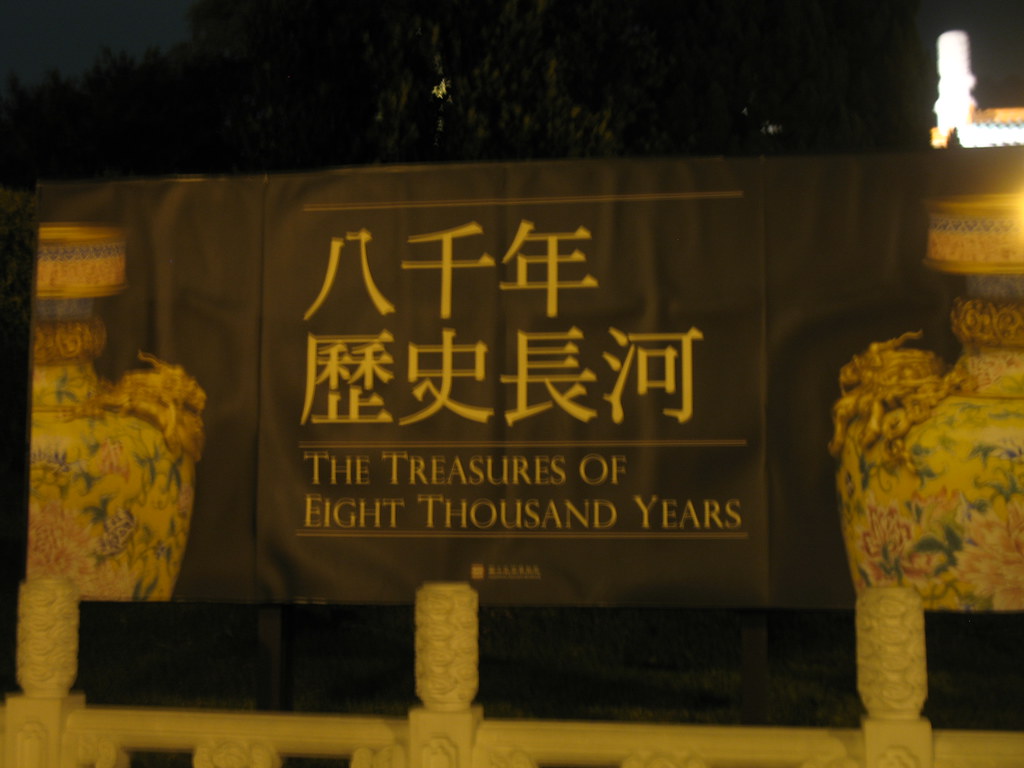
From prehistory until the beginning of the 20th century. Incidentally, I don't think the Chinese says the same thing as the English. I read it as something more like "Eight Thousand Year Long History" and don't see anything likely to be related to treasures or items of value. Andrew Tsai, correct me?

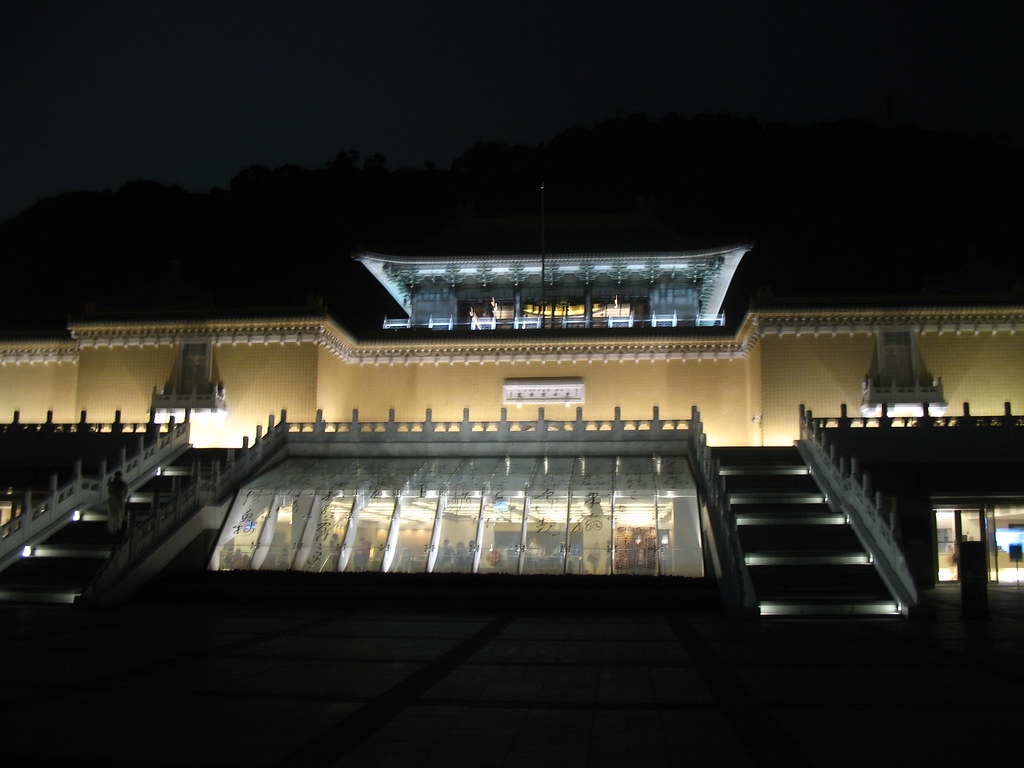
This picture was taken after we left the museum at the end of the day. It has several imposing entrances before you actually get to the door.

Pictures are understandably totally forbidden inside the building as the public never managed to actually turn the flash off until after they've set it off several times. Thus, I can't show you the things we saw very well, and descriptions aren't going to go far. I recommend you go to their website and look at the pictures they've taken of parts of the collection here. Go to Collections and then Selections. We especially enjoyed the bronzes, ceramics, and carvings. We spent probably five hours going between exhibits, hitting ones we were most interested in, circling back around when one area was too crowded, and generally getting lost in the intertwined exhibits.

One thing we mention as especially cool was reading Chinese characters from 2600BC - they are many that of course are not used in Japanese or even in Chinese any more, but some are clearly recognizable. I don't think we read any sentences but it was cool to pick out words here and there amongst things four-thousand-odd years old.

Tour groups comprised the majority of people visiting the museum and they were a real hazard - flying wedges zooming around the museum, following really loud people with bullhorns. Watching two going around a room in opposite directions was kind of funny; you'd expect bodies to fly when they met. The plus side of having these large ornery organisms trampling around was that when they weren't there, the place was pretty much empty. So when they showed up we just shifted to where they weren't and I don't think we missed much because we just kept doubling back later after seeing other stuff. I really, really enjoyed some of the exhibits (The bronzes! Amazing aesthetic and craftsmanship!) and would count the whole trip to Taiwan worth it for this visit alone.

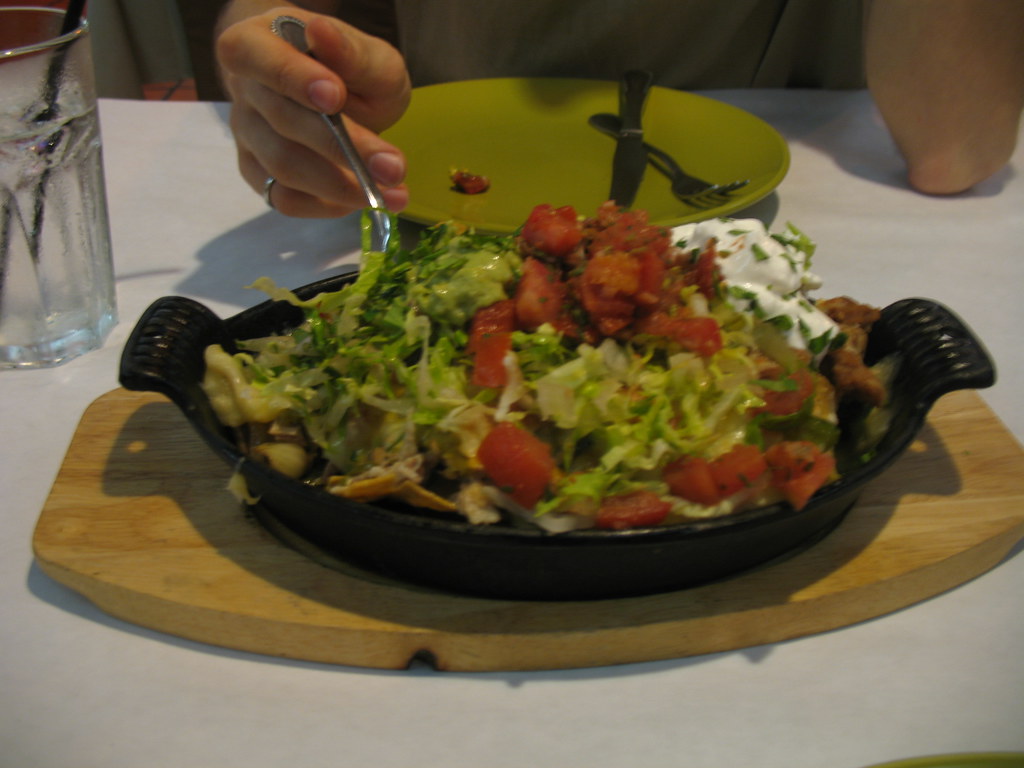
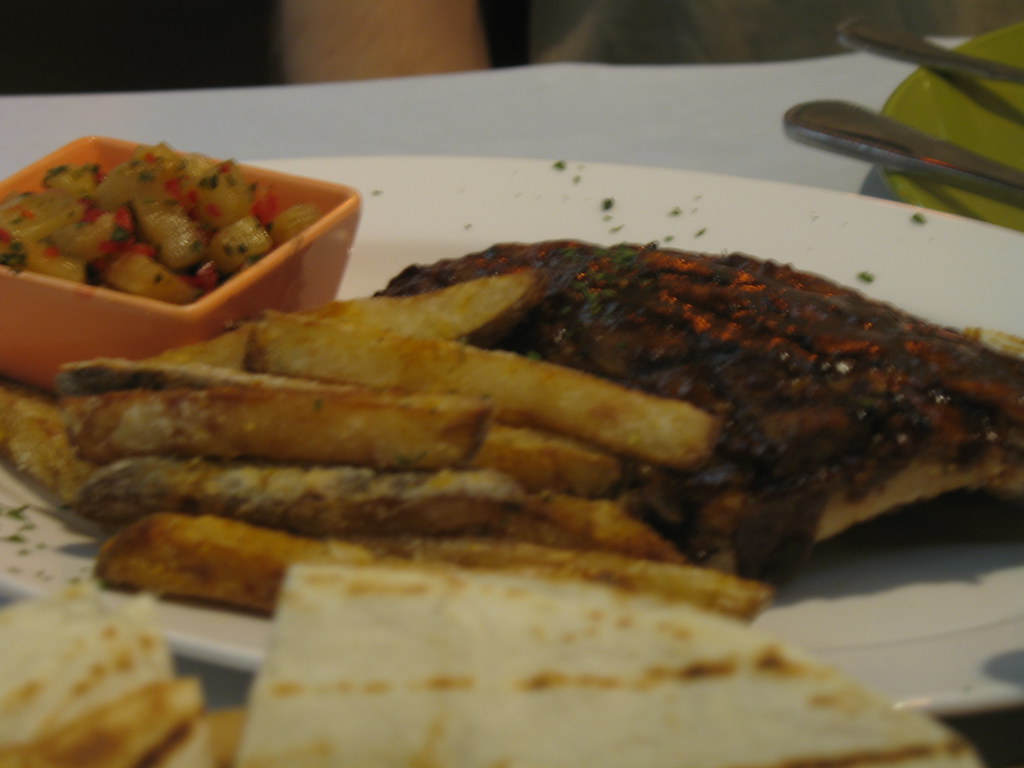
We stayed much later at the museum than we had originally intended to because of the opportunities afforded us by the extended hours, and we totally and deliberately blew our dinner reservation in order to stick around. Finally, though, we'd seen everything we wanted to and were starting to get hungry. When we researched where to eat in Taipei we read a lot of recommendations before picking one place that didn't have anything to do with Chinese cuisine. It's called Yuma and it is full-on Tex-Mex in downtown Taipei. We went and had absurd nachos and really, really good BBQ ribs, and fajitas and Sprite and friendly English-fluent service and everything had portion sizes I would account large by American standards. It was fantastic, and even cost less than it would have at home. They didn't seem to mind that we were hours late for our reservation either (they had open space), though we apologized anyway.

You could feed a three-generation Japanese family for a week on those nachos!

Came a looooong way for this BBQ and I would challenge anyone not to enjoy these ribs. Maybe not the best I've ever had, but I did not expect them to be exceptional, which they were. If I wasn't totally stuffed I'd have ordered another round and eaten them with eyes-rolling-back ecstasy.

I felt a little bit guilty about not taking this opportunity to eat someplace serving Chinese in China, and we'd read about one particular Peking duck restaurant that caught our attention, but I can't be too sad about it in the end because we really enjoyed eating there and got things we won't eat again until August at the earliest. We'll try to do better when, at some point, we make it to China proper. Plus, I ate leftovers from Yuma the whole rest of the time we were in Taiwan. There was that much left, and they meticulously (to the point of humor) wrapped it up for us in carefully separated and secured individual packages for each little item. We considered going out and doing something more after finishing dinner, but with so much food in us and an early morning the next day, we just bought some supplies for the next day and hit the sack.

Tuesday, April 20, 2010

Spring Break 2010: Singapore, Taiwan, Singapore, Tokyo (Day 4 Part 1)

After making it to Taipei, Taiwan, the day before and sleeping in our hilariously round but not entirely uncomfortable hotel bed we woke up to the first of our two full days in Taiwan.

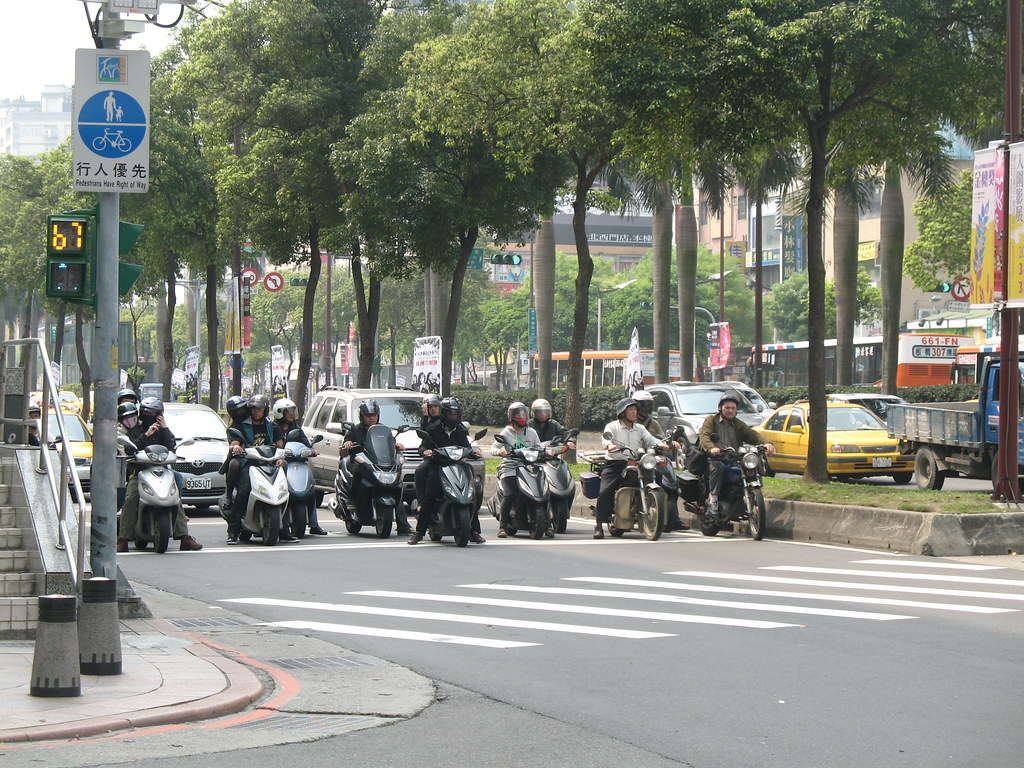
Here's a nice picture of the highway right next to the hotel.

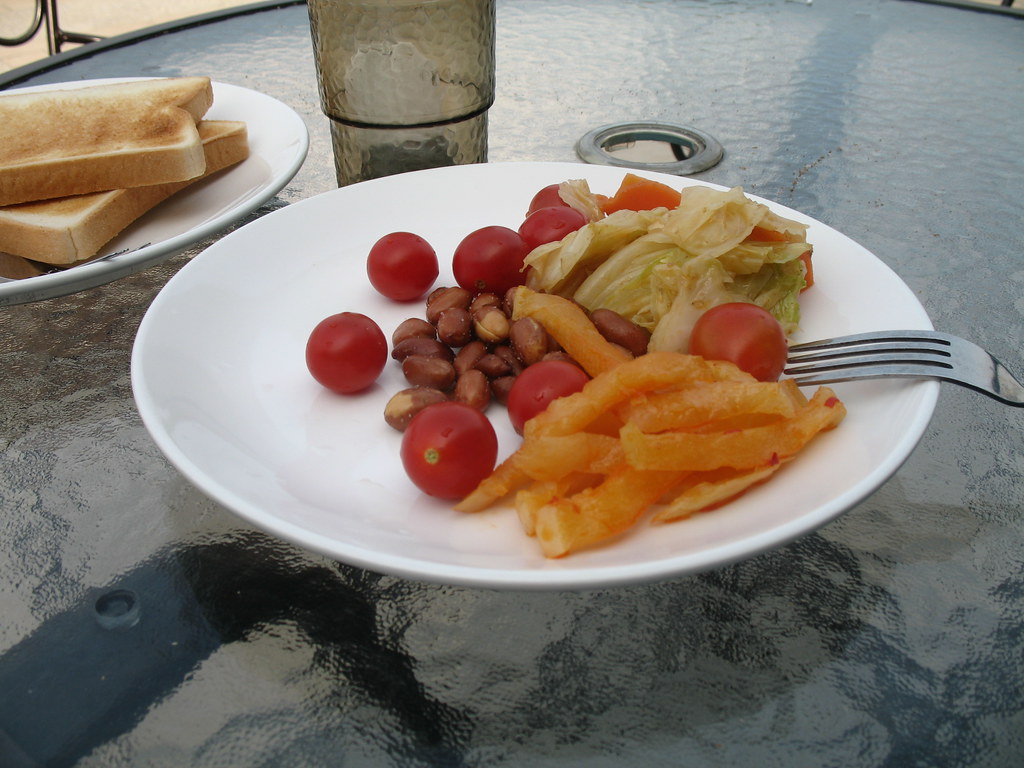
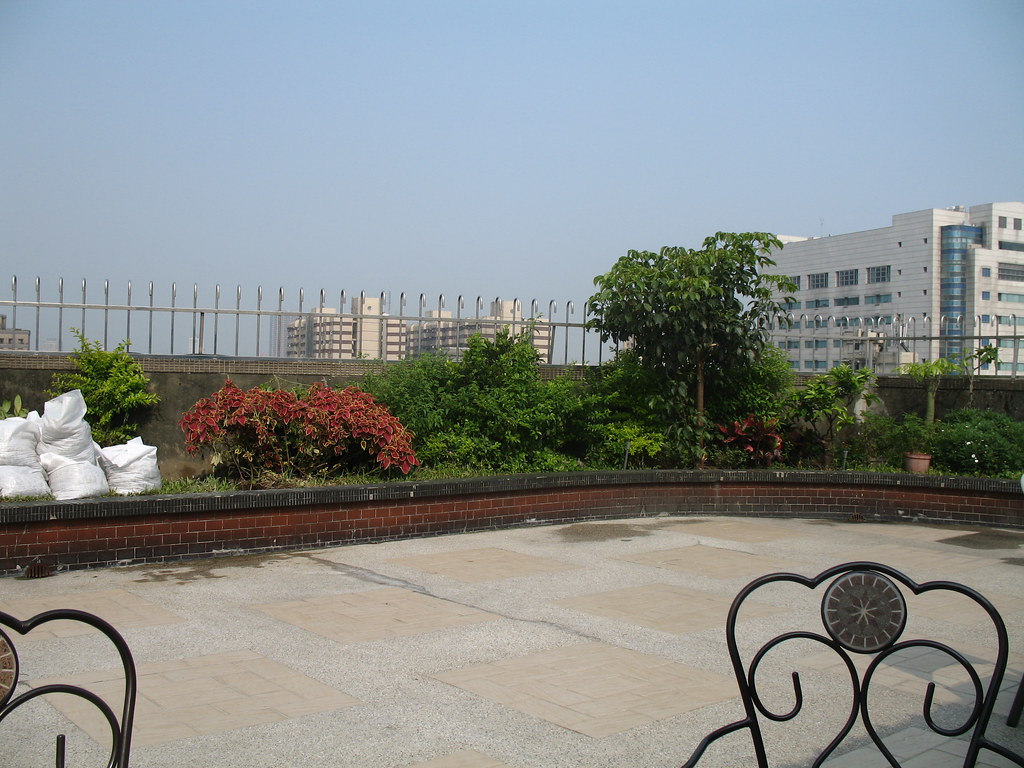
The hotel offered complimentary breakfast so we sallied forth to test the quality of their offerings. We peered with some trepidation into the buffet trays and mostly didn't understand what was going on, or if we did, didn't much care for the look of it. Ana pretty much had toast, and I had a lot of the good fresh cherry tomatoes and sampled a few other items. The best part of breakfast was definitely the table on the roof of the hotel - the wall was a bit too high to see a whole lot of Taipei but the sun was shining, there was a little garden, and the temperature was entirely temperate.

I still don't know what the orange stuff was.

The view from our breakfast table

Food urges muted, we headed out to the first of our three big goals for the day, the Taipei 101 building. On the way to the subway station, a man on a bike singing opera rode by. He was actually pretty good.

I didn't put a picture of the nifty RFID plastic subway coin in before, so I'm putting it here.

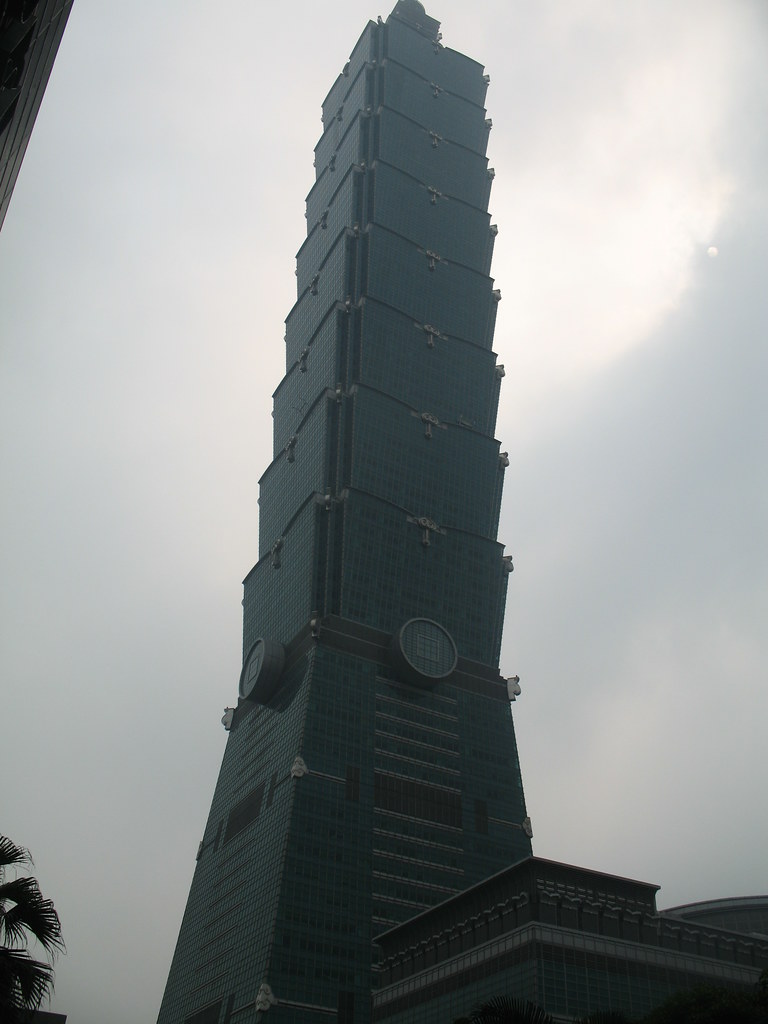
Recently overtaken by the Burj Khalifa, the Taipei 101 is now the second tallest building in the world, and remains a significant piece of structural engineering while allowing for amazingly expansive views of Taipei despite the fact that it is hideously ugly. The Taipei 101 does not have any buildings of remotely comparable size anywhere near it, so when it stands above you it's hard to appreciate just how big it really is, which is nearly 1,700 feet tall to the point of the spire. The base of it is an enormous mall, above which are dozens of floors of office space, topped by the observation decks, on top of which there are some more offices, which I believe are occupied principally by building management and the like.


Taipei 101 from only a block or two away

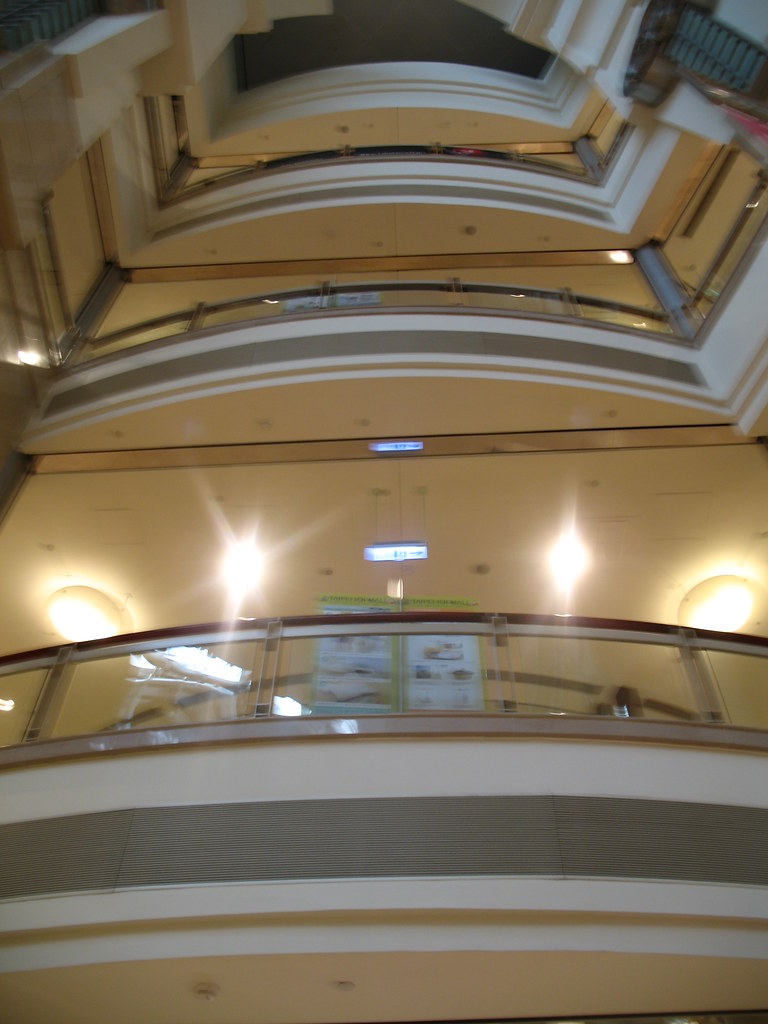
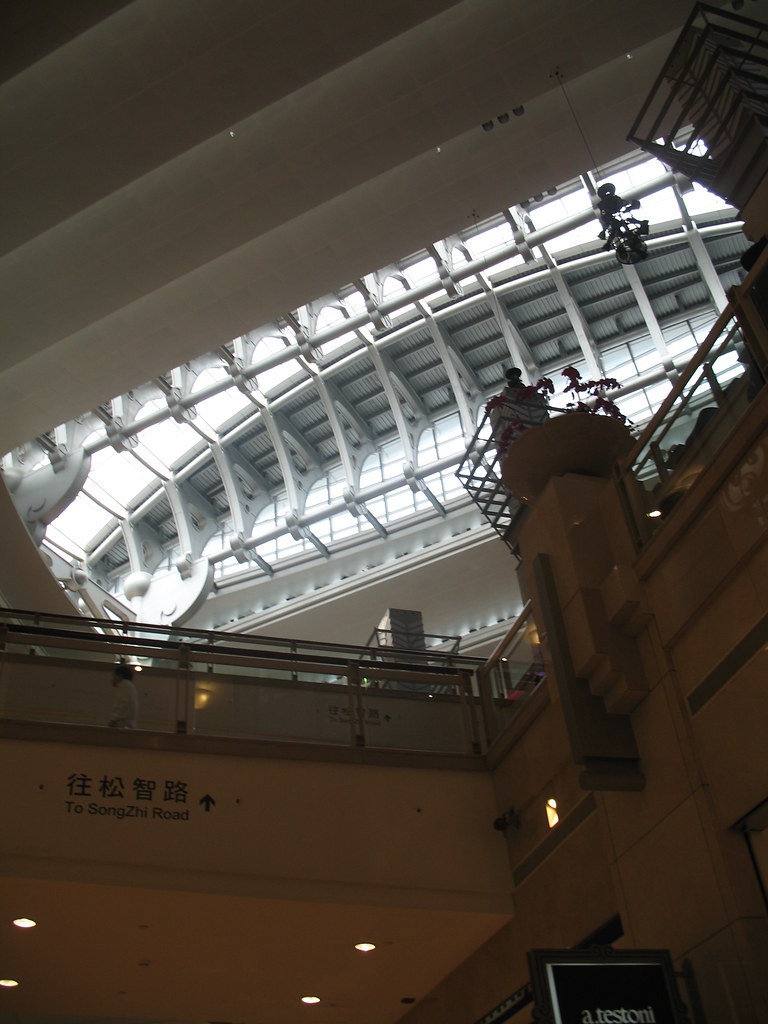
The mall at the base is positively cavernous and not for the faint-of-credit-limit. For example, they weren't advertising Mercedes Benz, they were advertising specifically the AMG performance arm of Mercedes Benz. It looked like a great place to spend a lot of money for specific designer names on the tags of your clothes or wristwatch, but was pretty lacking in anything else. We zig-zagged across the mall, going up one floor at a time, just to see what they had. The food court on the top floor of the mall area was pretty fancy, but we kept moving up to the lobby for the observation decks.

Inside the shopping cathedral

More shopping cathedral

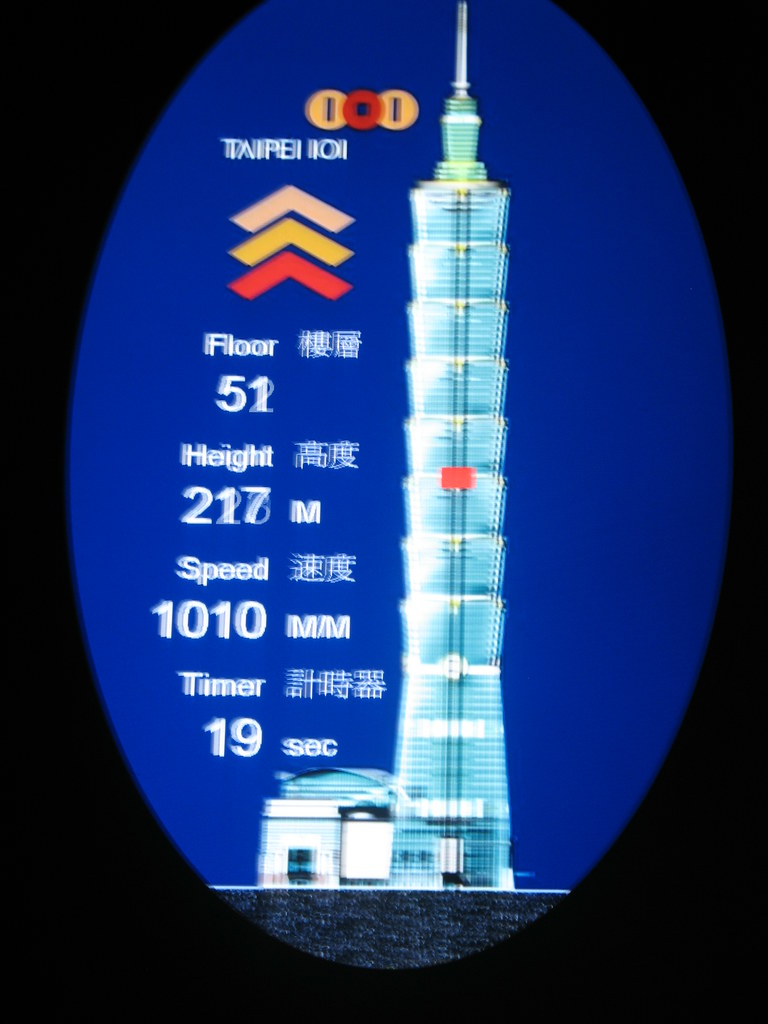
The lobby area was crowded and a bit of a madhouse, but we paid them about $30US for two tickets to the observation deck and got in line for the elevators. They make a big deal about the elevators because they're apparently still the fastest ones in the world. I'm pretty sure the school elevators take about the same amount of time to do five floors that these ones spend to hit the 89th floor observation lounge.

That's about 38 miles an hour, inside a building.

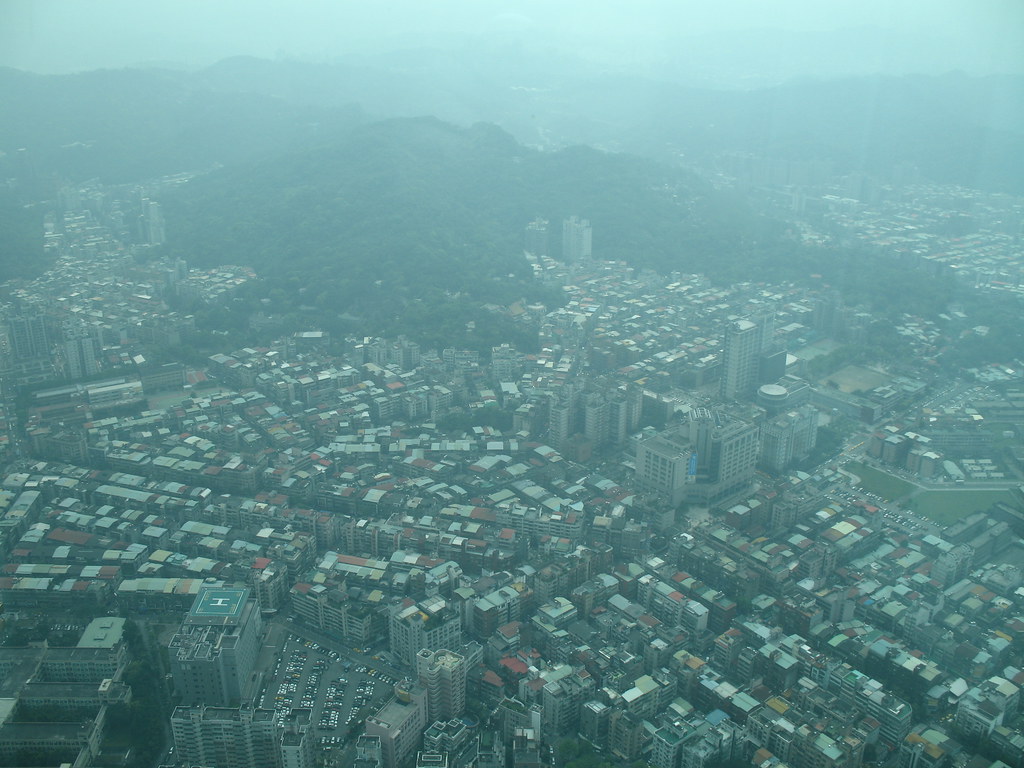
At the time we were in Taiwan, dust storms over the Gobi desert were putting a real haze in the air in all Asian parts east of the Gobi. We'd first thought that it was pollution, but later discussions with people who were elsewhere at the time and were seeing the same effects put us on the right track. Anyhow, for all the extraordinary height of the building, visibility was significantly limited by the dust in the air to, say, miles instead of light-years. I do wish we could have seen it on a really clear day but it was impressive nevertheless. Hold your hand at full arm's length; your forefinger nail is how big a city bus looked from up there.

The observation lounge is the whole 89th floor, and the city looks a lot like this in every direction.

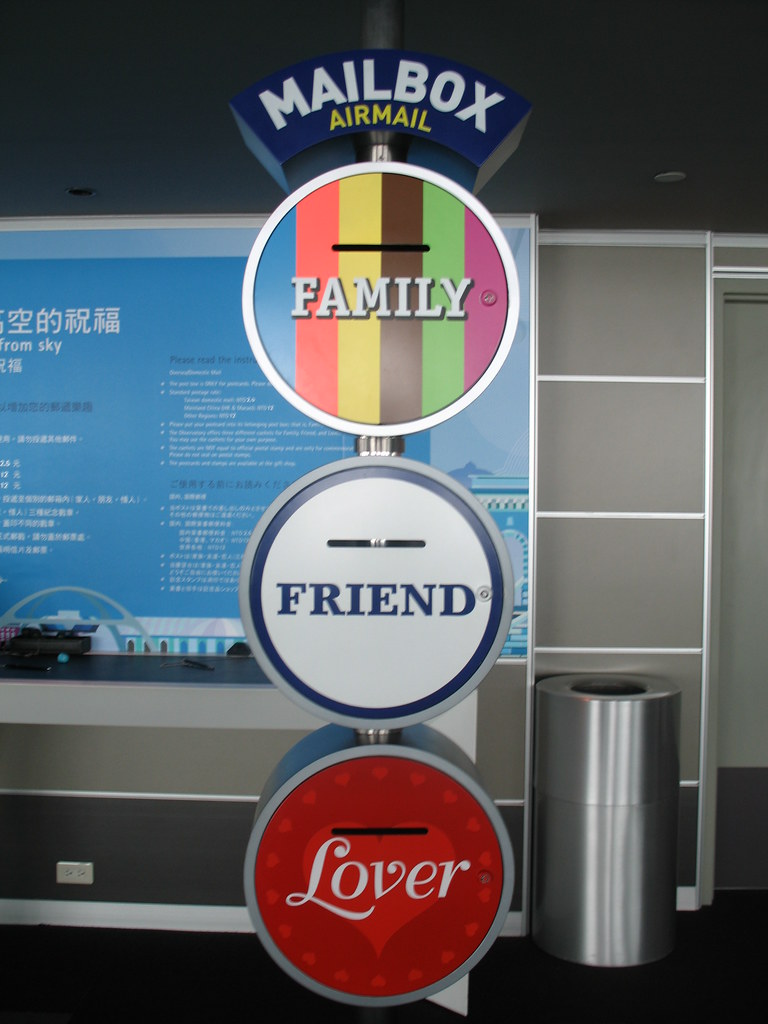
The observation lounge also featured several souvenir areas hawking various things, including postcards with special postmarks that Ana decreed must be sent to several people, though not having addresses limited the potential audience sharply.

They also had ink stamps with pictures of the tower and the inexplicable "damper babies"

This is the 101's tuned mass damper. It keeps the building's swaying to a minimum, though my inner ear sent down a few notices saying that things here were perhaps not quite right.

And this is one of the four mascots for the 101 based on the damper, called "damper babies". I'm not sure these things were necessary or made any sense at all. The other colors are black, gold, and silver. Each one has a backstory and catchprase....


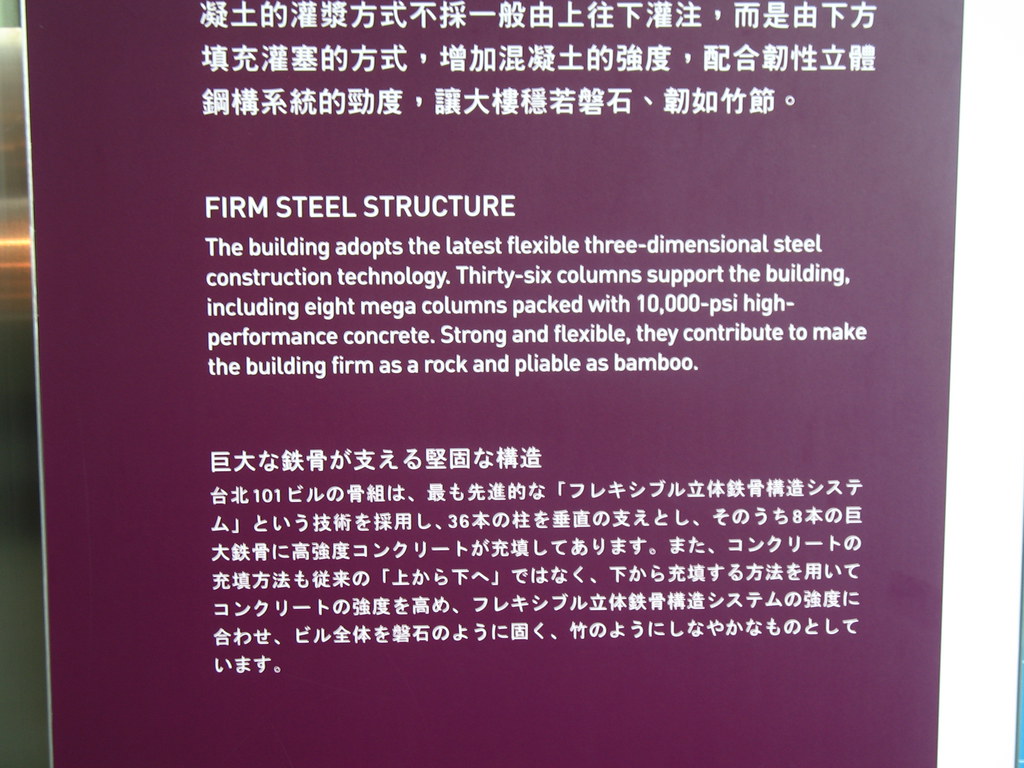
There were a lot of signs and info about the building posted in the observation deck. The engineers in us noticed that one of the signs rated the concrete used in the 101 to "10,000PSI" and immediately wondered which failure criterion the 10,000 psi applied to. We're guessing compressive failure but without indication the number means not a whole lot.

The floor above the windowed observation deck is an open-air observation deck. The was pretty much the same, except with a really big fence. From here it was clear that the floors above the observation decks are also office space.

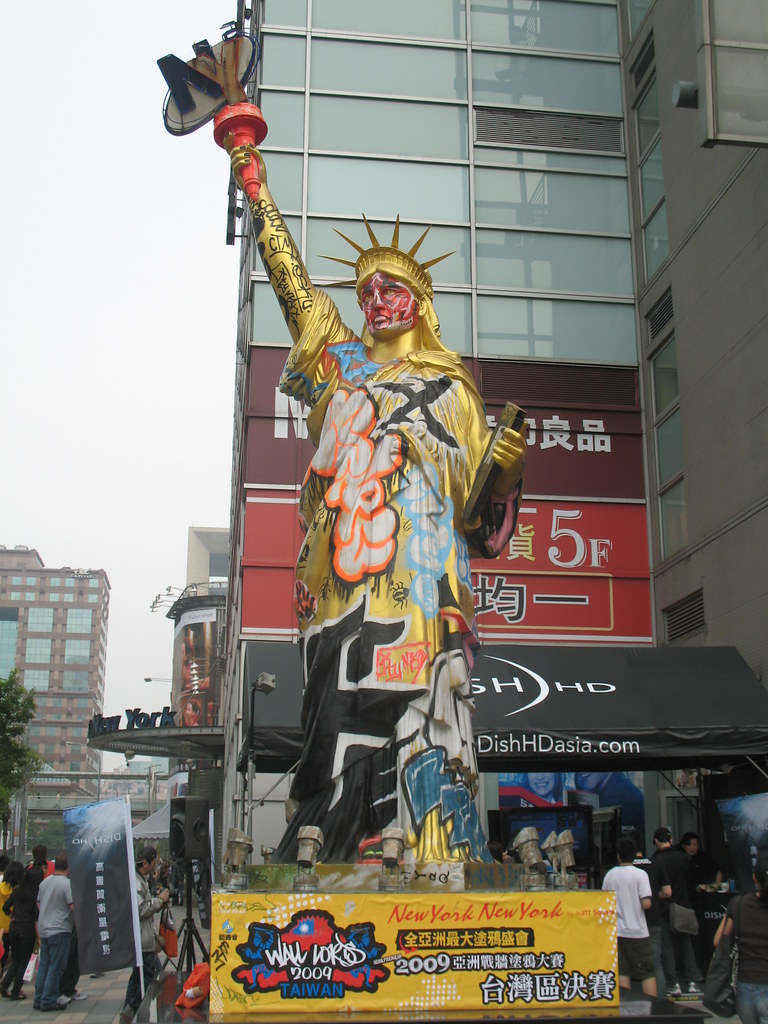
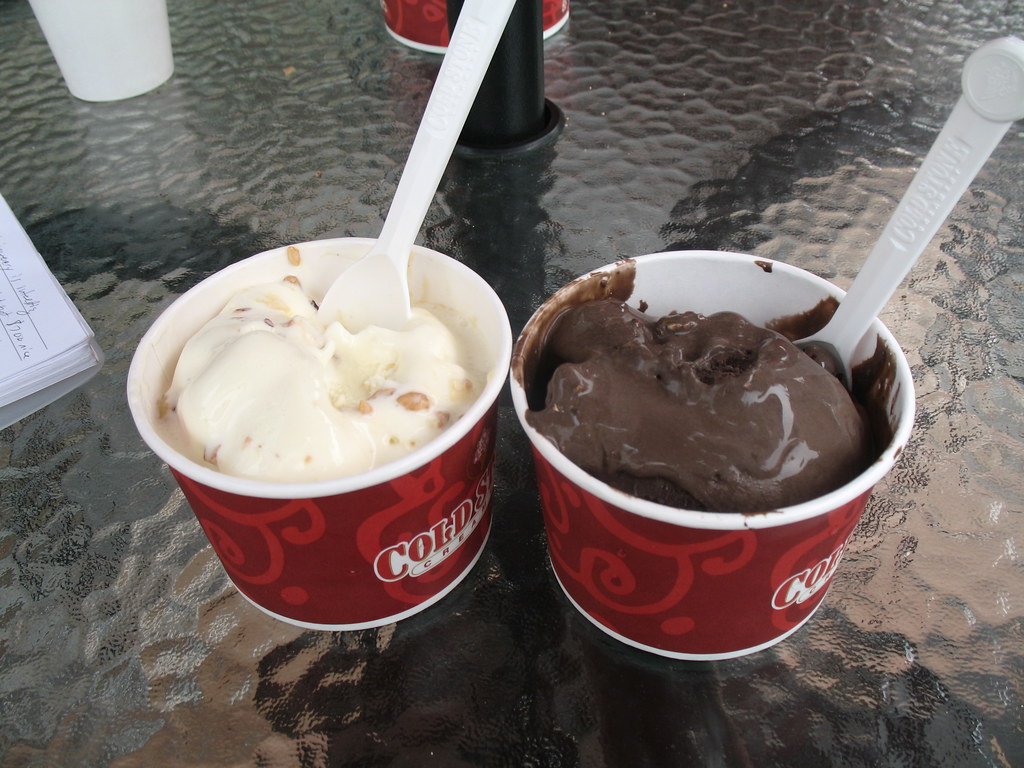
After descending from the heights, Ana's attention was caught by signs advertising something calling itself New York New York, so we followed them to find out what it was. I'm still not exactly sure what that store sold, but it turned out to have a Coldstone right in front of it so we promptly had ice cream for lunch. I'm going to break Day 4 into two parts here. Next up is the National Palace Museum and then we eat Tex-Mex in Taipei for dinner.

New York New York's Statue of Liberty

I wasn't nearly as excited as her, but it was probably 90˚F out there so the ice cream was welcome.