Monday, August 2, 2010

A Wise Man Might Not Climb It At All

There is a Japanese saying "a wise man climbs Mount Fuji once". Having done exactly that, a small part of me now believes the saying is intended to make the uninitiated pull the same dumb stunt as everyone else. Otherwise, we agree it was worth doing, at least once. This post documents our experiences climbing the tallest mountain in Japan.


You may want to read about another time we went volcano climbing in the dark here.
Fuji is only open for climbing for the height (heh!) of the summer, in July and August. As this August is spoken for by our trip home and the future is unpredictable, we resolved to climb Fuji this July. There weren't any vacations within reach, so we needed an entire weekend to make the trip. We took the night bus to Tokyo on Friday night, climbed Saturday night (the goal is to reach the top at dawn), and took the train back Sunday afternoon. Informed of probable and possible conditions by the internet and Japanese hiking guidebook, we prepared for rather extreme circumstances. We had learned that the temperature at the summit on a clear, sunny day averages about 40F in the daytime in July, not counting wind chill. We'd be climbing at night, and it regularly rains buckets to boot. The guidebook includes phrases like "freezing cold" and "howling gale". Thus, we brought full-length ponchos to wear over our ski jackets, winter gloves, etc, as well as spiffy new LED headlamps. Our friend Abby adventured with us.

Wearing our headlamps (still low on the mountain - we're not wearing winter clothes)

We'd not previously taken the night bus and must remark that it was largely unremarkable. Big reclining chairs to sleep in (at least big if you're Japanese), but they keep the lights on until they've made all their stops (past midnight) and then play a recorded 20 minute (not kidding) safety briefing in Japanese, followed by a 1 minute safety briefing in English. Not that I wanted it to be longer but somehow I feel like they don't care quite as much about foreigners. Not a terrible form of transit, but I'd probably pay the extra 20% for the night train with sleeper cars if given the option, to be able to lie down fully and close the curtains to eliminate ambient light.

The bus put us bleary-eyed in Tokyo Station at about 6AM. Since our bus to Fuji wasn't until 7PM, we went to the school's apartment and got several additional hours of sleep and then showers, substantially improving our outlook on life.

Figuring that we needed a strong base of food to power us through the nighttime climb, we lunched at the Mexican place in Roppongi that we like. Salsa, ceviche tacos, chicken tacos, tamales, roast pork and roast pork burritos later, we went to the adjacent foreign grocery store to get something to eat. There we armed ourselves with bagels and granola for trail food. It just so happened that the 100% Chocolate Cafe was on the way back to the apartment from there, and the girls deemed a visit essential, prior to returning to the apartment for a second round of pre-all-night-hiking nappage.

Inexplicable chocolate/orange beverage, with flavor of the day choc. square (was banana, and better than you'd think)

After that, it was time for dinner and to catch the bus to Fuji. I thought complex carbohydrates a reasonable dinner idea, but I was outvoted and we went in search of one of Japan's ~6 Burger King locations. Our directions proved totally inadequate (Tokyo is a maze and an address can be completely useless) and we spent a lot of time asking directions before finding it. When we did, they didn't have the chicken tenders that had prompted the quest. We had to run back to catch the bus, which was also very difficult to find (it was the tiny other bus terminal next to the huge bus terminal) before eating. I had two Whoppers and thereafter felt queasy as I well deserved.


Sign at the very beginning of the hike

Fuji has twelve official "stations" going from the base to the summit. The most common ascent, which we did, starts at the Fifth Station, where the road stops. Starting at Station 1 you'd have a whole bunch of walking to do, which would take a lot longer than we had to do it. From the Fifth Station, it is 1500 meters (.93 miles) to the top...vertically. The Fifth station is already 2300 meters above sea level, meaning the first ~60% of the vertical distance of the mountain is by bus. The summit is over two miles above sea level, and is the highest point in Japan. Even at Station 5, it was already cold when we debarked at 9:30PM.


 Going up, together

After discovering that all bathrooms at all stages of Fuji are pay-to-pee (we'd have brought more change if we'd known) we set off. The initial stretch of trail was so sparsely peopled and directed that we thought for a while that we might be off track, but soon enough it became apparent that getting lost much past the Fifth Station would be basically impossible. Stations Six through Twelve, and maybe a dozen facilities not dignified as full Stations (many shared names with facilities fifteen or twenty minutes away, or had names like "Station 8.5") positively lit up the night. We could look up and see a constellation of building lights and bobbing headlamps that just kept going up into the sky. It was clear from looking up at the trail that there were thousands of people on the mountain that night, in a largely unbroken chain stretching from the Fifth Station to the summit. After fifteen minutes, we caught up with the end of that chain and thereafter were, if not surrounded, definitely in company for the remainder of the hike.


 Gaijin, out of the wind along the wall of a hut

We met up with some other foreigners (at least 1/4 of the people on the mountain were non-Japanese) who we ended up making the whole way up with, so we had a couple of conversations going on and off most of the night, though the lack of air sometimes took precedence over socialization. The terrain at the bottom was mostly wide, steep ramps of gritty, sandy dirt, sometimes shaped into tall stairs, herringboned into the side of the mountain. This eventually gave way to a mixture of bare rock and fist-sized stones. Hiking did a lot to keep us warm, but as we ascended we kept adding layers, and I was wearing everything I brought long before reaching the top. Blessedly, though, the night was completely clear. I'm not sure that even with the rain gear we'd have made it to the top if it had been raining hard. The cold, gritty wind and the mountain itself were enough to deal with without ice water down the backs of our necks. Some climbers were clearly equipped for hurricane conditions, wearing yellow (or blue, red, or fluorescent) rubber suits head to toe, with elastic straps over them at ankles, waist, wrists, etc.
Here's some in blue, there's one in yellow, and one in red up higher

We had the recommended amount of time, and took a slow and steady pace up the side of the mountain, resting at Stations close to the walls to get out of the wind, but not staying long enough to lower our heart rates too far and start to feel tired and sleepy. The crowds were problematic in some places, usually where the trail narrowed to be only one person wide and things backed up. There were times when we had to wait ten or twenty seconds before between steps. Part of me was irritated that they were slowing us down, but another part of me was happy for the enforced rest.


 The ramen was crappy, but warm

As the night wore on, fatigue and cold started adding up, but we kept moving and crossing off stages on the map. We stopped around 300 vertical meters from the top and paid for some really crappy ramen that came with the happy privilege of sitting inside a heated building for twenty minutes. Towards the top the crowds really starting building up, and progress became very slow. We should have made it to the summit with 20 minutes or so to spare, able to get to the true peak by sunrise, but that was not to be. It became apparent that we wouldn't be at the summit at dawn (~4:30AM) but we were between the penultimate Station and the summit, very high up indeed.


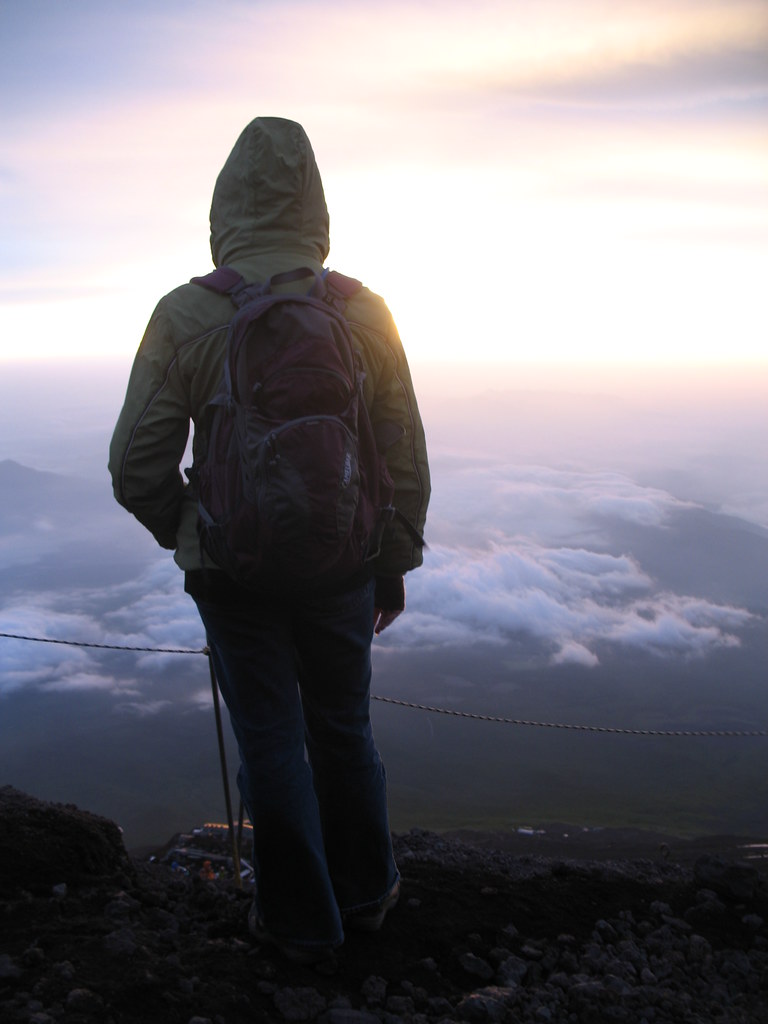
 The sunrise didn't seem to start at the horizon but in a line the sky - probably clouds reflecting a sun still around the curve of the earth

As the light started coming in everyone turned toward the sun as the sky colored brilliantly, and the world went from grayscale to color as the black mountain and black shapes of other climbers turned rust red and all the colors of neon rainbow, respectively. Of course, the minute the sky began to lighten, hikers stopped in  place, in many areas not bothering to leave the trail and forcing those still trying to summit to go around, which accounted for a major portion of the slowdown. Others slowly advanced, taking pictures of every second of the sunrise along the way. We managed to get some too, trying to advance when we could and photograph when we couldn't. Ana and Abby were pretty beat at that point, and considered starting back down rather than making more steps that would need to be retraced, but we stuck together and finished the job around perhaps 5:30 or 6.


 The only things more colorful than a sunrise over Fuji are the Japanese hikers taking pictures of it

The summit has quite a collection of buildings up there, and Ana and Abby went inside looking for warmth and cover while I took pictures, went to look down the caldera, and went up to the highest point near the camp (very windy). The sunlight, steadily increasing temperature, and victory over the mountain were reviving me, but Ana especially was just bone tired and the bus was leaving at 10 with or without us, so we took one final look over the edge and starting heading back down.

 Looking down at the summit buildings from the highest point

Fortunately for us, they had opened the previously-snow-closed alternate route just that morning, so all those hundreds and thousands of people didn't have to try to go back down the up trail as hundreds and thousands more people were still trying to come up. The down trail was definitely man-made in almost its entirety. Wide, steep switchbacks had been carved into the mountain with construction equipment, and the edges and corners sometimes reinforced with chicken wire or railings. The footing was loose red volcanic gravel almost the whole way down, and it was easy to lose footing and fall on your butt.

 Welcome to Mars, watch your step

Note this is really quite high up - look at the countryside below
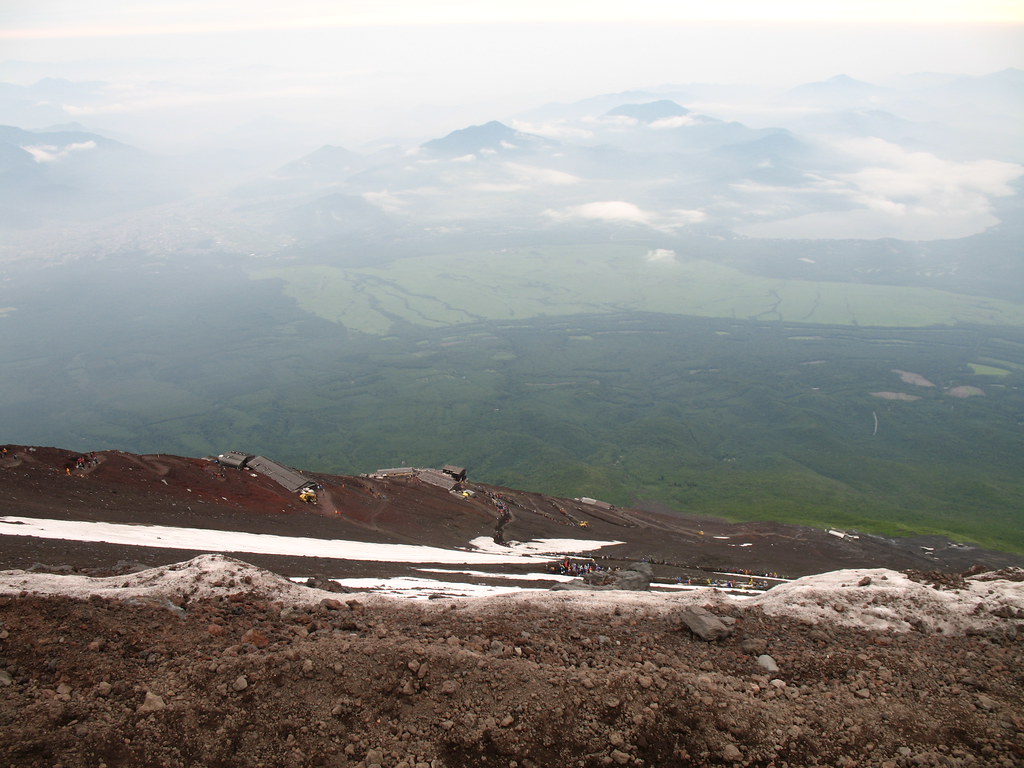
Also steep

It took three or three and a half hours to step / skid / slide / recover our way down the mountain back to the Fifth Station, and we arrived with half an hour to spare before the bus. Cue celebratory granola and an uneventful trip back to Kanazawa, spent mostly asleep.


Back at base...doesn't look as big from here

For some spectacular shots of the sunrise and a massive collection of other Fuji images, check out the Flickr set.

Sunday, August 1, 2010

Super Rindo Trip

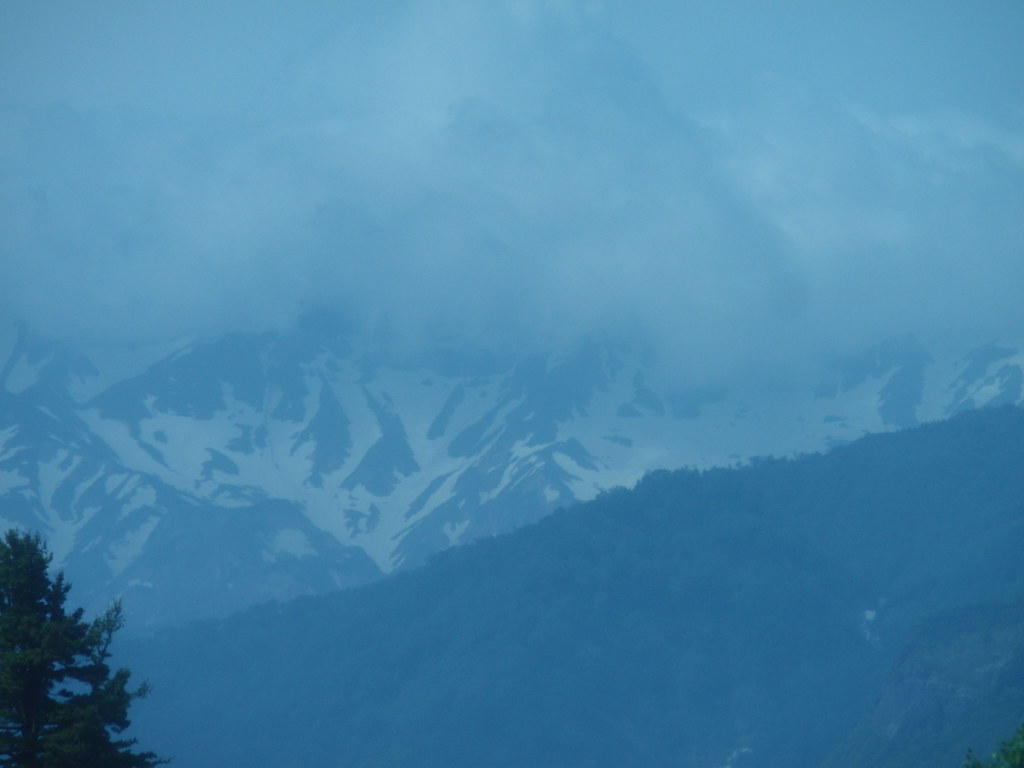
The Super Rindo Road is a winding road leading into the Japanese Alps, between Haku-san City, a lot of other mountains, and then Haku-san itself (Haku-san is one of the three holy peaks of Japan, along with Fuji-san and Tateyama). We'd been meaning to get up there and look around for a while, and an opportunity to do so pretty much fell in our laps, so we took it. The Haku-san we-like-foreigners-and-their-money group set up a trip that any foreigner in Kanazawa could sign up for which cost a measly ten bucks a head, so to the Super Rindo we went.


 Bus full of foreigners

Haku-san City and the Super Rindo are an hour or so away from Kanazawa, so all the foreigners would be busing up together. The tour bus conveniently stopped at several points in Kanazawa and we were able to catch it at a local stop instead of having to go all the way to the train station first thing in the morning.


The plan for the day was to bus to the Hakusan City area, drive most of the Super Rindo, and then do a short hike up one of the minor peaks in the area, Sanpō-iwadake. After climbing down, they'd bus us into town for lunch at an onsen before bringing us home. The bus ride up was about what you'd expect - a whole bus full of foreigners, most of them knowing each other at least through other people - we all swapped plans for the summer and spoke full-speed natural English to each other. The tour group people felt this needed some stirring up, however, and bestowed upon us a tourist guide to the Haku-san area showing basic statistics and various tourist attractions, and then proceeded to quiz us on Haku-san facts. I used the book and guessed the best, winning the grand prize of a 500 yen (five dollar) bookstore gift certificate with seven of ten multiple choice quiz questions correct. Lesser beings won $1 international calling cards (hint to Haku-san people: we use Skype, and it is free) and everyone got to keep the pencils used for the quiz.


 We took a lot of pictures from the bus - the road is along the walls of the gorge

The Super Rindo itself winds across some very dramatic terrain, and both sides of the bus get to see things the other side does not. We snapped a large number of pictures from both sides, most of which we knew were going to be rubbish. We got a couple of keepers though. I just wish they'd washed the bus windows before the tour as that would have improved our yield substantially. I'll let the pictures describe the Super Rindo further. There is one weekend each year when it is closed to motor traffic and people walk along it - we'd certainly be interested to come back for a closer on-foot look.


 We discovered snow (in late June)

When we reached the base of the hiking trail, there was definitely still snow, but it certainly wasn't very cold out. The guides predictably lead the whole group in stretches and warm-ups before permitting us to begin walking. The hike itself was only about 30-40 minutes up, made longer by a few breaks. I don't think most people needed them - we certainly didn't. The view from the summit was pretty nice, and included a clear view of Haku-san itself. We're considering climbing it later in the year.


  Warm-ups and stretches - the Japanese love 'em

Lunch was Japanese-style curry and a salad and as part of a package costing ten bucks I can't complain. The actual onsen cost $5 extra, and since the bus wasn't leaving for hours we all paid up, leading to time spent naked with a lot of strangers, but hey. It was a relaxing end to the trip, followed by busing back to Kanazawa in time for dinner.


 Trail up

 View of Hakusan

At the top

Waterfall next to the Super Rindo

 Lunch - Head over to Flickr to see all the images we've got.


Sunday, June 20, 2010

Hyakumangoku Parade

The big event for the Saturday of the Hyakumangoku Festival is the parade, which starts at the train station and ends at Kanazawa castle, next to Kenroku'en. After we went to Kenroku'en in the morning to see iris, we walked back downtown and had lunch at an Indian restaurant which turned out be be really good and have large portions. Most of the staff was actually Indian, and therefore spoke English, which was a nice touch (the English menus conspicuously were not full of questionable translations too).

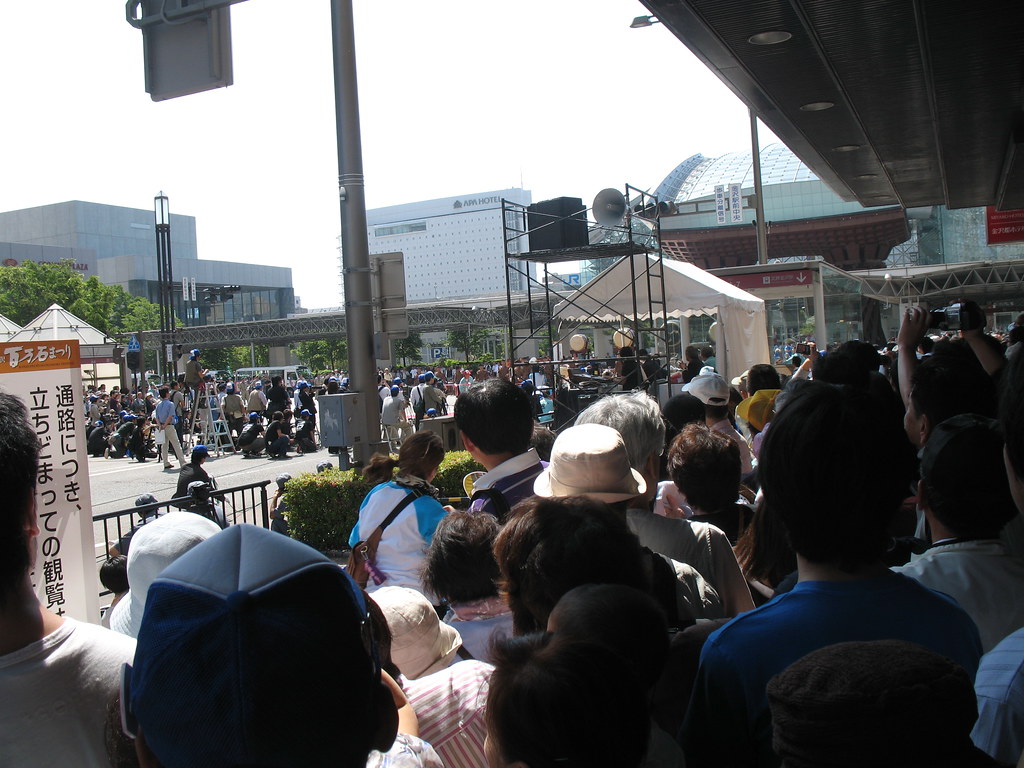
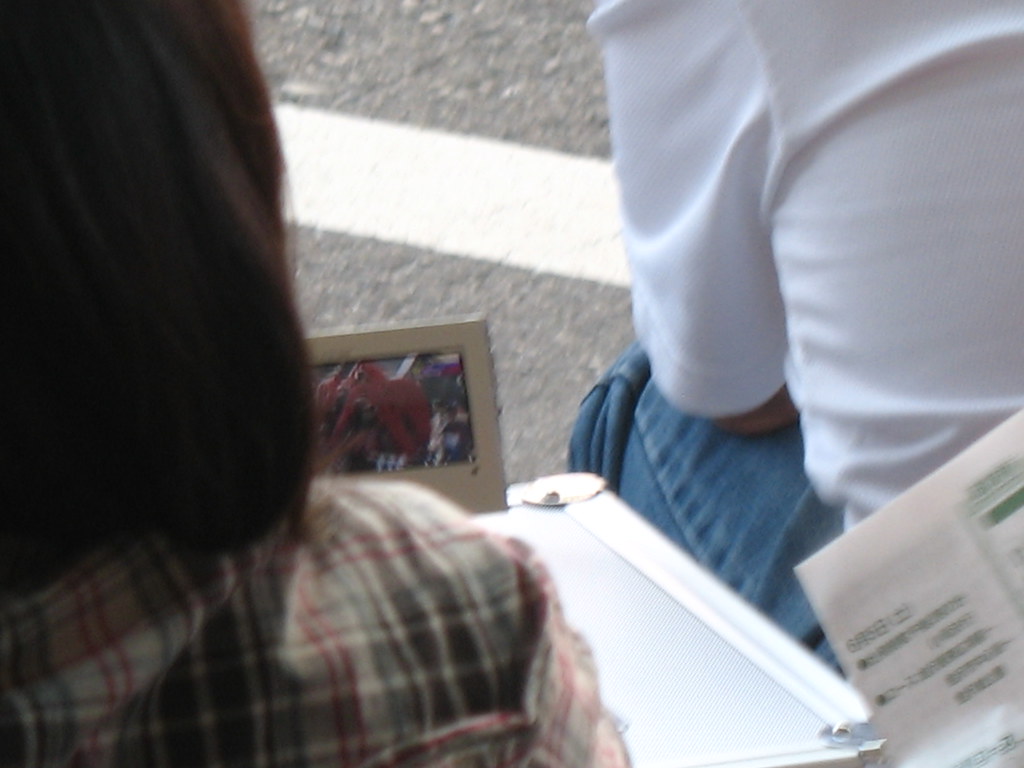
We ate so much and spent so long doing it that when we were finished the festivities for the beginning of the parade had already commenced, and thousands of people crowded the intersection in front of the train station. We found that this was fairly pointless, as nearly every angle from which one might possibly watch the taiko drummers and the like was obstructed by platforms for TV cameras and sound equipment. It was clear that the TV audience had priority - sidewalks were roped off and then left empty as routes for TV personnel to walk back and forth while the police kept the people there back against the buildings. So, what do the Japanese do in this situation? They pull out their cell phones and other portable TV devices, and watch the proceedings on TV while they stand where they easily could have seen it live were the TV dudes not in the way. Classic Japan.

The media blocked the view

Watching the TV version of the event right in front of them

Standing there wasn't working for us, so we went further down the parade route and found a shaded spot where we could see well and sit down when we wanted to.


The firemen / acrobats from an earlier post performed during the parade.


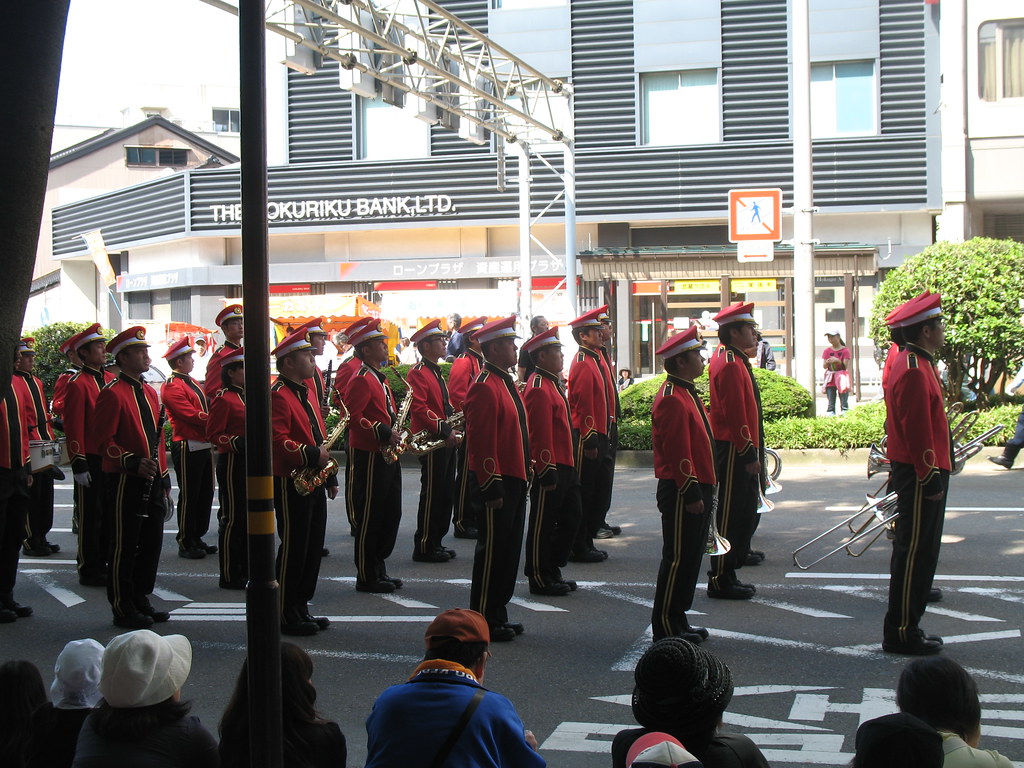
Bellhops's Union marching band (probably not)

Many individuals in the parade had clearly fortified themselves for duty with alcohol, but this being Japan that was OK / expected during festival participation.
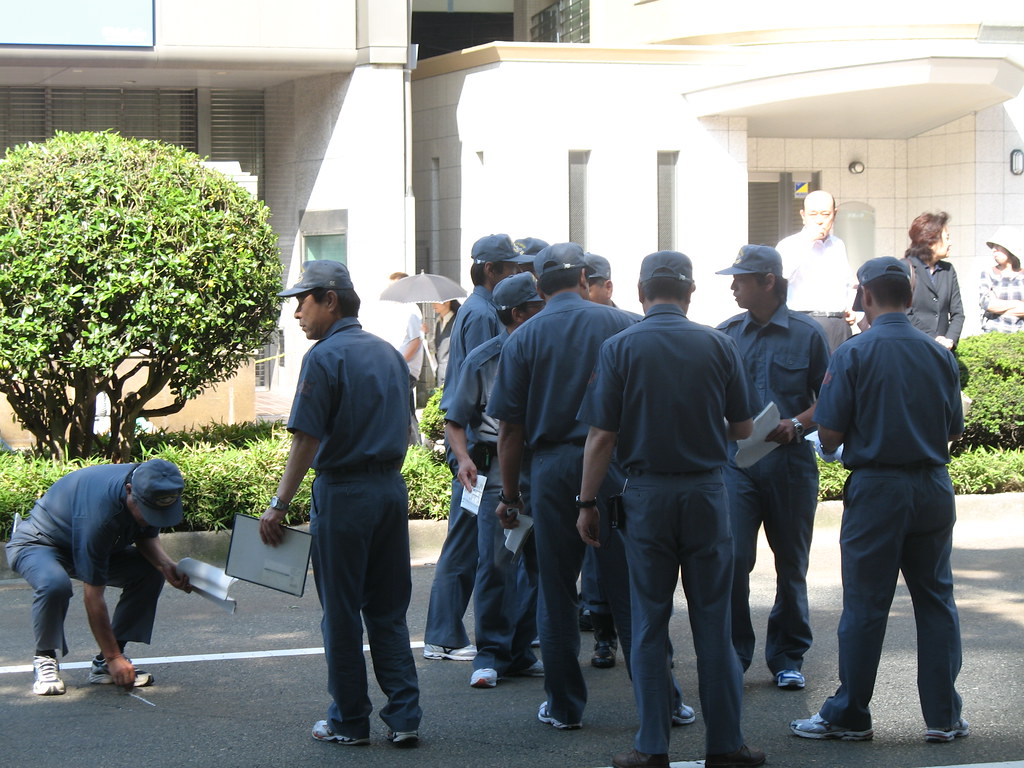
Some aspects of the parade were clearly still being worked out during the parade - tech crew stopped by to draw marks on places where different groups should perform. This is an unusually large tech group for the situation as one guy with chalk appears to be all that the was required.
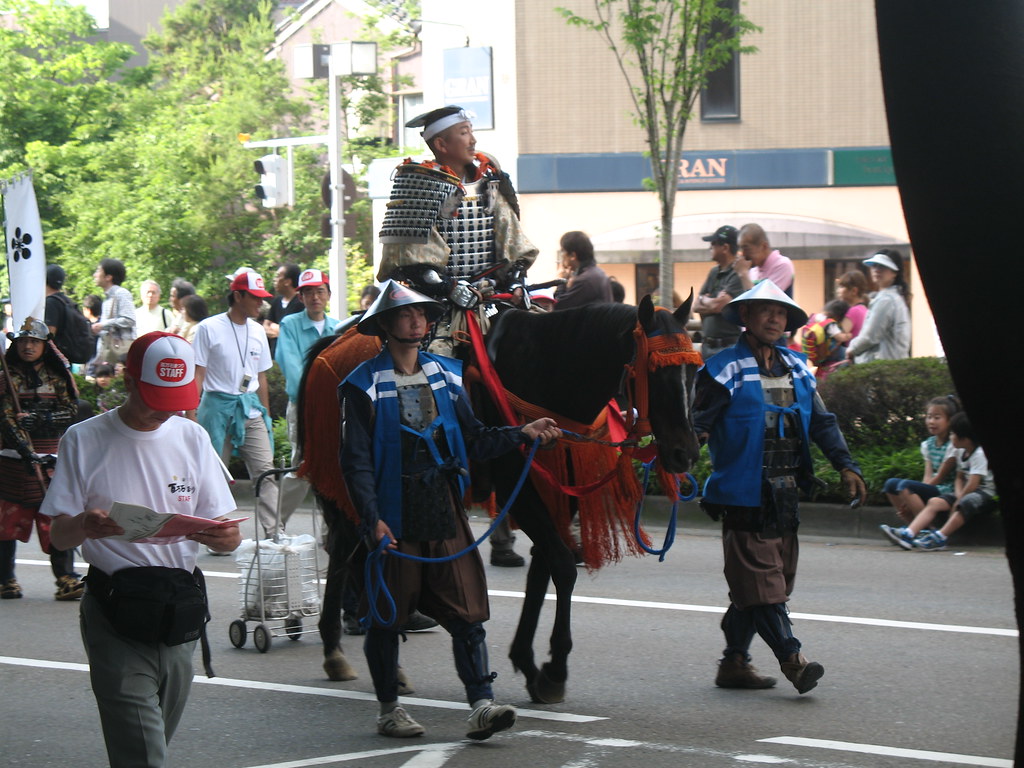
"Samurai" were in evidence. Don't mind the swastikas, the Japanese had them first.

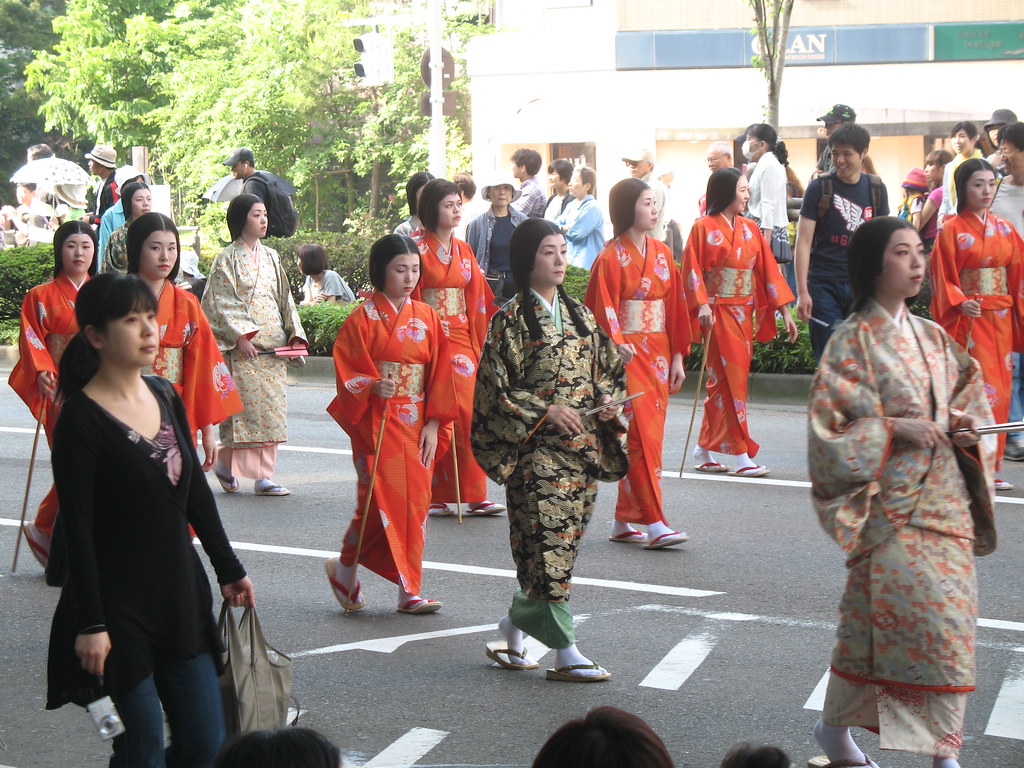
As were female noble types. Anyone who wants to can sign up to be samurai or noblewoman in the parade, and they provide costumes. People have said that the whole process is long and boring though - we'll probably not sign up for that.

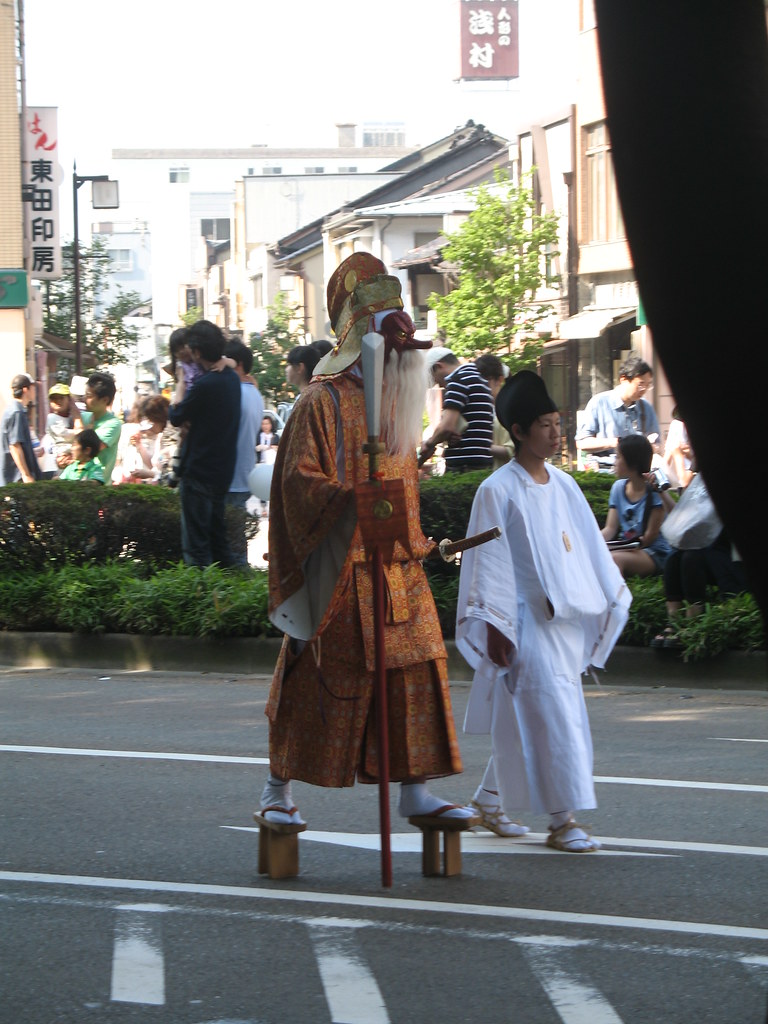
Demons walked the streets, with nearby priest to keep things under control.

The official stand-in for the long-dead lord being celebrated by the parade

The parade moved very slowly, with large and conspicuous gaps between groups. We've heard that this is usual, though I don't understand why. They definitely could have sped the whole thing up dramatically without losing anything. I'm sure the people in costumes would appreciate a 2-3 hour parade instead of a 5-6 hour one. They were probably performing for judges or something along the way, though it was quite annoying to sit for 20 minutes between groups. We watched for several hours before experiencing parade fatigue and heading home. Worth seeing the once, though we might just have a cookout at home next year, and watch the TV version over the internet. Check out pictures and several videos on Flikr.

Wednesday, June 16, 2010

Hyakumangoku Lanterns

Last weekend we attended Kanazawa's Hyakumangoku festival (translates roughly to 150-million-kilograms-of-rice festival), which is probably the largest Kanazawa festival of the year. It is the celebration of the entrance of Lord Toshiie Maeda, Daimyo, into Kanazawa. The area around Kanazawa that he was now ruler of produced hyakumangoku of rice, which is why the festival is so named. That was several hundred years ago, but they still use the excuse to throw a serious party every year. There are a few different parts of the festival celebrated over a Friday night and the whole day Saturday, and even a little on Sunday. We attended two parts, which we're going to break into two posts.

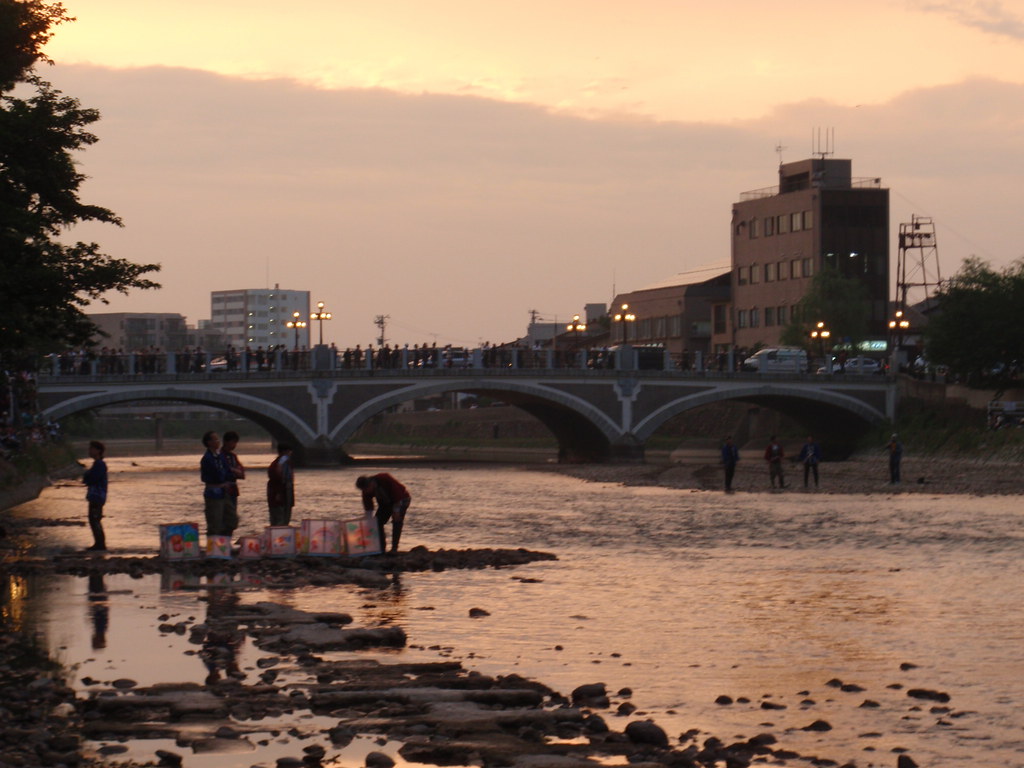
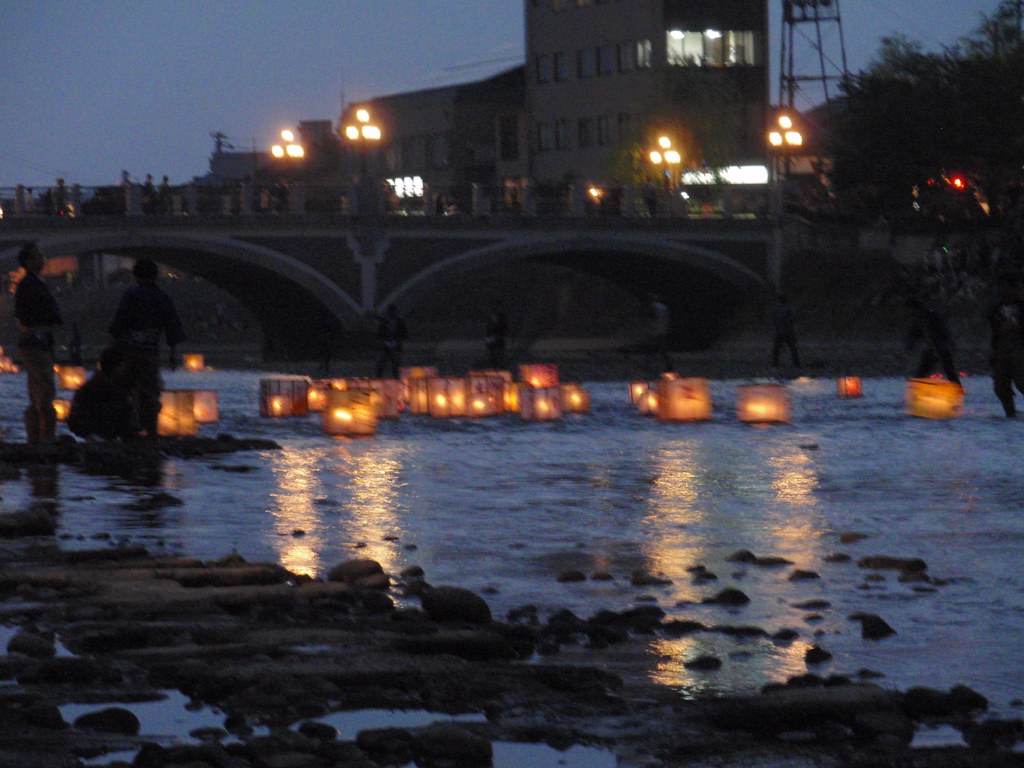
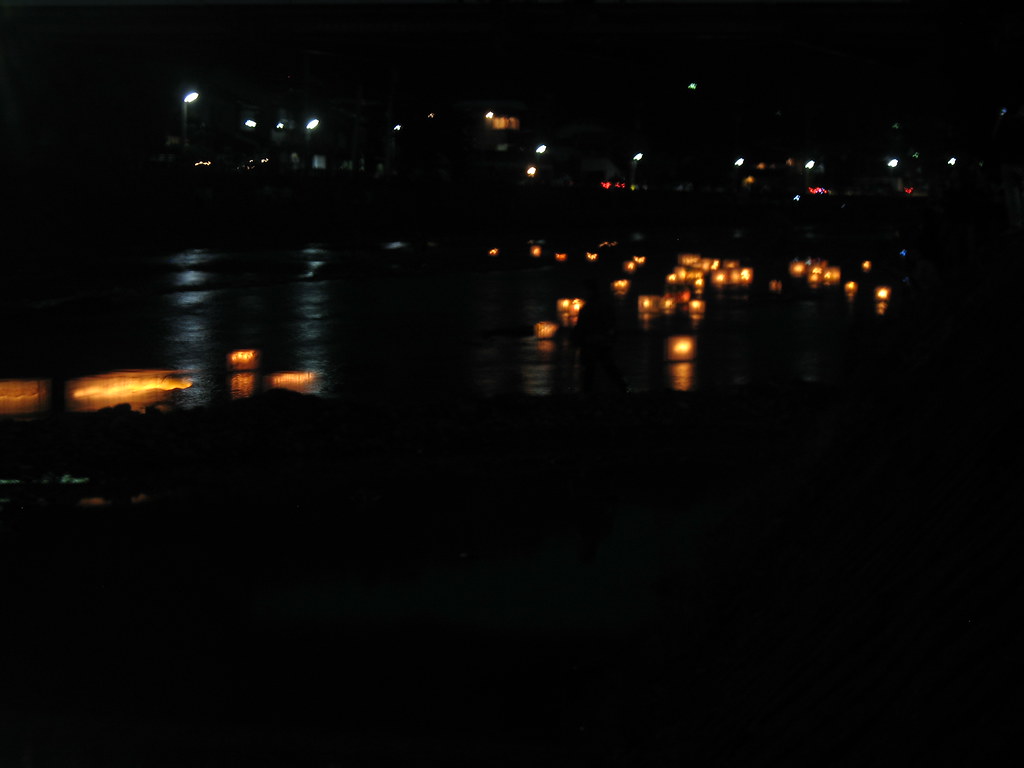
One big thing done on Friday night is to float lanterns down the Asano river for the aesthetic appreciation of several thousand people. We biked downtown after work and grabbed some takeout, then walked over to one of the older districts of Kanazawa, which features numerous temples and houses constructed in the traditional style. The Asano river runs by this district, and has grassy banks on both sides. Apparently they dredge the river mud up into winding banks inside the canal walls to speed the water flow and create pleasing curved paths for the lanterns to follow as they float down the river. The lanterns mostly come from elementary school students, with some larger lanterns in fanciful shapes being produced by sports teams and clubs higher up the educational food chain. It was very crowded in some areas, but we just kept walking until we found enough space to sit and watch without being too much disturbed, where we ate our burgers (Ana got a teriyaki burger - does that appease the sense of eating Asian in Asia?) and watched the lanterns float by in the darkness. Pictures available on Flikr.


River at Sunset

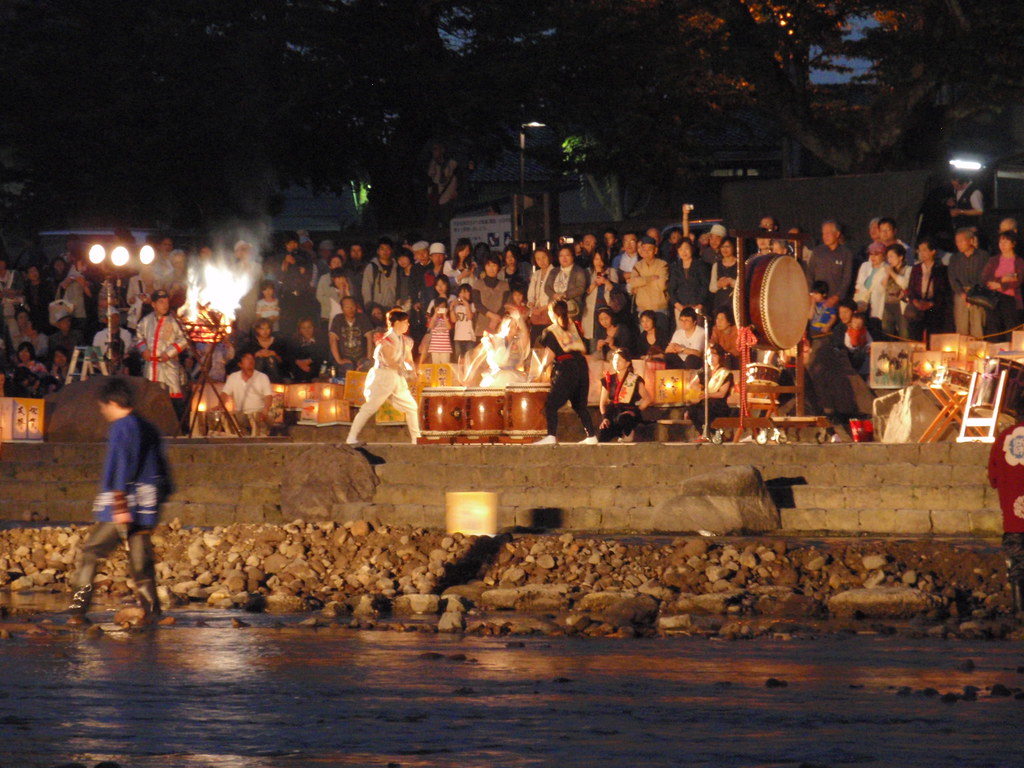
Main pavilion and lanterns

Taiko


Sunday, June 13, 2010

Kenroku'en in Early Summer / Iris

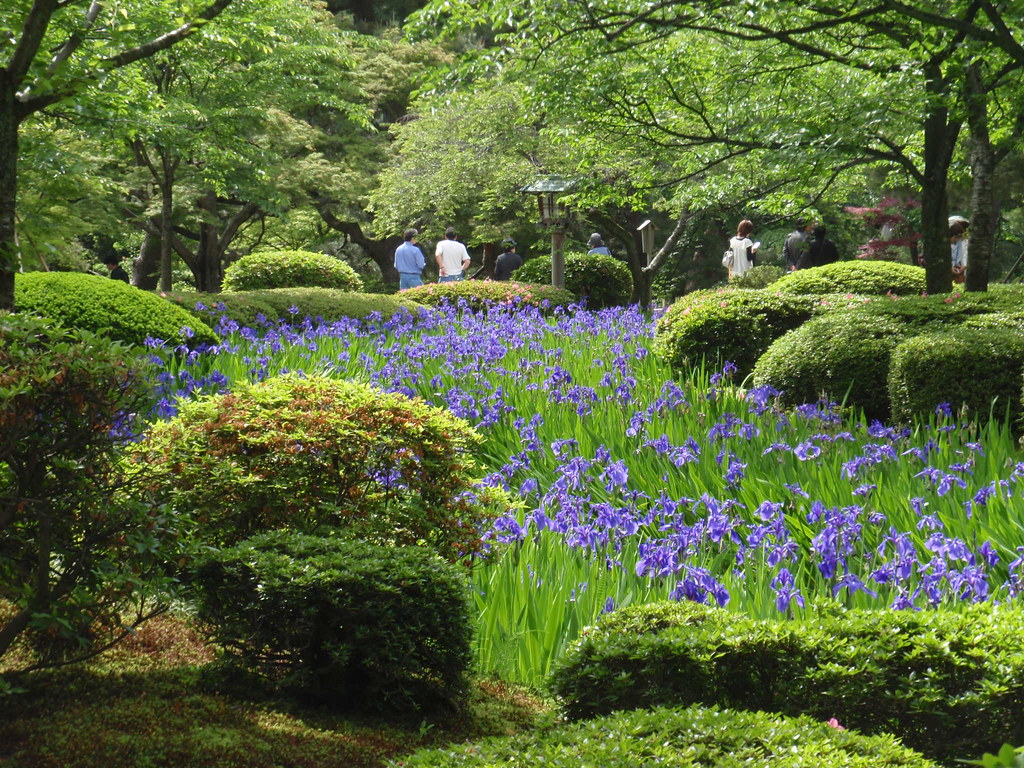
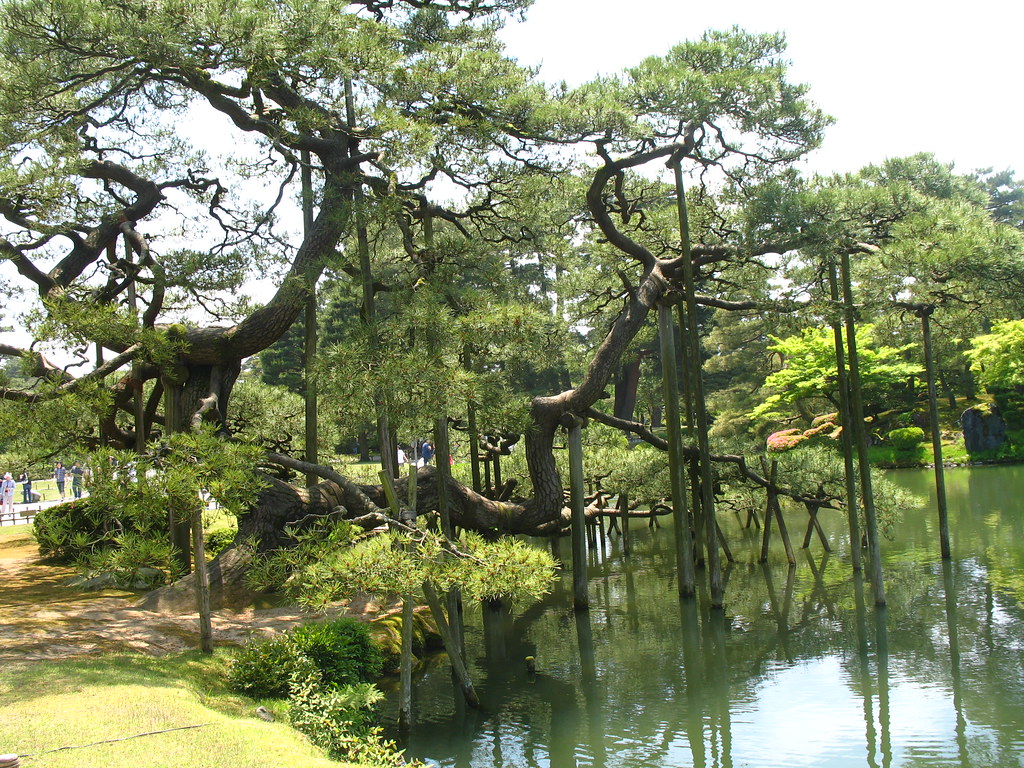
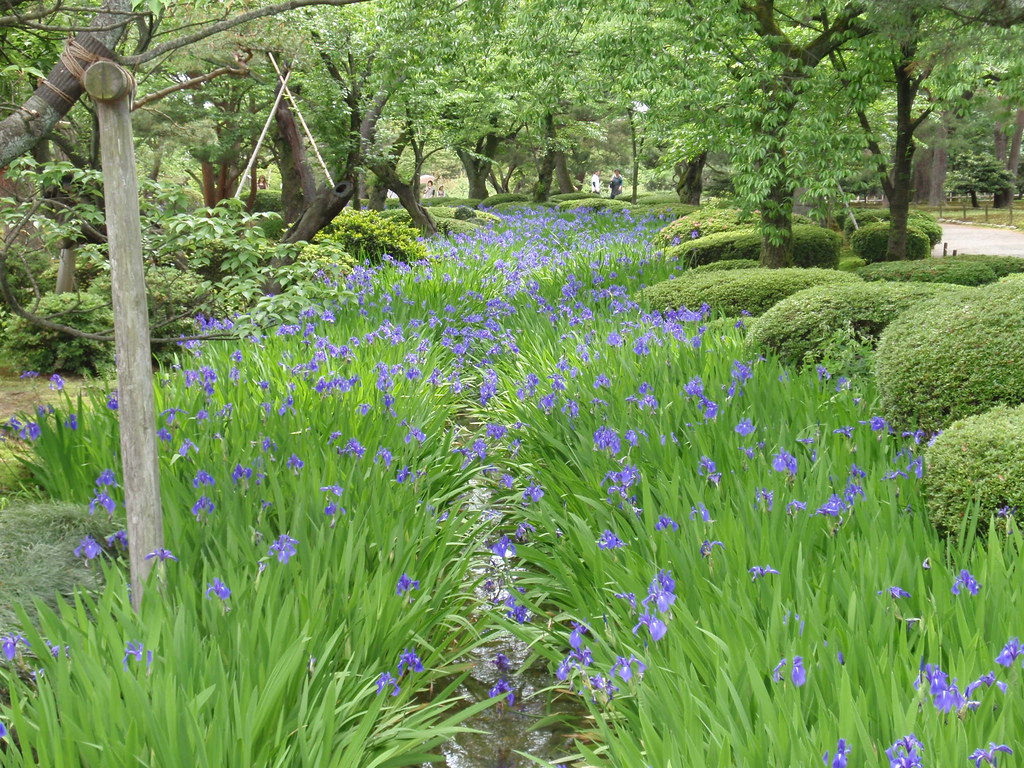
Last year we read about an iris festival, but didn't manage to find out exactly where it was or to attend. This year we did a bit more planning and preparation, and determined that there are two really big iris festivals in Japan, but neither is close by. As it would cost us many hundreds of dollars for the train tickets to go see them and being short of evidence of them being worth it, we decided to hold off and just go see the iris at Kenroku'en, which we'd not yet seen anyway. They have a few pretty significant plantings, which are easy to miss when they're not in bloom. They turned out to only feature one variety of iris, which was a little disappointing, but the weather was perfect and the admission free, so it would be silly to complain. Pictures follow and can be found on Flikr.


Friday, June 11, 2010

The Rose Garden

Every so often, I get together with some local girls to hang out and knit. As the weather has been gorgeous, we wanted to have an outdoor afternoon of nice weather and yarn. Here in Kanazawa, there is a rose garden fairly close to home, which I'd never been to before, and we ended up going there. This garden isn't huge, but it does have a large assortment of great roses.


We walked around the garden for awhile before finally sitting down and knitting under a tree. My camera's batteries had died by that point, so we have just the pictures of the roses. I don't have much to say about them, except that they were gorgeous, smelled great, and it was a great way to spend the afternoon, so I'll let the pictures speak for themselves:


Sunday, June 6, 2010

More KTC Advertisments Featuring Ana

We've shown you some promotional materials for Ana's school featuring Ana before, but they've produced some new materials and we figured we'd share.

First up is the front page of one of their information booklets, upon which they have carefully placed their one black and one female engineering instructors.


Next up, the front of another information booklet. I call your attention to the picture in the bottom center - the one with the rowboat? Yeah, they take students out of class for that for days at a time to send them to one of our seminar houses to teach them teamwork by making them row together. I personally might not publicize that.


I include the rear of the same booklet for one reason: they have the full faculty and a bunch of students posing in front of a school building. You'd think it would be, say, their own school building. In this case, you'd be wrong. That's a KIT building, which KTC students to the best of my knowledge do not take classes in. However, they've remedied that with this years' photo - we took one a few days ago in front of the KTC building.

We could probably puzzle out of a good portion of this, but it is more fun just to imagine and theorize.

This portion of the newsletter brought back some wonderful Christmas memories. They had students from Singapore Polytechnic visiting in December, and for some reason decided to hold a "traditional American Christmas dinner" for them, as a time for students of both schools to hang out. First off, they ordered a Thanksgiving dinner, not Christmas. Second, they ordered 12 12lb turkeys for about 30 people to eat. 144lb / 30 people = 4.8 pounds per person. Third, the entire meal was stone cold when served because the facilities for cooking could not accommodate all of the turkeys at once, and then it was stored it in the fridge all day before serving it after school. On the plus side, Ana brought home a nearly intact turkey in a clean garbage bag afterward and we ate off it for days.