Monday, May 24, 2010

Golden Week Trip (Day 5)

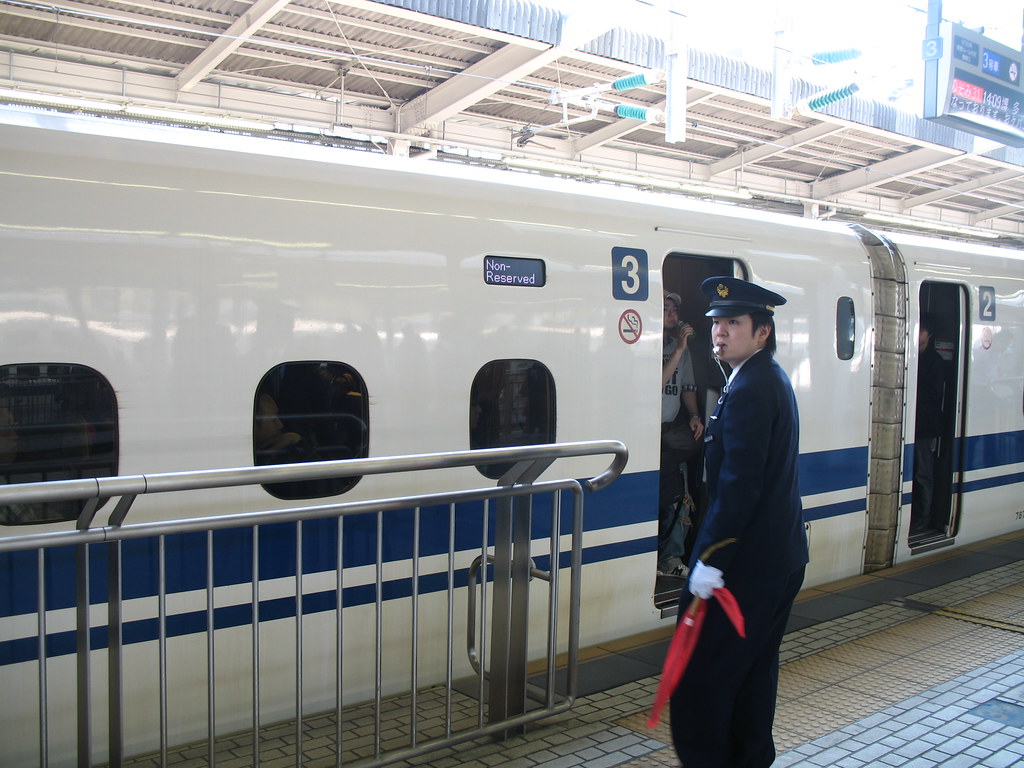
We rose bright and early to catch the first shuttle bus to town. Breaking camp proved easier and faster than we'd been anticipating, so we had some time to hang out by the beach before heading out. We then took the ferry to the local train station to grab the train to Hiroshima Station followed by the Shinkansen to Okayama.


Shinkansen

The reason that we were going to Okayama was Koraku'en, one of the three most famous gardens in Japan, along with Kenroku'en in Kanazawa and another one somewhere outside Tokyo. Okayama is on the Shinkansen line between Hiroshima and Osaka, so we were going to be passing it anyway, and figured why not stop and see something instead of just coming directly home?

We stuffed most of the heaviest stuff we were carrying into coin lockers at Okayama Station, but the lockers were almost entirely sold out and we thus toted around, among other things, sleeping bags that we had no particular purpose for that day. Dumping the heavy stuff was key, though.

In Okayama they pretty much just assume you're here for the garden and signs leading to it are easy to come by. The walk from the station is around 15 minutes and isn't complicated. When we got close to Koraku'en itself we discovered that the local neighborhood there had a festival going on, but we ignored that for the time being and moved on to the garden.

I'm pretty sure this was festival-related.

Koraku'en is probably not much bigger than Kenroku'en but it looks and feels expansive compared to it. While Kenroku'en has a lot of little areas all abutting each other, Koraku'en has enormous grass fields separating the different garden elements, giving the whole place a much wider and more open feeling. It also appears to be more coherent a design - Kenroku'en has some mess and disorganization where elements are individually stunning but do not necessarily draw strength from their proximity. Koraku'en felt to me to be more like a Western formal garden, with carefully trimmed shapes, lots of grass, obviously unnatural (though quite pleasant to look at) water features, and since most Japanese women walk around during the day with frilly umbrellas and sometimes white gloves, the whole thing felt rather Victorian, despite the bulk of the garden being undeniably Japanese.
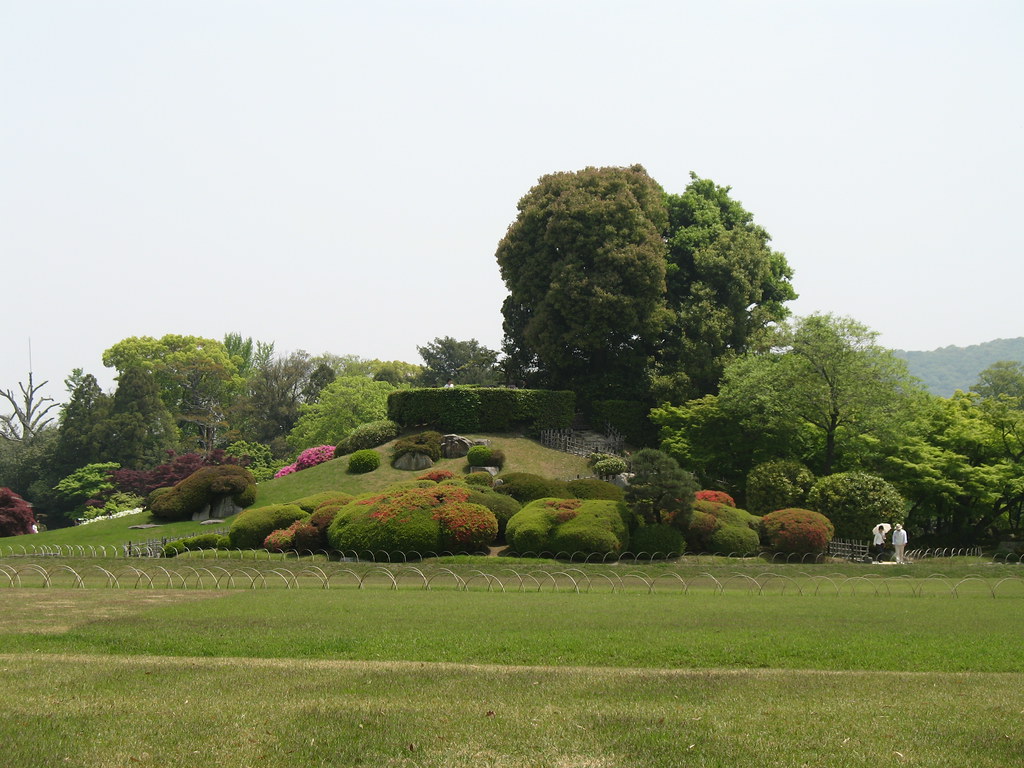
Large grassy areas that you cannot walk on
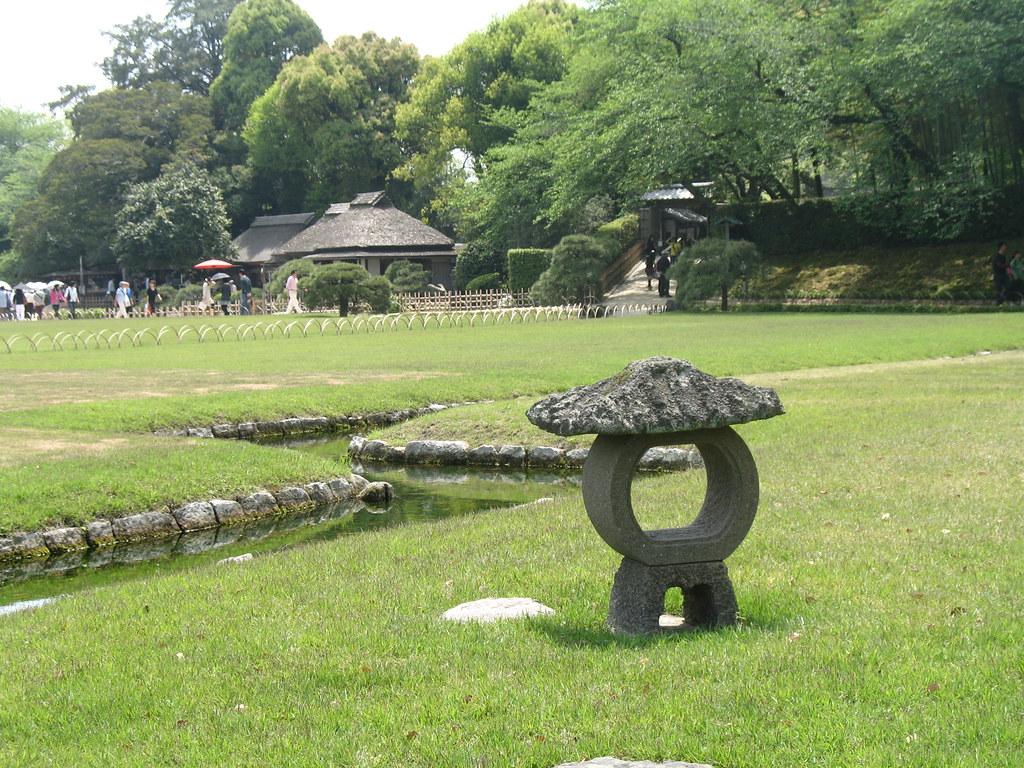
Streams meandering around the meadow
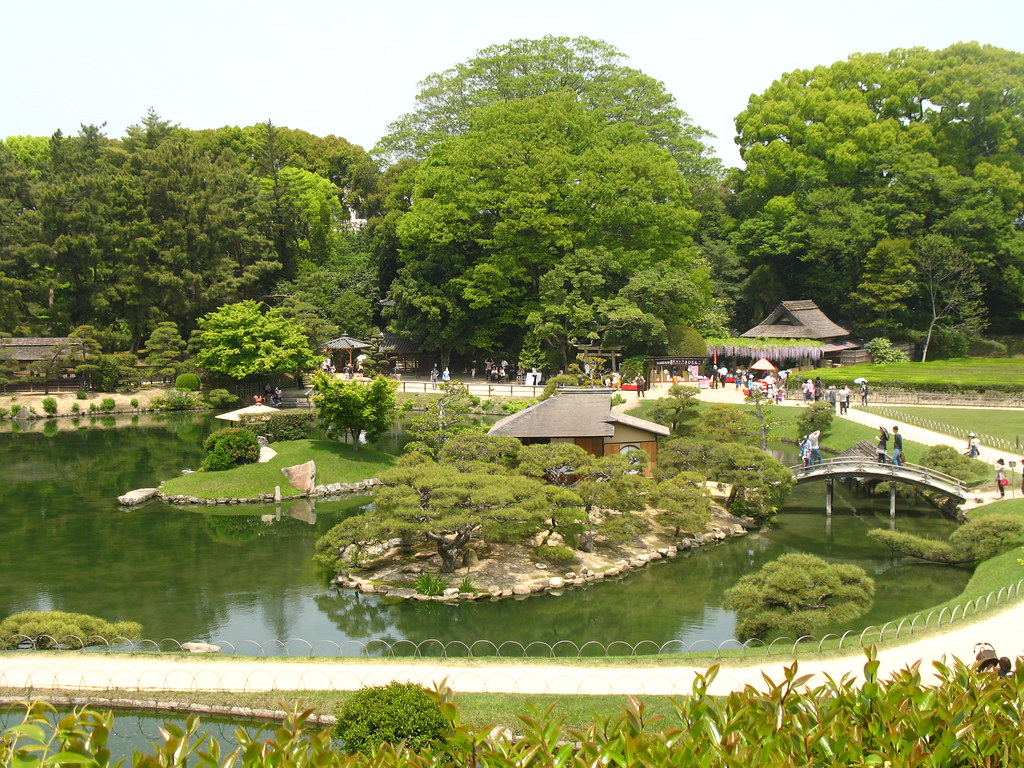
Ponds and islands were not the focus of this garden, but it had to have some


We had plenty of time between trains, so we got to see every part of the garden. We even stopped to dangle our toes in the water in the little house devoted to that purpose.

There's a time and a place for toe-dangling, I guess

After viewing our fill in Koraku'en, we went back into the neighborhood that was having the festival to look for lunch, and immediately found a restaurant overlooking the river that looked interesting, with the cheesy English name of Natural Mystic. We're pretty sure, in retrospect, that the restaurant is vegetarian, because the tasty looking burgers they were advertising (and that we both ordered) turned out not to be meat. That said, it was in fact tasty enough that I'd eaten halfway through mine before I even noticed and I'd order it again if given the chance. The hamburger buns were also the best we've had in years, better even than one usually gets in the States - chewy and flavorful with a lightly crunchy exterior. For a couple who ordinarily makes hamburgers on thick-sliced white bread because buns aren't sold in Japan, these were especially nice to have. The salad that came with the burger was clearly very fresh produce - all the vegetables in both the burger and the salad had superior crunch and flavor.
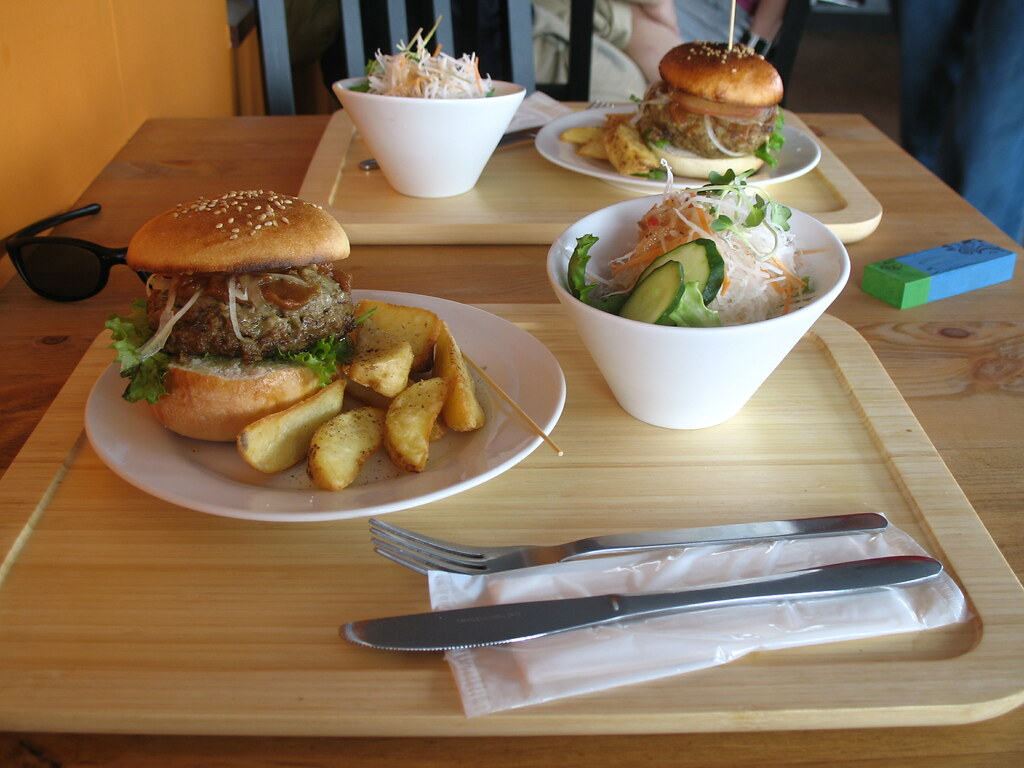
Better than a significant percentage of all-beef burgers I've eaten
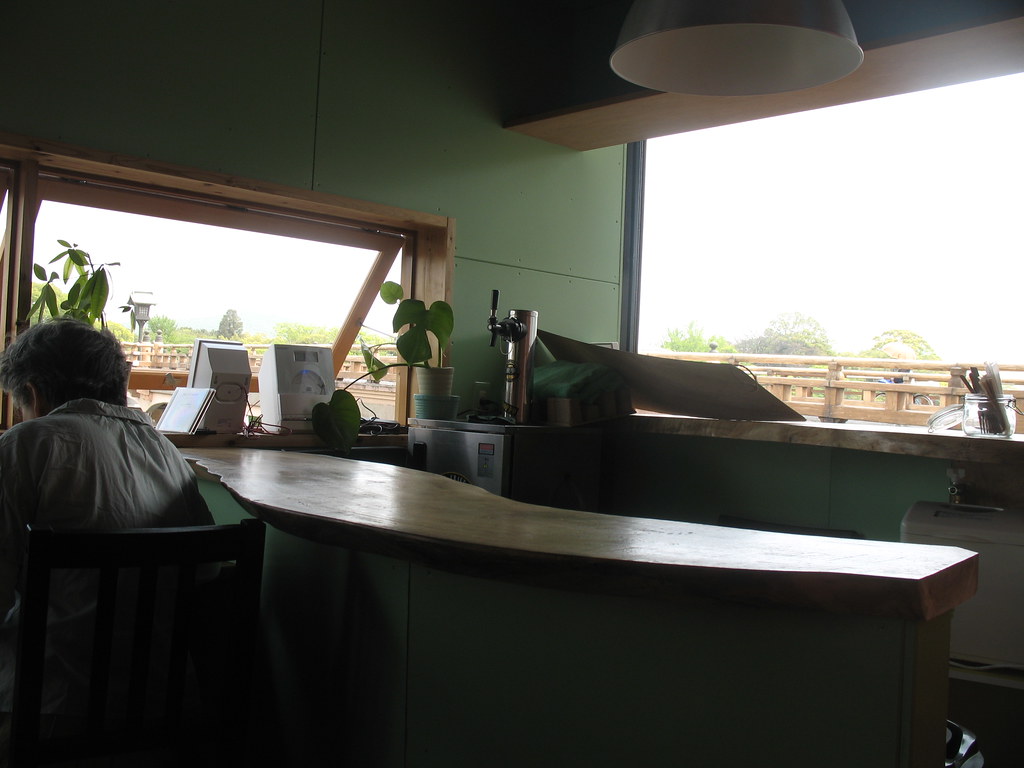
Bit of a hippie place but whatever it was good

Crunch and flavor aside, Ana was not as thrilled as I was with lunch (she objects to fake meat products on the grounds that if you're a vegetarian you should just suck it up and not pine for meat or meat substitutes - I don't necessarily agree) and she swiftly conducted us to a dessert cafe right down the road to find a supply of that which makes everything better in her life - sugar. The place was called the Plywood Cafe, and like Natural Mystic it was definitely a little fruity. However, the desserts turned out to be amazing, my confection was one of the best desserts I have ever had, and exhibited a wonderful subtlety and balance between sour grapefruit and the sweetness of everything else.
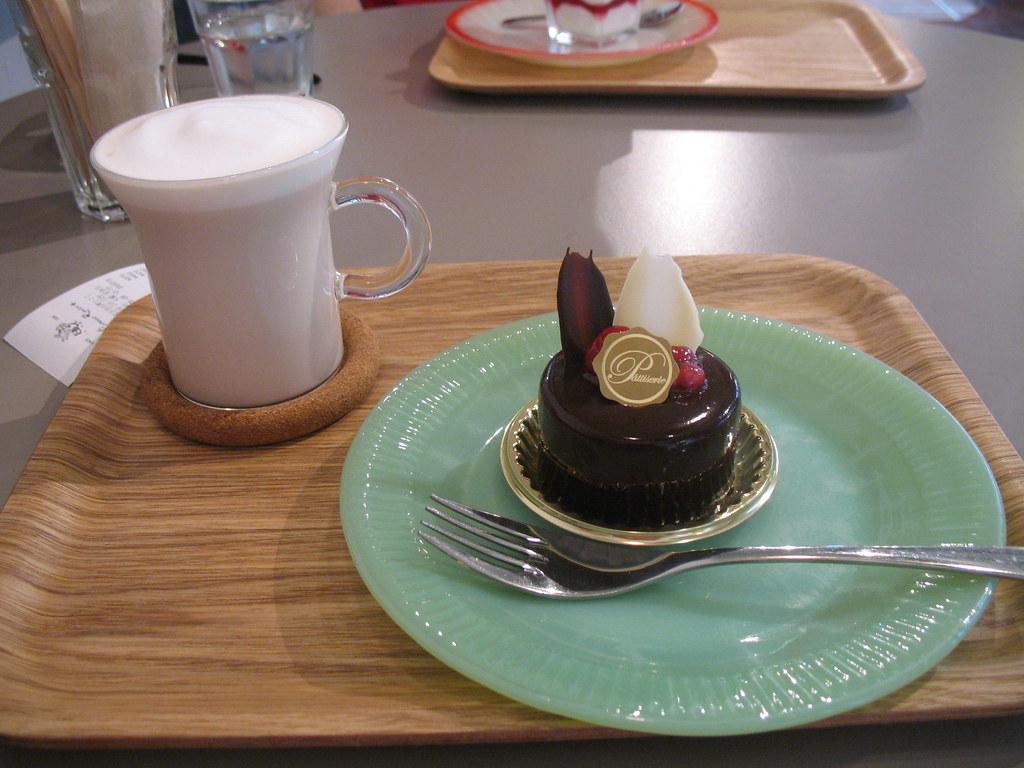
Ana was troubled and required desserts
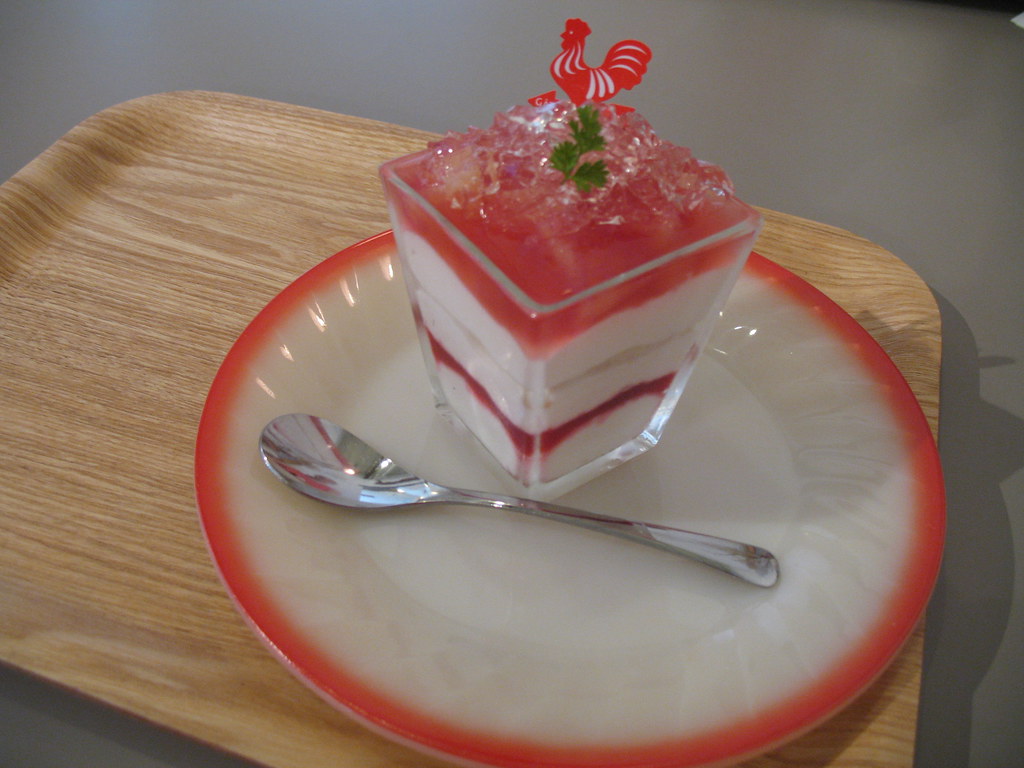
Superior confection

Desserts consumed, we headed over to Okayama Castle, which is adjacent to the garden. Like Hiroshima castle, it is also a replica, though Okayama's castle was destroyed by incendiaries rather than an atomic bomb. The usual museum exhibits were supplemented by a display of extremely detailed historical information relating to this specific area in Japan during the times of turmoil when Japan was beginning to shed its feudal structure for that of a more modern state. I felt it was a lot like "and so-and-so begat so-and-so" except that instead of begat it was "rebelled against" or "suppressed the rebellion of" but Ana liked it and I didn't mind it, so since we had the time it wasn't bad.
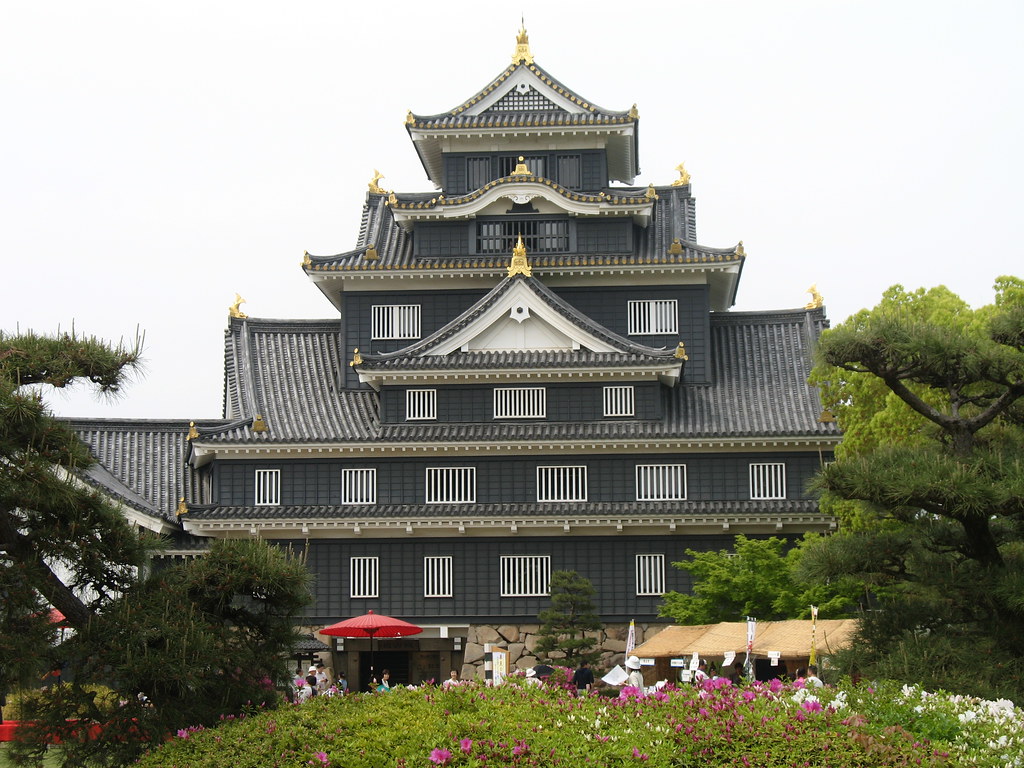
Okayama castle 2.0

After all that, we still had two hours until our next train left, so we found a park bench by the river and I snoozed while Ana read her book. About about an hour before our train, we walked back to the station to head back to Kanazawa and work the next day.
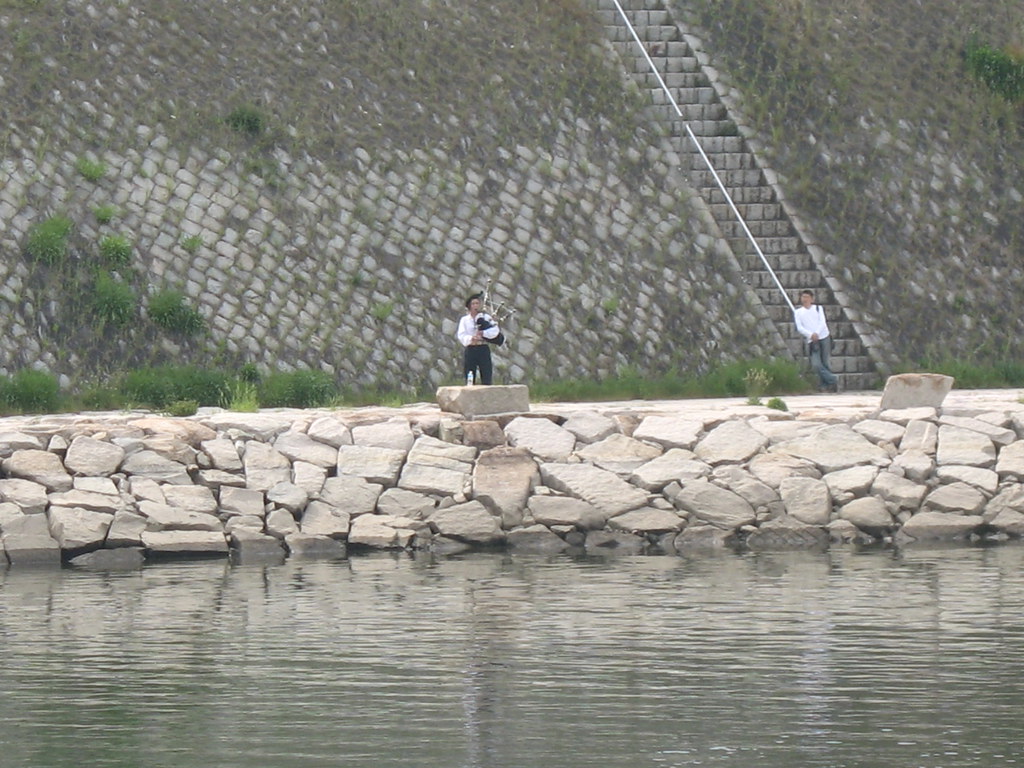
Ana felt it was very important to mention that shortly after beginning to walk back to Okayama Station, someone on the other side of the river started playing bagpipes. They weren't a beginner but they weren't expert either. It was fairly surreal to walk around in Japan to the sound of bagpipes.

Saturday, May 22, 2010

Golden Week Trip (Day 4)

We had a longish day planned and so arose much earlier than usual (maybe 8am instead of 11, the horror!) to get started. We took the shuttle to the ferry to the train to Hiroshima Station, where we bought streetcar passes for the day and headed into the city.

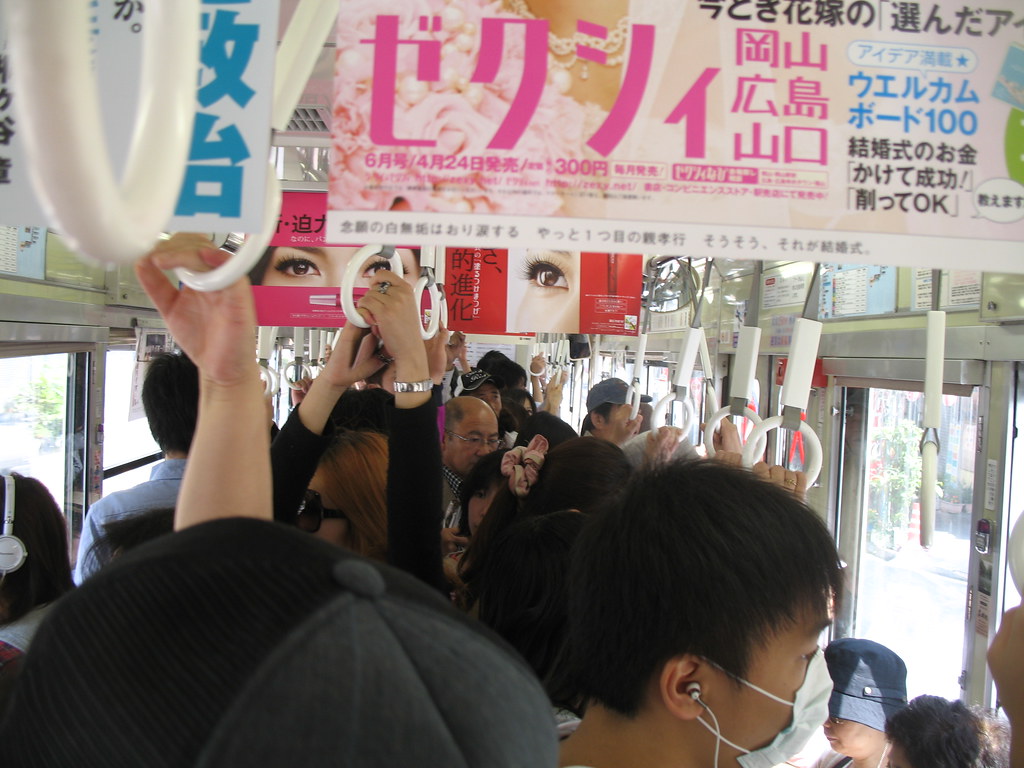
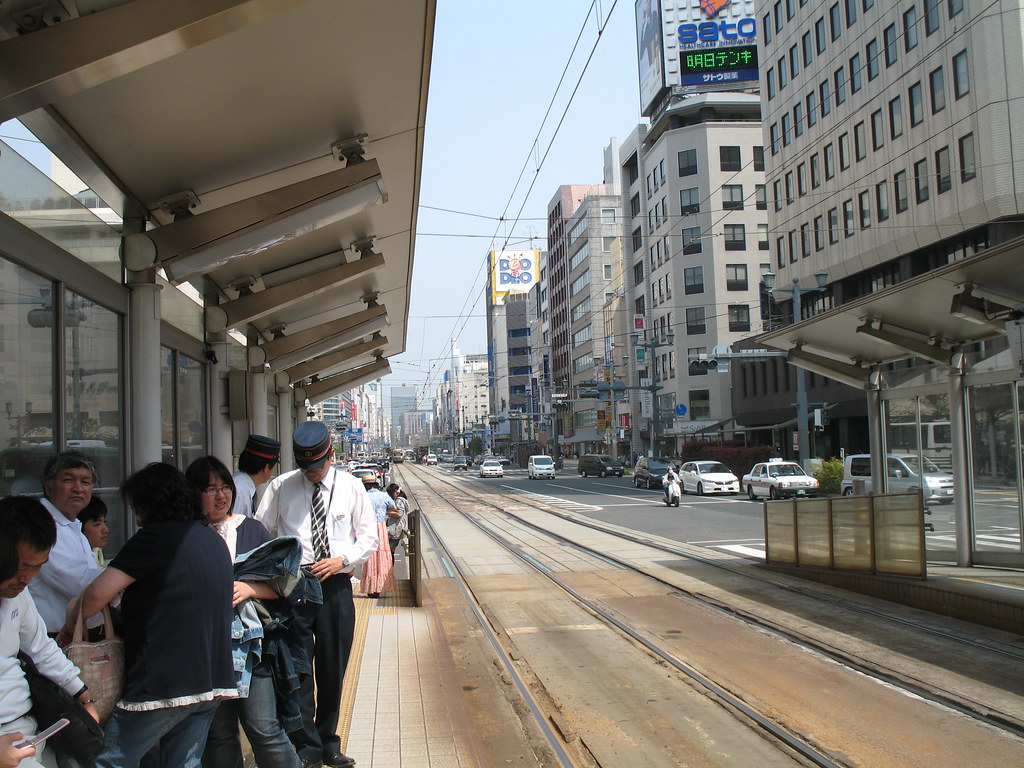
Streetcars are apparently relatively common in this area of Japan, and they do work, but I'd take the Tokyo subways over them any day for efficiency and speed. That said, I'm not sure I've ever ridden a streetcar before and now we have, so I guess that counts for something. It was quite crowded heading out from Hiroshima Station but the line went directly where we needed it to so we didn't take too much effort to achieve our destination.

Streetcar station

Streetcar interior

The first order of business for the day was the Hiroshima Peace Memorial Museum and the surrounding monuments. The Memorial Museum commemorates and documents the atomic bombing of Hiroshima. While some aspects of the museum desperately need updating, the relics, photographs, and information on display communicate the effects of nuclear devastation such that even the most jaded or prepared viewer is likely to be pierced by horror and solemnity during the experience. While photography was allowed in some areas, we did not take pictures inside. It did not feel right to do so. Other people have, and you can see their images on Flikr, if you like.

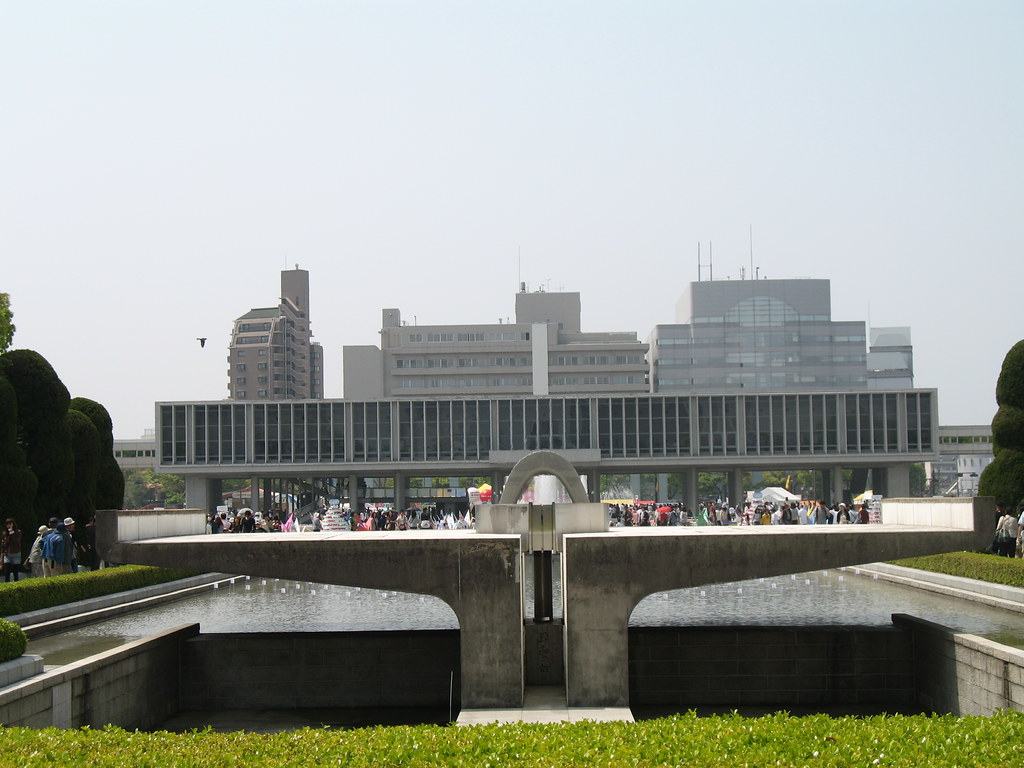
Museum exterior - under that little half-circle in the middle is a stone box housing a book in which is written the name of everyone killed in the bombing

For me, many of the historical aspects were reasonably well known from prior classwork, but I still learned new things, particularly to do with the Japanese perspective. The historical documentation was well done and well supported with source documents rather than commentary, though it was perhaps a bit dry in places. I'd heard that the museum was not entirely balanced in its viewpoint on the war and the bombing, but we found that at least the English translations of the exhibit notes were scrupulously fair and open. They show the military Japanese installations in Hiroshima that were destroyed, they mention Japanese atrocities such as the Rape of Nanking*, they show copies of documents from the high command and the American thinking behind the when and where and why and how of the bombing, and then pretty much leave it open to you to decide whether it was right or wrong (or whether that question is irrelevant). It's simply presented as "these people thought it was necessary for these specific reasons, and this is how it occurred". There are a few times where some rhetoric is used, such as one sign mentioning the "hundreds of thousands" killed in the bombing while everything else states 140,000, and while it is mentioned that Korean and Chinese were working as Japanese prisoners, it is also stated that they had survived their ordeal and would have been sent home safely if it hadn't been for the bomb. It does not paint the Japanese as blameless or the US as murderers, but works to illustrate how awful the effects were and expresses a firm message in favor of global nuclear disarmament**.
The historical aspects were informative, but it is the relics and photographs that get you. The circumstances and right and wrong are debatable, but the effects of the atomic bombing are not. I don't particularly care to describe many gruesome effects and stories here (go see it for yourself) but I'll put one piece of it out here.

At the end of WW2 the US was carpet bombing Japanese cities (still featuring paper houses) with incendiary bombs, killing many hundreds of thousands of people. The order came down in the areas still standing to establish firebreaks around important and military areas to protect them from fires. Japan at this time had almost no available manpower with which to effect large deconstruction projects across significant metropolitan areas, so they drafted junior high school students to do the work. The high school-ers had already been drafted for other efforts. Thus, in downtown Hiroshima on the day of the bombing, many thousands of junior high school students from around the region were at work outside creating firebreaks around the very targets that the atomic bomb was aimed at. Nobody in that close survived in the long run - these children either died instantly or more likely died from burns and radiation in the days and weeks that followed. The museum has several work uniforms worn by children on that day, plus additional replicas. The uniforms are very small. They might fit an American child of six today, though their wearers were between 11 and 14 then. The originals are mostly made from different pieces removed from different children after fire took the rest. Illustrations drawn by survivors show lines of burning children, fallen where they had stood.
If you can stand in front of those tiny, charred uniforms and not cry...I couldn't.

The message reporting the bombing was sent by high school girls, in a bunker in the hills. They were in charge of the air defense communications of the city.

That's about all I have to say about the Memorial Museum.

Upon leaving, we viewed the other memorials in the park with increased respect, and walked across the restored Aioi bridge, which was the aiming point for the bomb because of its distinctive "T" shape, with three roads meeting. I didn't realize it until halfway across.

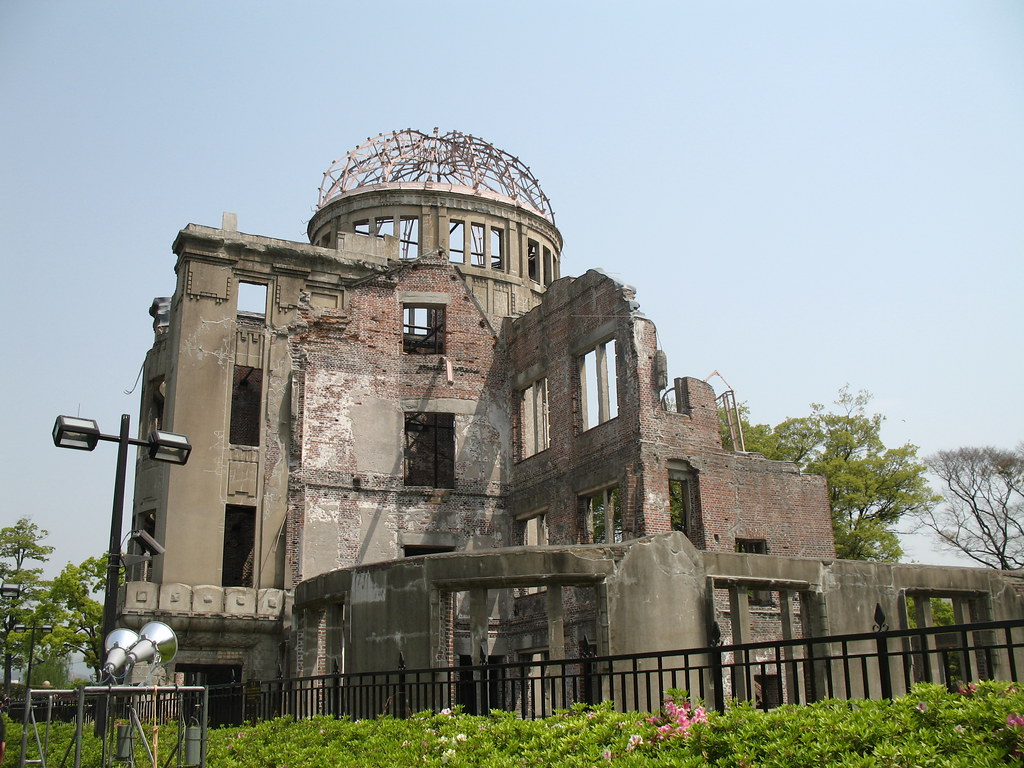
Famous dome that survived the blast by being so close to the center that the shockwave faced almost directly down instead of outwards

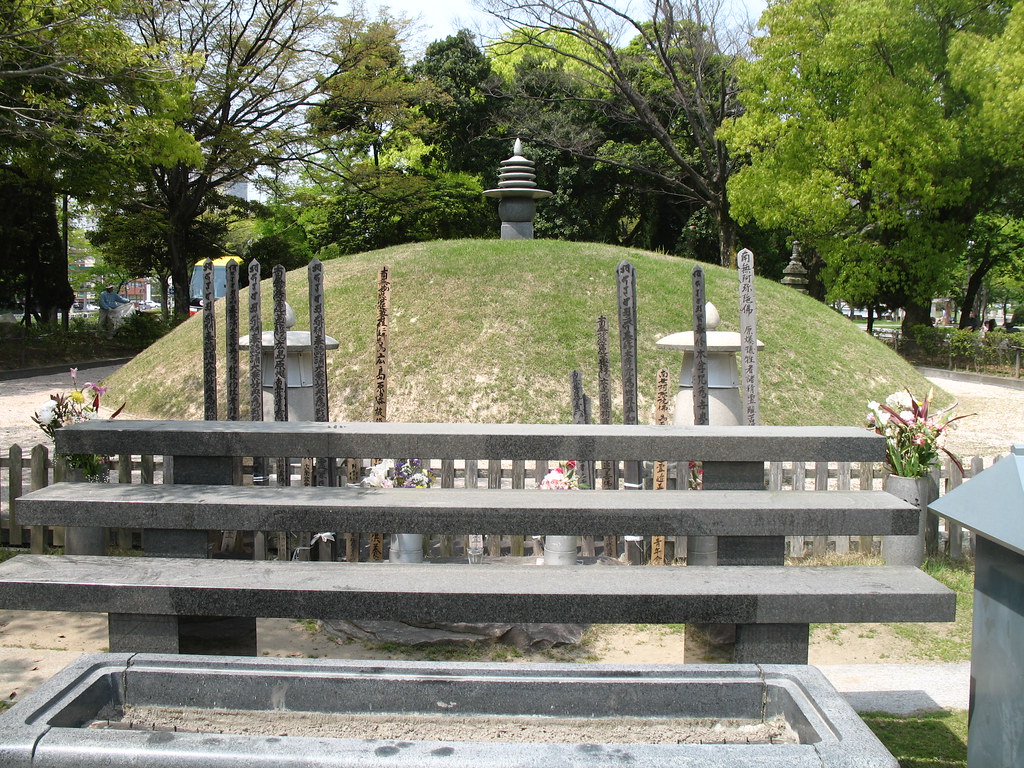
This mound houses 80,000 urns containing the ashes of those who could not be identified

We found afterward that we still managed to be hungry for lunch. Life goes on. The Museum is smack in downtown, so we walked out of the park and found a restaurant area on the top floor of a mall. We were browsing different places' menus until we found an inexpensive all-you-can-eat Italian buffet and then the choice was clear. The food was better than I would have expected but I would have settled for hot and filling so hot, filling, and fairly tasty was a bonus. Ana tested little samples of a lot of things, decried the presence of non-traditional pizza toppings on all of the pizzas, and then hit the dessert cart like a swarm of locusts. We both left stuffed.

After that, we consulted our streetcar map of tourist attractions and found there were two more items of interest for us this day, those being Hiroshima Castle and Shukkei Garden (Shukkei'en). The map, another caricature, made it look like they were both far apart and almost outside the city proper, but in reality they were almost next to each other and about five minutes walk from where we stood, so pleasantly we were able to go to both instead of having to choose just one.

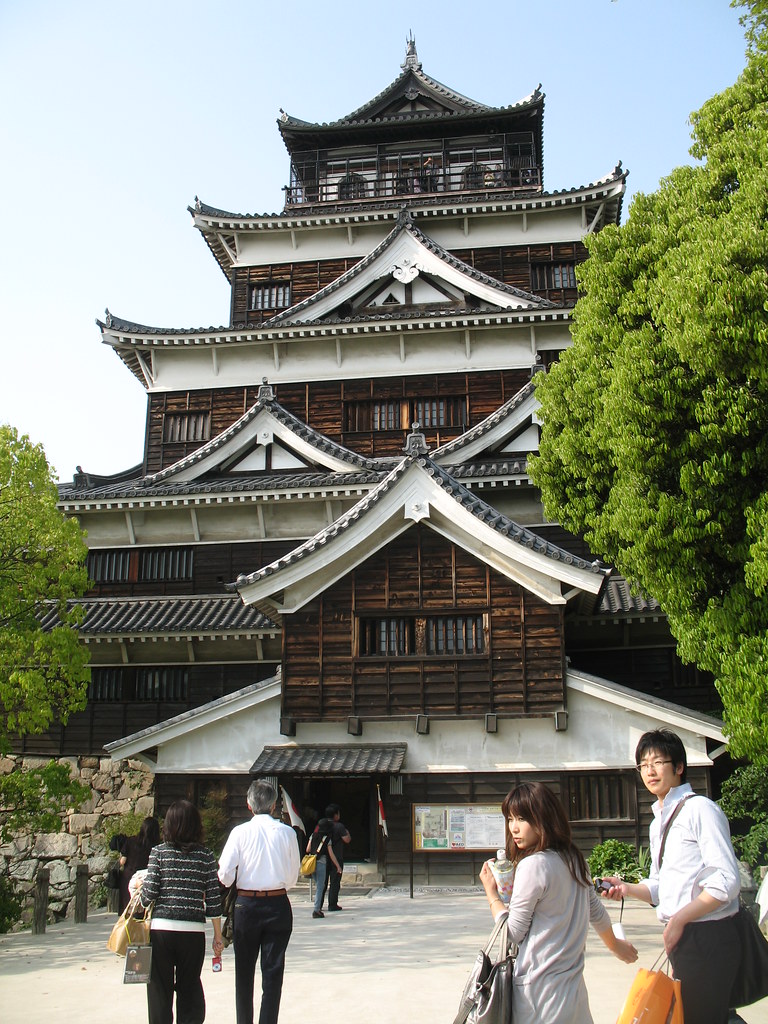
Hiroshima castle 2.0

The castle is a replica, built on the site of the old castle. The original was, of course, obliterated in 1945. It has a museum inside that was pretty well done, with information on life in medieval Japan and the different types of castles and so forth. We had a good little tour and some parts were quite pretty.

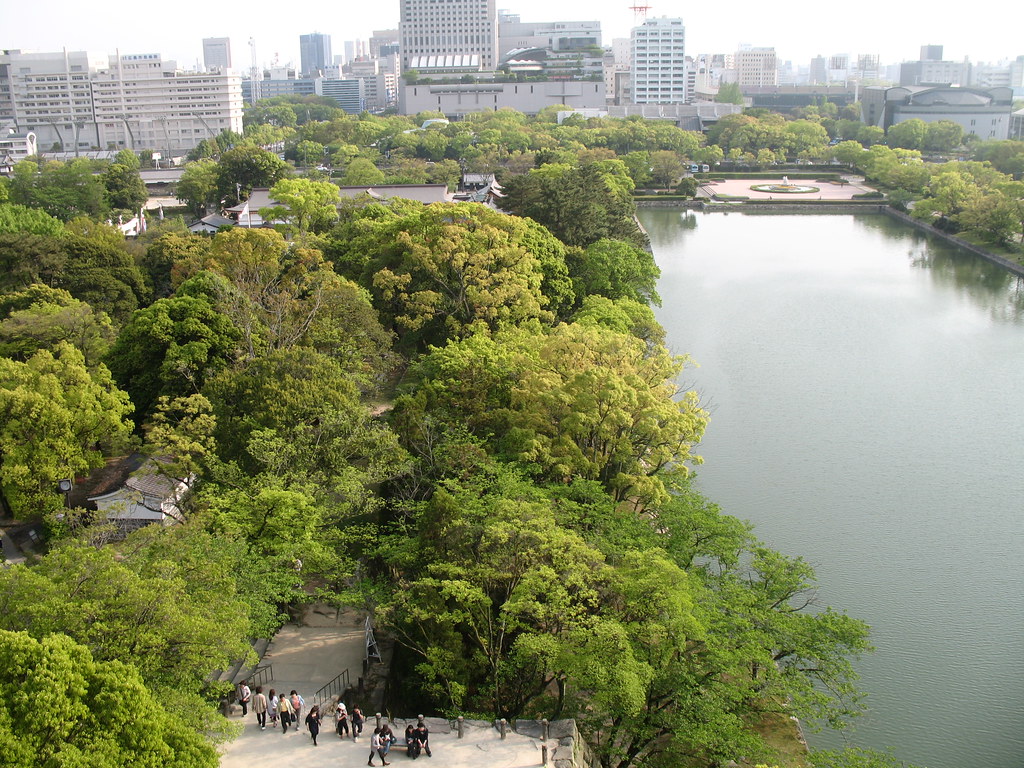
View from the top of the castle

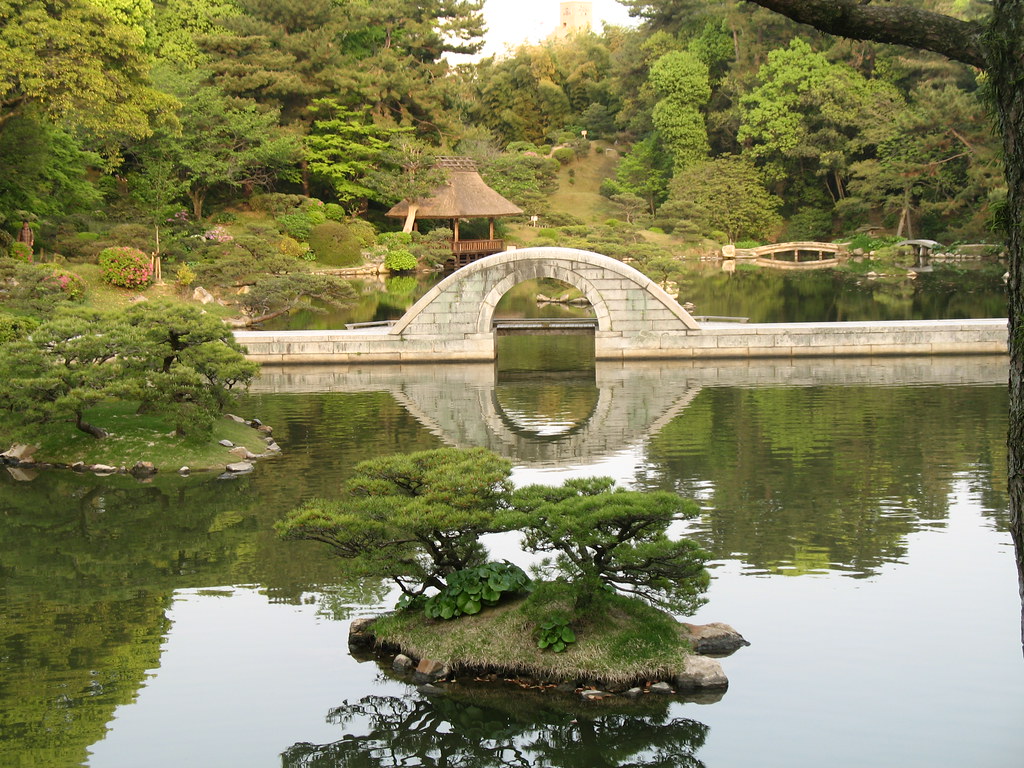
We got to the garden about 35 minutes before closing time, but fortunately for whatever reason they were waiving the usual entrance fee on that day so we didn't have to pay full price for an abbreviated visit. While we didn't have time to ponder every aspect of Shukkei'en we did see most all of it, and found it to be a very nice small garden. There were some elegant granite bridges and a lot of little shaded interconnecting paths around the central ponds. I think Tokugawa'en in Nagoya is still my favorite but this one was entirely pleasant for an evening stroll.

Garden, viewing the long way across the main pond

Even after walking around for hours, we were still full from our gargantuan lunch, so we just picked up a few snacks in case we felt peckish later and headed back to camp for our final night there. In the morning, we'd be heading home with a stop in the city of Okayama, which will be featured in the next post.

*Historical Note: The Japanese military killed hundreds of thousands of civilians with bayonet and bullet in the captured area of Nanking, China during WW2; the Japanese claim 100,000-200,000 deaths and the Chinese claim 400,000 or so, according to Wikipedia. Additionally, widespread and systematic rapes were engaged in by the Japanese military. To my mind, this is far more offensive than even the horrendous death toll of Allied carpet bombing in Europe and Asia (and the atomic bombing) simply because the carpet bombing stopped immediately upon surrender, while the Nanking atrocities took place principally in an occupied and controlled area. Nanking was so bad that some Japanese nationalists deny it ever happened, despite overwhelming evidence, including video, to the contrary. I feel it is relevant to the atomic bomb in the sense that before death visited these Japanese citizens, their country too had killed innocents on a large scale. This doesn't ennoble our actions at all, but lessens a sense of injustice about it and puts the results in the context of the carnage of the day.

**I think this would lead to a sharp increase in the likelihood of large scale conventional (and thus eventually nuclear) warfare. Mutual Assured Destruction is insane, but keeps the big boys from going at it. Global nuclear disarmament is a task for a world much flatter and safer than today, though non-proliferation and arsenal downsizing efforts so far have made sense, and further steps back from the edge can (and should) be made without endangering the overall strategic equation.

Thursday, May 20, 2010

Golden Week Trip (Day 3)

We slept in again pretty hard, making for another very long sleep. Since we'd been going to bed around the time it started getting seriously dark and sleeping in well into the morning, we probably averaged over 12 hours a night while on this vacation. Part of that was losses due to sleeping on the ground, but I'm sure we also paid some sleep debt.

We took the shuttle bus into town, and for the first order of business we visited a ryokan to hit their public onsen (hot spring) and get clean. This would have been pretty weird when we first arrived and I must report that no qualms remain about this method of public bathing, at least when I needed to get clean as much as I did after a day of hiking and a campfire. Getting clean again was definitely worth the $5 per person cost to use the onsen, and the male side was totally deserted, which was pleasant.

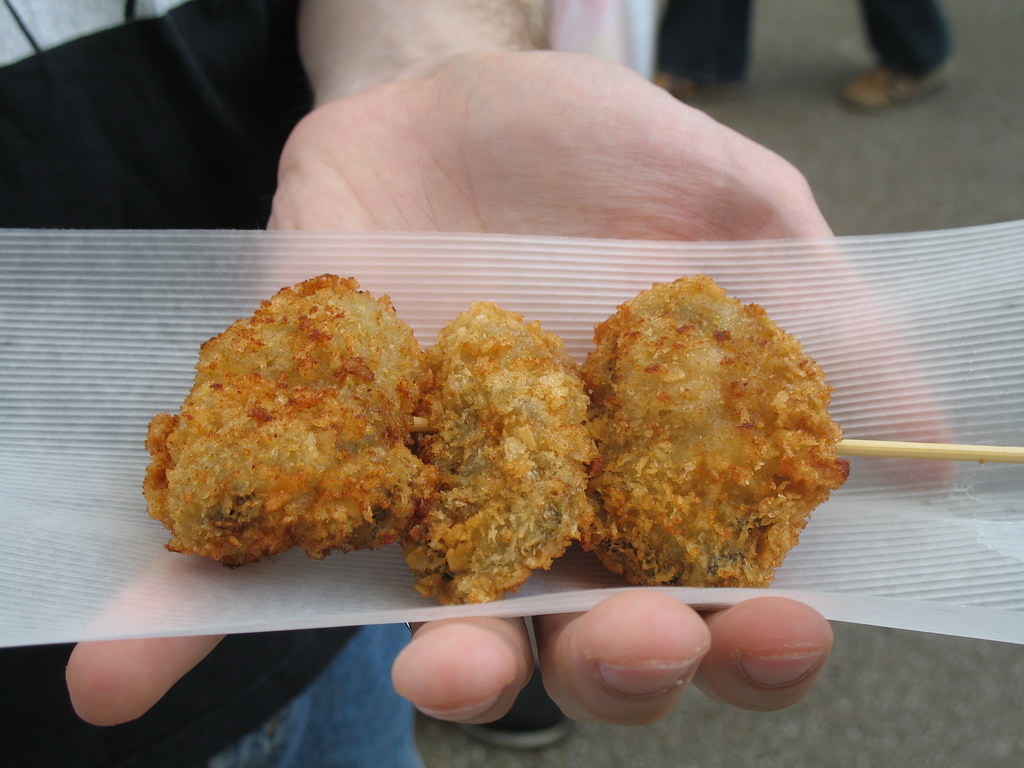
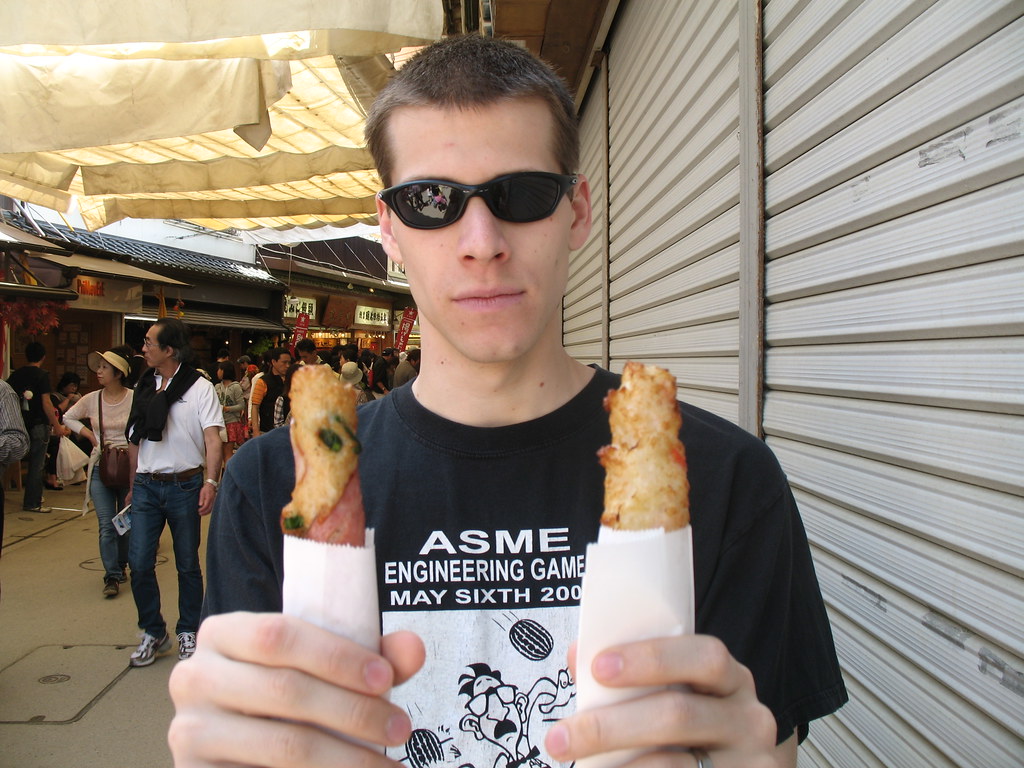
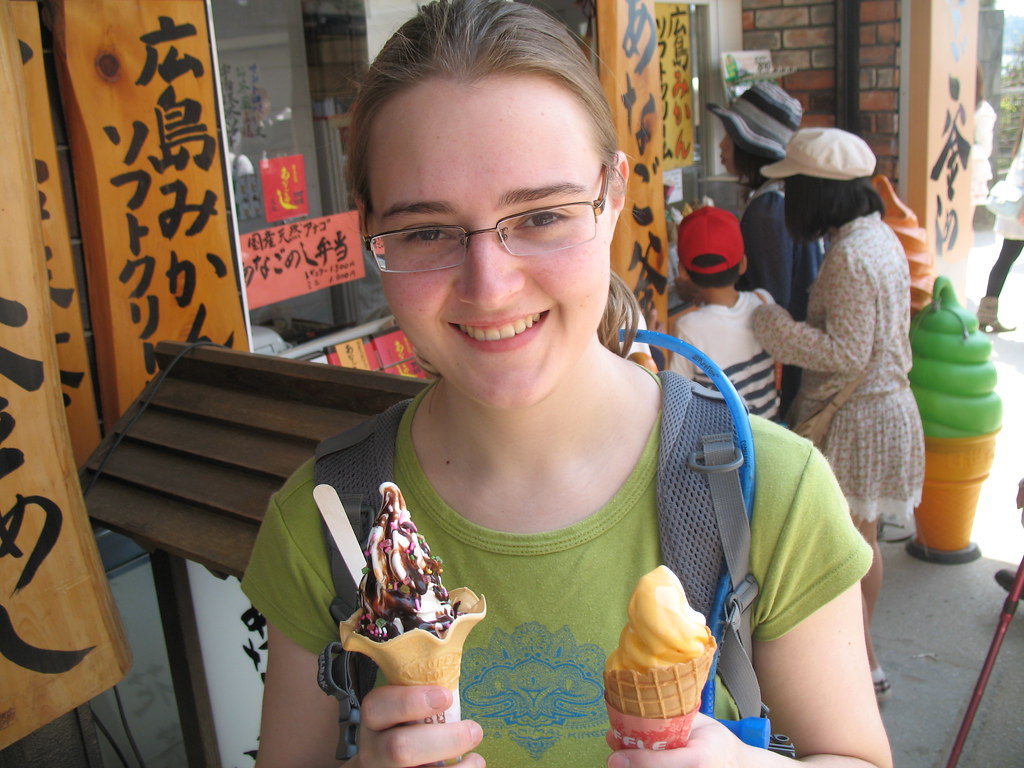
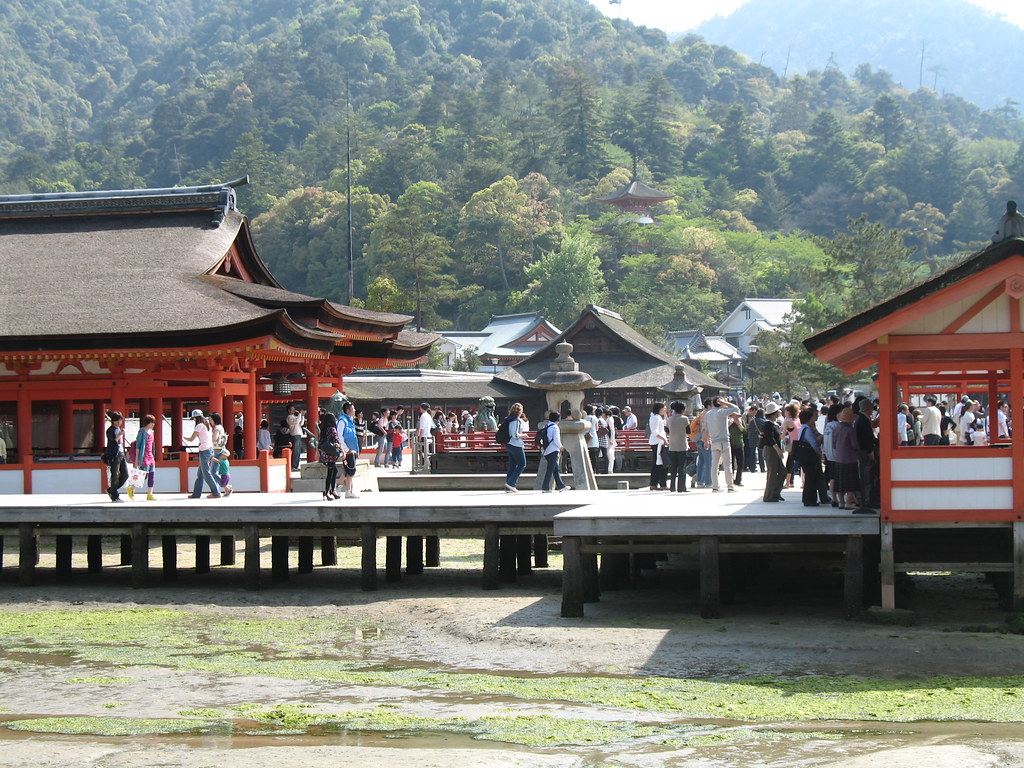
After that, our plan of action was street food and shrines, and since they're all tangled together in the town that worked pretty well. We had roasted oysters and fried oysters and giant fried flavored fish cakes and ice cream while wandering the town, then bought tickets to the famous Itsukushima Shrine. Itsukushima is a World Heritage Site and the Japanese all have warm fuzzy feeling for it, but our investigations indicate that while the structure is large it is also almost entirely empty aside from the bajillion Japanese people visiting it. It is a very famous place and quite pretty on pilings on the tidal plain, but not breathtaking.

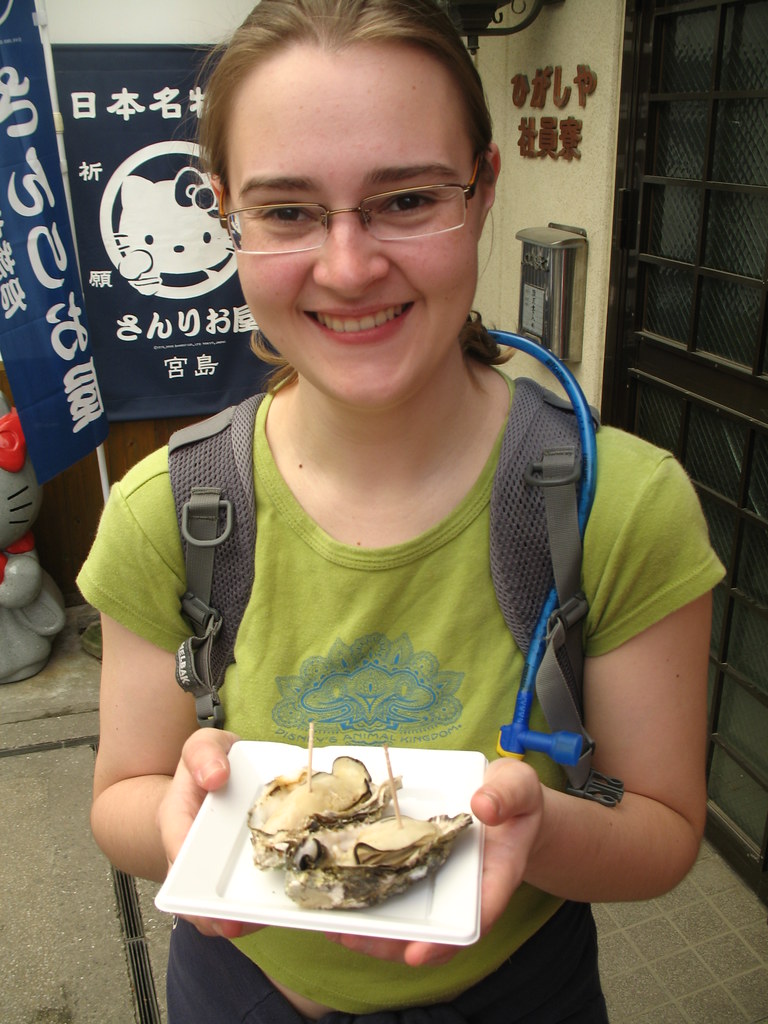
Grilled/roasted oysters

More fried oysters

Deep fried cylindrical fish cakes - pretty edible actually

Ice cream

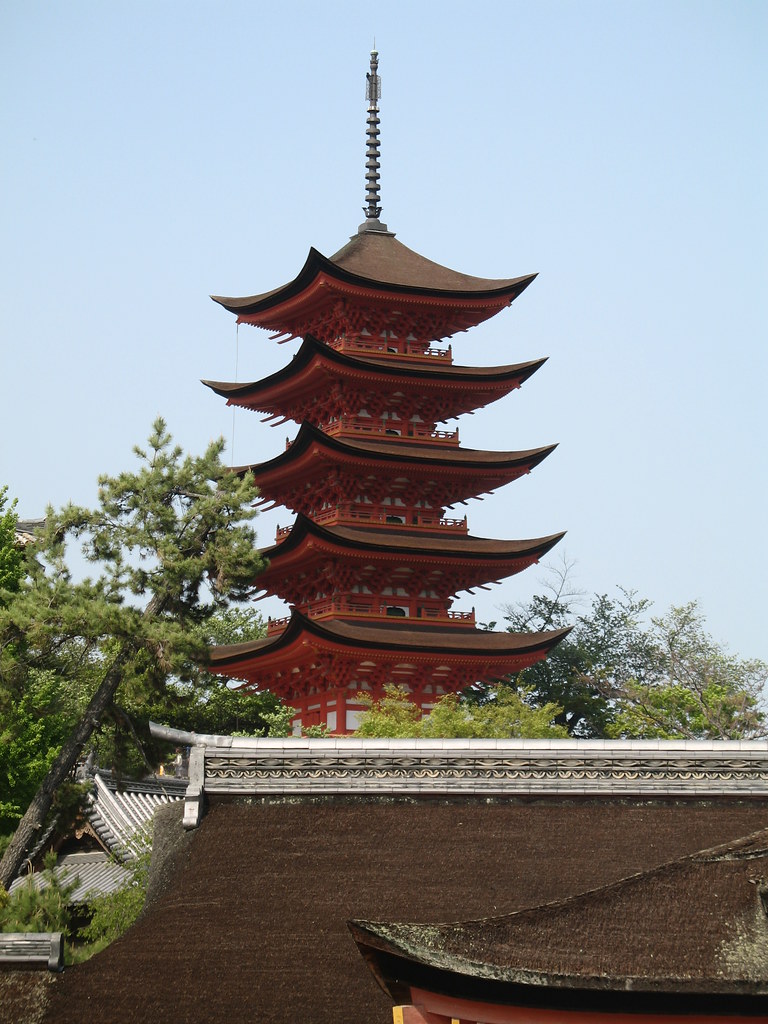
Miyajima is a good place to go for pagoda appreciation.

Itsukushima, from the shore

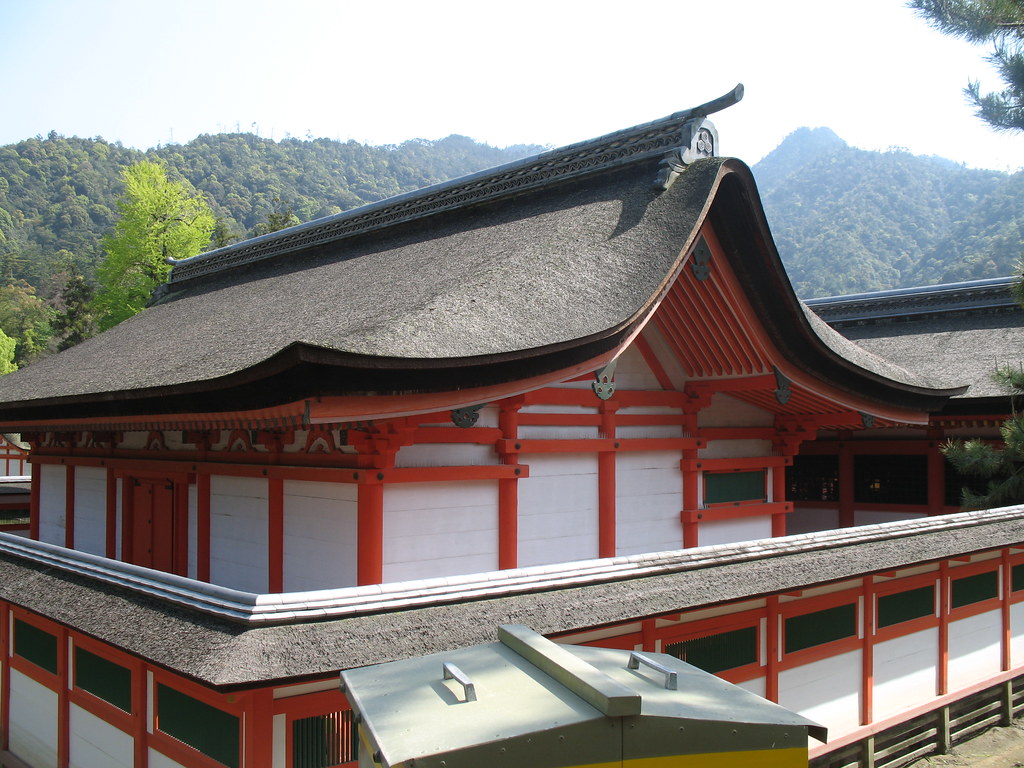
I did like the texture of the thatched roof and the detail work on the shrine

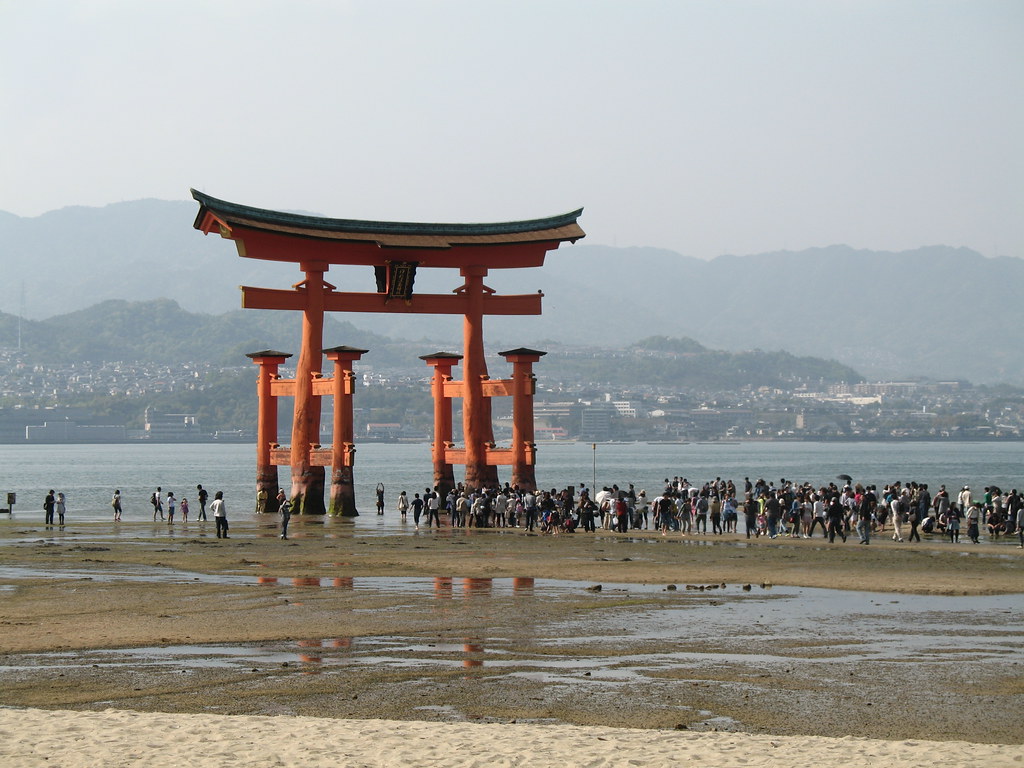
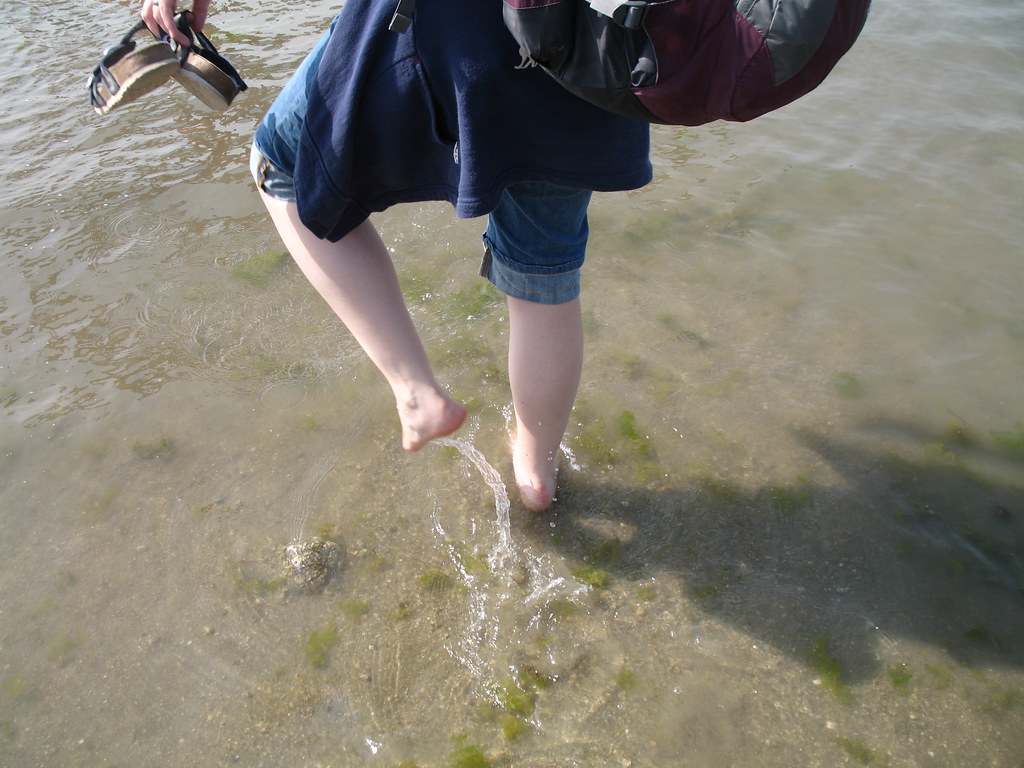
Itsukushima is also home to the famous giant torii in a bay, which is often shown in tourist materials for Japan and the like. The tide was going out so we sat for an hour or so and read our books while we waited for the water around the torii to get shallow enough to wade out. When it was time, the tidal plain proved to be covered in very small live snails and other forms of life that we had to walk across. I'm certain neither party enjoyed this. When we waded out the water was easily less than knee high, but a few hundred (at least) Japanese dutifully waited for the tide to go all the way out, standing on dunes adjacent to the torii for hours.

Look at them all waiting...

Wading out...

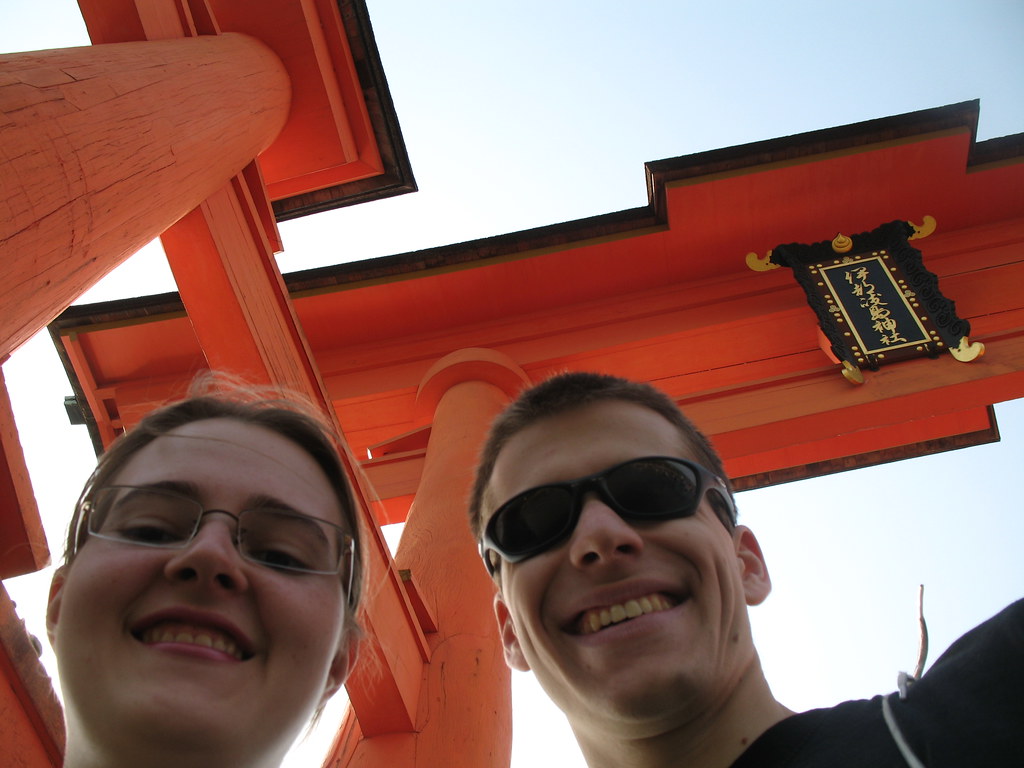
Taking pictures under the torii while most of the Japanese were still waiting...

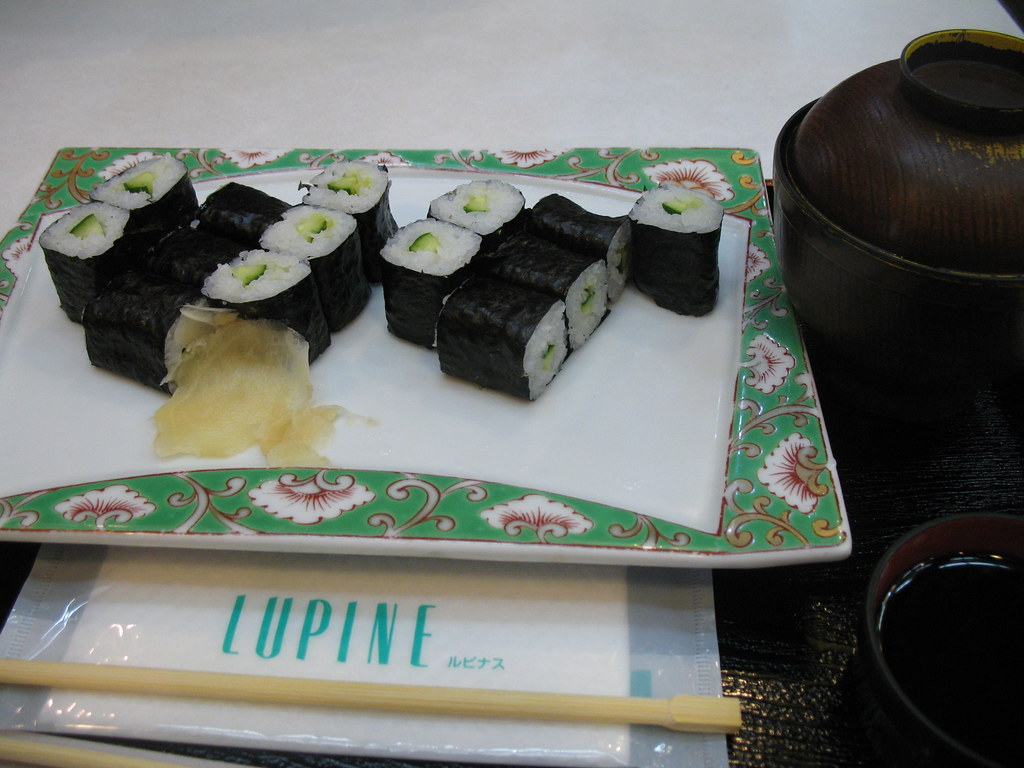
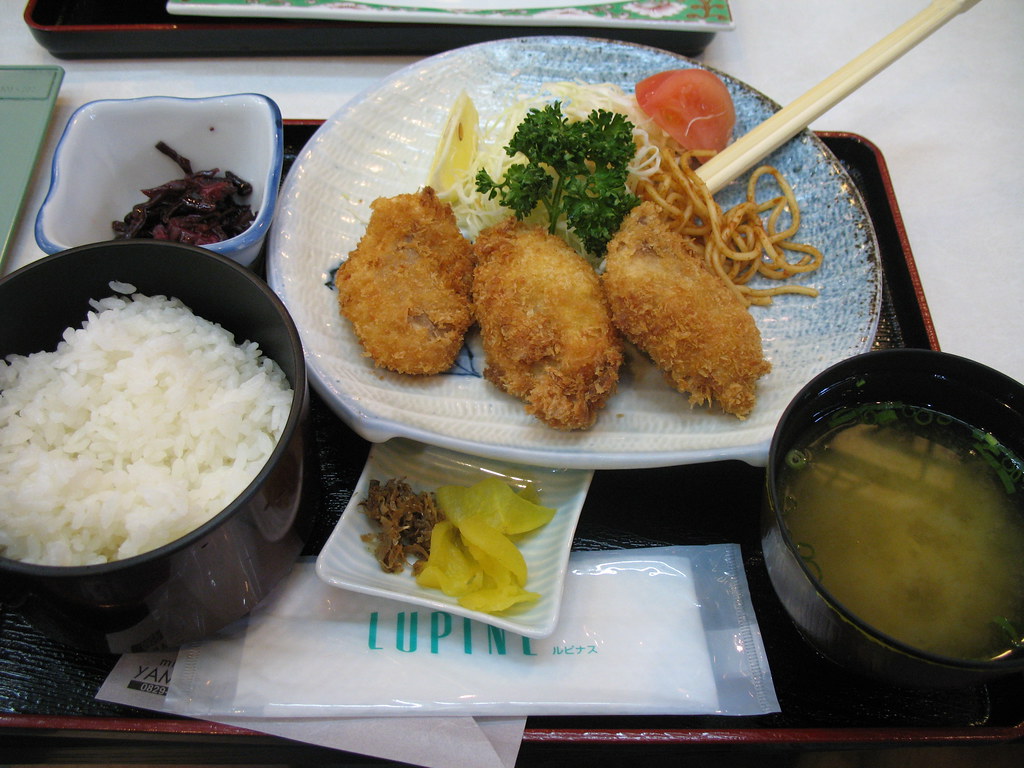
The torii pretty much wrapped up our explorations of the town, and so we ventured across the bay via ferry to look for new restaurants on the other shore. Turns out there wasn't much there at all aside from souvenir shops on the road between the station and the ferry (dog track, parking garage, etc) so we turned around and went back, dining at a less upscale place than the day before. Ana got cucumber sushi rolls, which are her favorite, but unfortunately they added the wasabi to the rolls themselves instead of putting it on the side. This made Ana sad and she fed all the ones with visibly a lot of wasabi to me so that I could experience the sinus-tingling sensation, instead of her. I ordered a fried fish set, which was quite good. The pickles and so forth were all standard issue Japanese cuisine, but I could have eaten a lot more of that fried fish. I suspect the fish was fresh and local.

Cucumber rolls of wasabi-flavored sadness

Fried fish of excellence

After that, we retired to the campground and read and hung out for a while before it was time to sleep. The next day we would leave Miyajima and visit Hiroshima proper.

Tuesday, May 18, 2010

Golden Week Trip (Day 2)

The campground sounded an unmissable musical wake-up call around 7AM (WHY?) which we thoroughly ignored and ended up sleeping in pretty late. The ground seemed pretty hard that morning but the weather was gorgeous and we perked up pretty well once we started moving around.

Miyajima has shrines and things in two places: either right down in town on the bay or located all the way at the top of the mountains. There is an easy way up from the town to the mountaintop called the Ropeway, where you only have to do a little bit of walking and then gondolas do all the hard work. If you don't use the Ropeway it takes about two hours to hike up and the terrain is rugged.


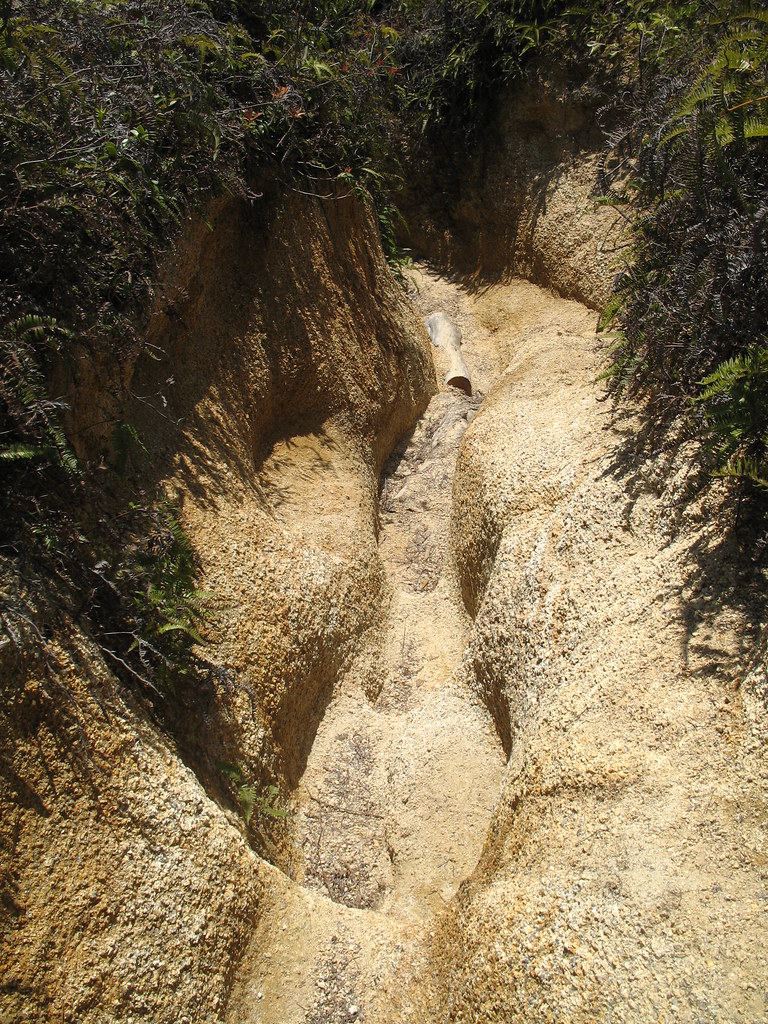
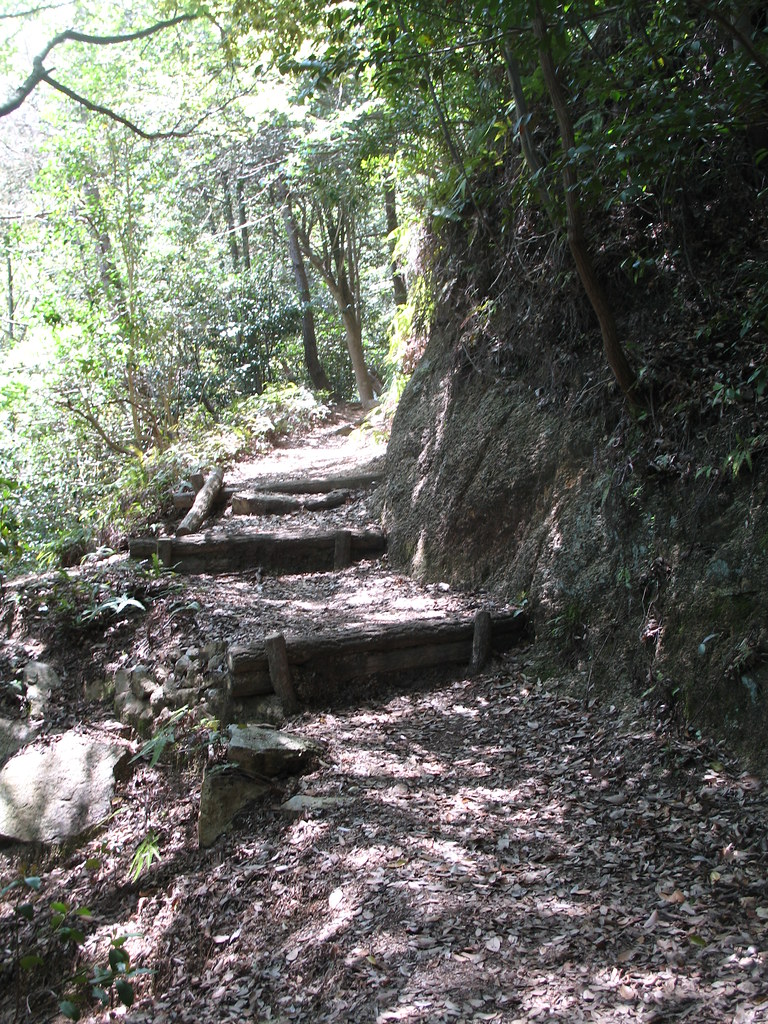
Rugged terrain

For this day the plan was to start with the attractions located on the mountaintops and move on to the town as time permitted. Based on the tourist map of the island, which Ana memorably denigrated as "a caricature of a map" the things we wanted to do formed a loop that would work best if we took the Ropeway to the top and then hiked down. Our preference was for the reverse but it just didn't look nearly as convenient according to the map, so we took a trail behind the campsite that lead to the base of the Ropeway.


Or not.

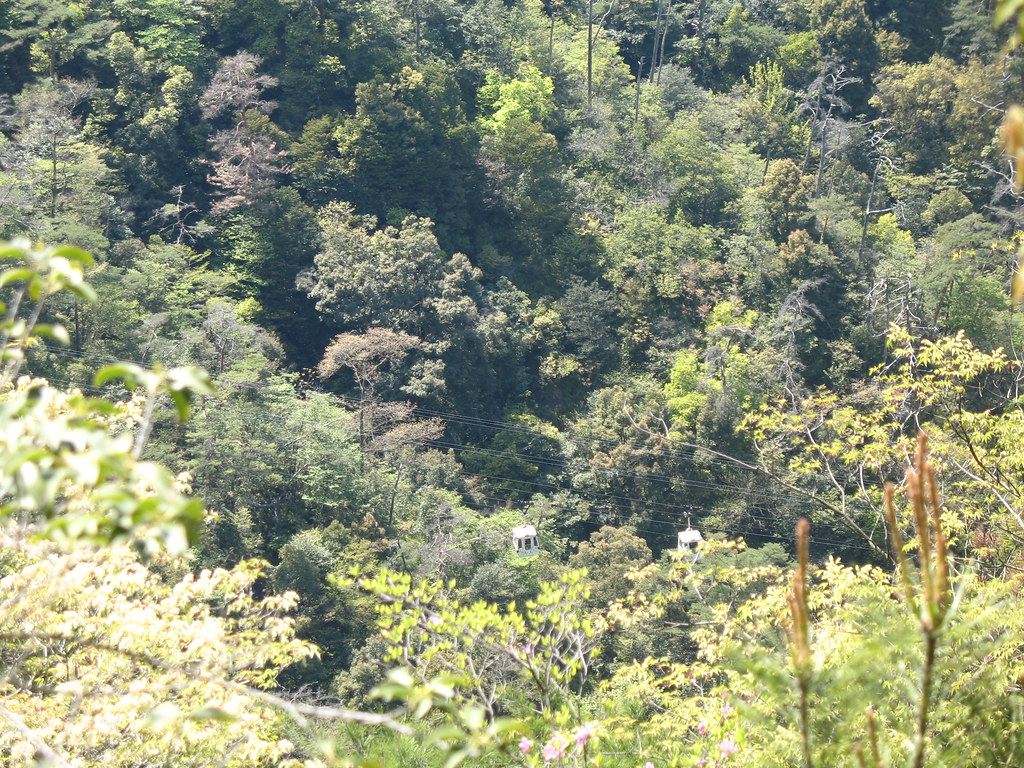
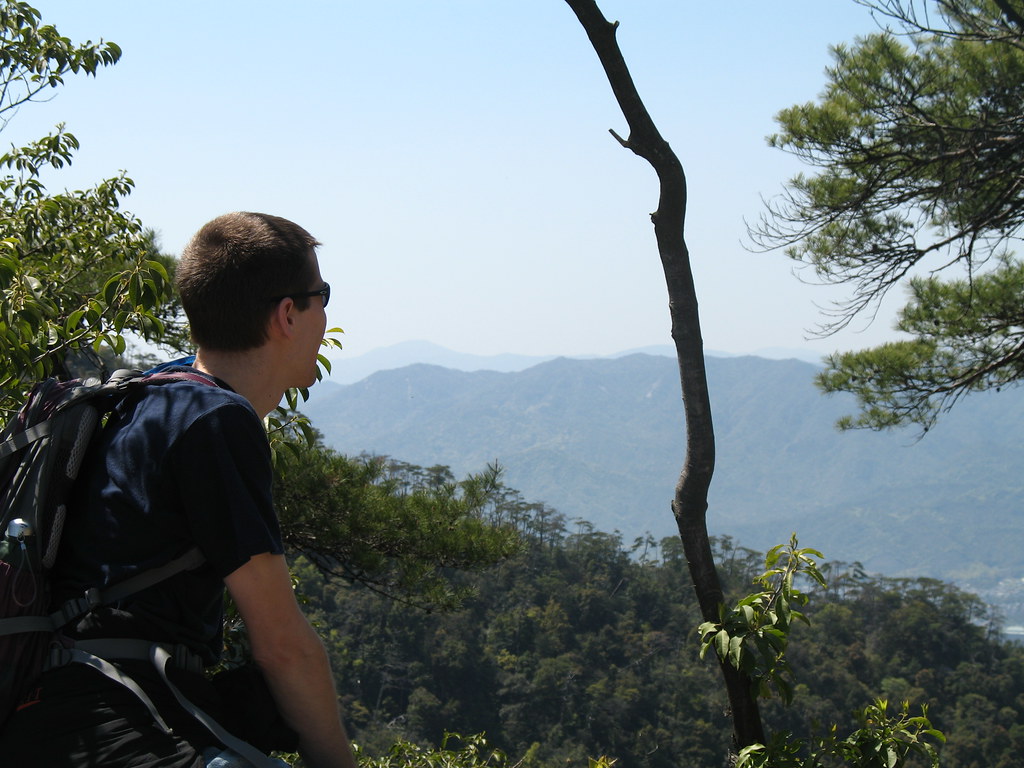
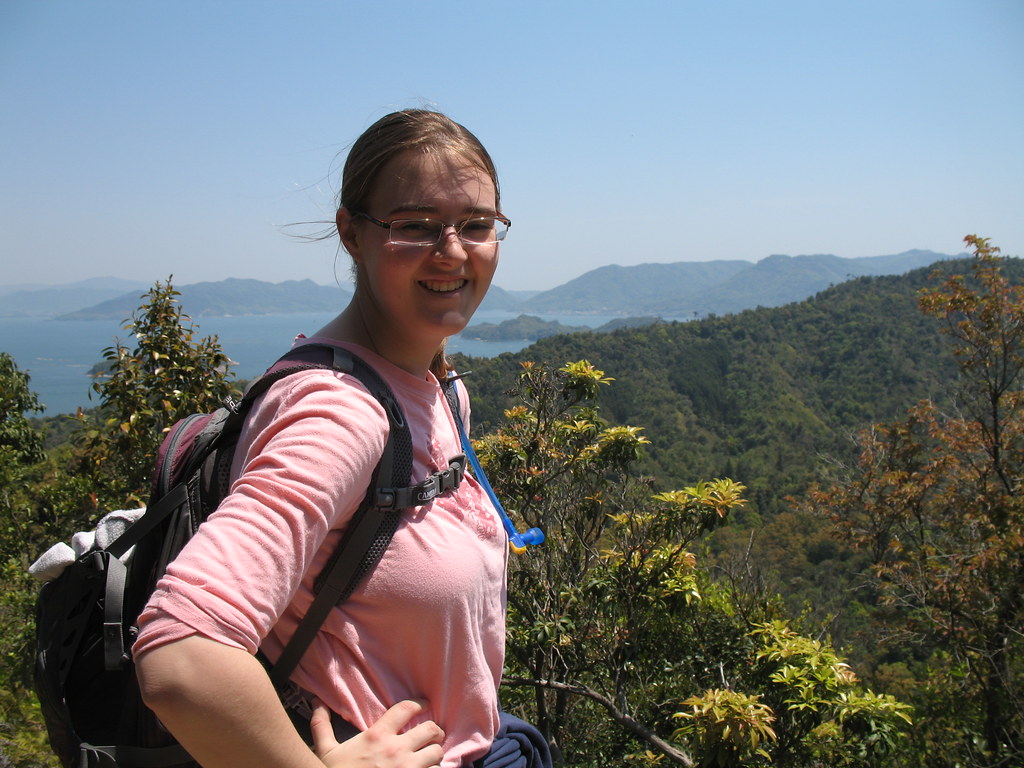
Or at least we thought it did, and the trail signs all said so. Apparently the map does not show all of the existing trails, and we took a rather more direct route to the top than the Ropeway. Our error became clear when we saw the Ropeway below us, but by then it made more sense to keep going than turn back. Despite being contrary to the plan, the hike was great, with many scenic overlooks, and the trail was 100% deserted aside from us. We would have equipped ourselves with more water and less weight if we'd been planning from the beginning for a longer hike, but we ended up having a lot of fun anyway.


Yep, we were doing it wrong.

Enjoying the rewards of doing it wrong.

The trail was deserted aside from this strange creature.

Up at the mountains' top there is a loop going between various shrines, the observatory, the top of the Ropeway, etc. We did the loop, and some of the shrines were alright, with a few being pretty nifty (like the one where they've kept the same fire burning for 1200 years) but the views were the real highlight.

They claim this particular fire has burned continuously for more than 1200 years.

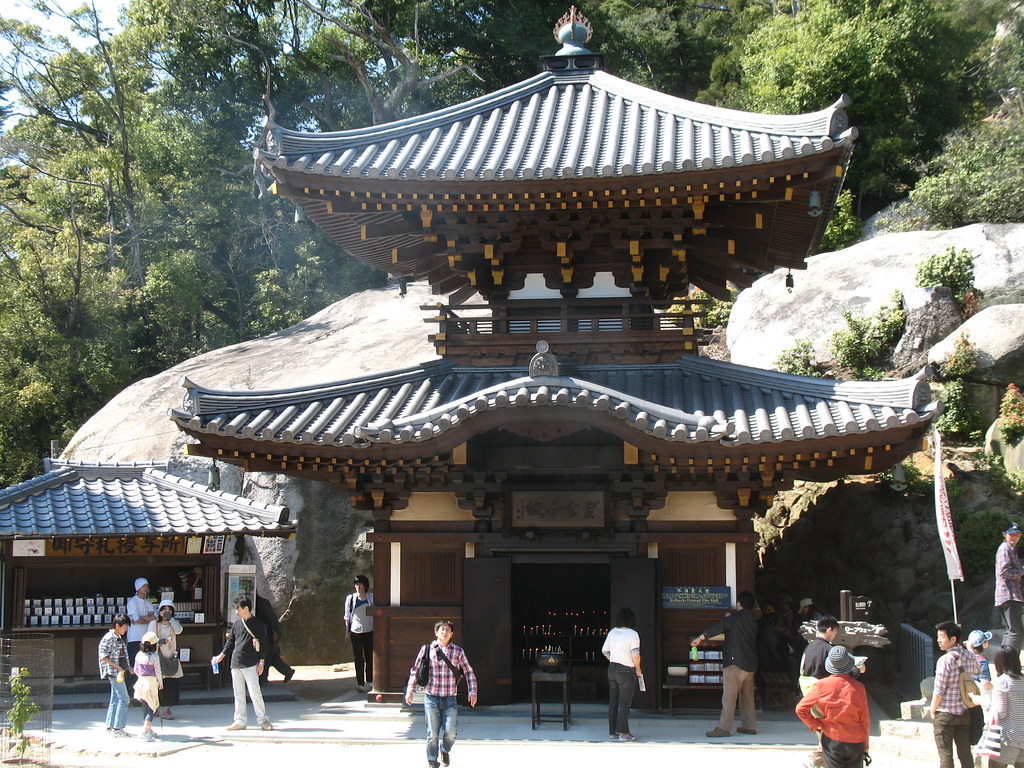
The shrines were mostly notable for age and for being up on a godforsaken mountaintop

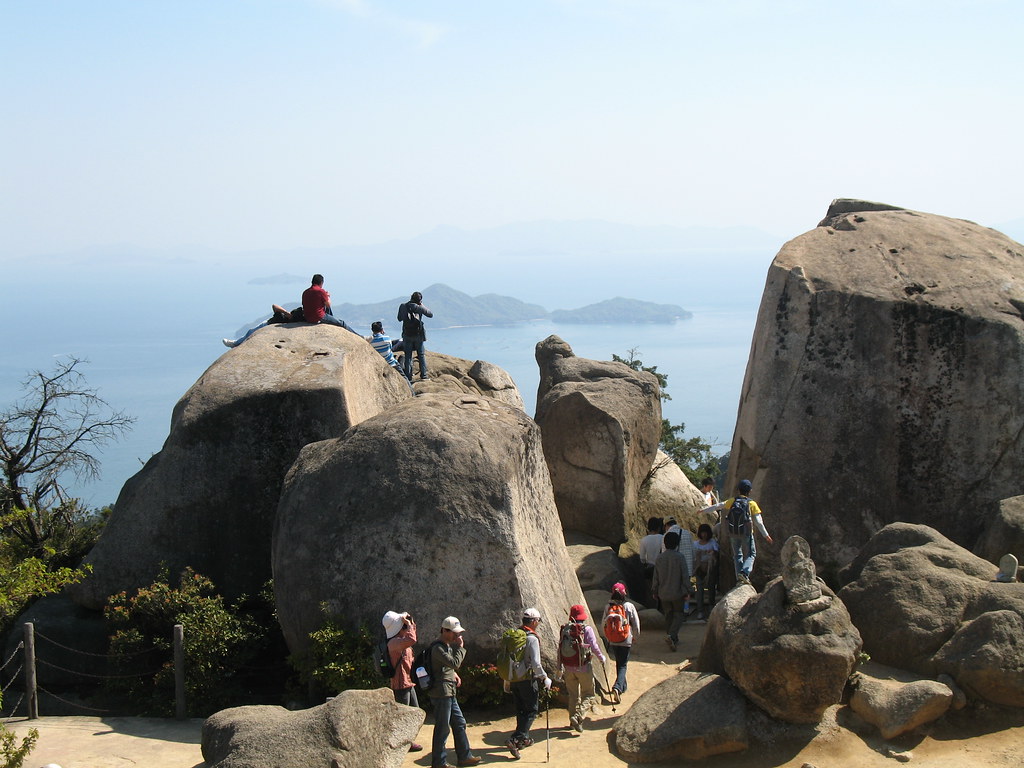
One view from the observatory

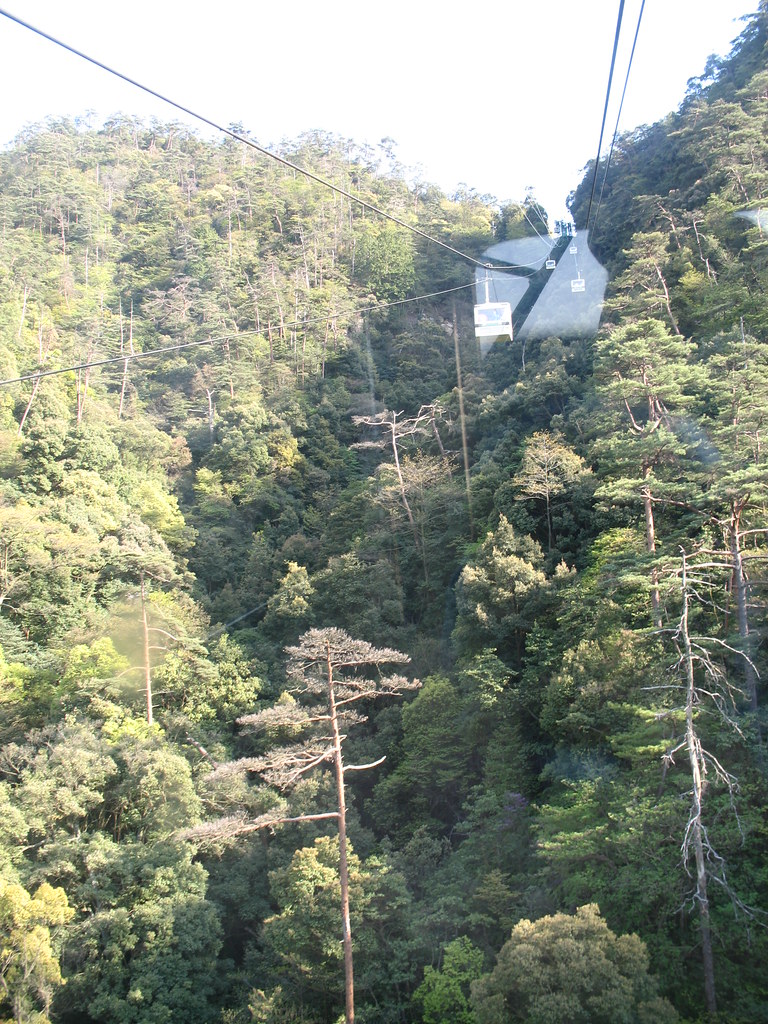
After completing the loop we got strawberry cream popsicles, which really hit the spot for cooling satisfaction and taking the edge off our hunger, then caught the Ropeway down, which was very relaxing and scenic. It goes right over a large quantity of totally virgin forest - never harvested ever, at least not in the last 2000 years or so, as logging hasn't been condoned on the sacred island in Japanese history.


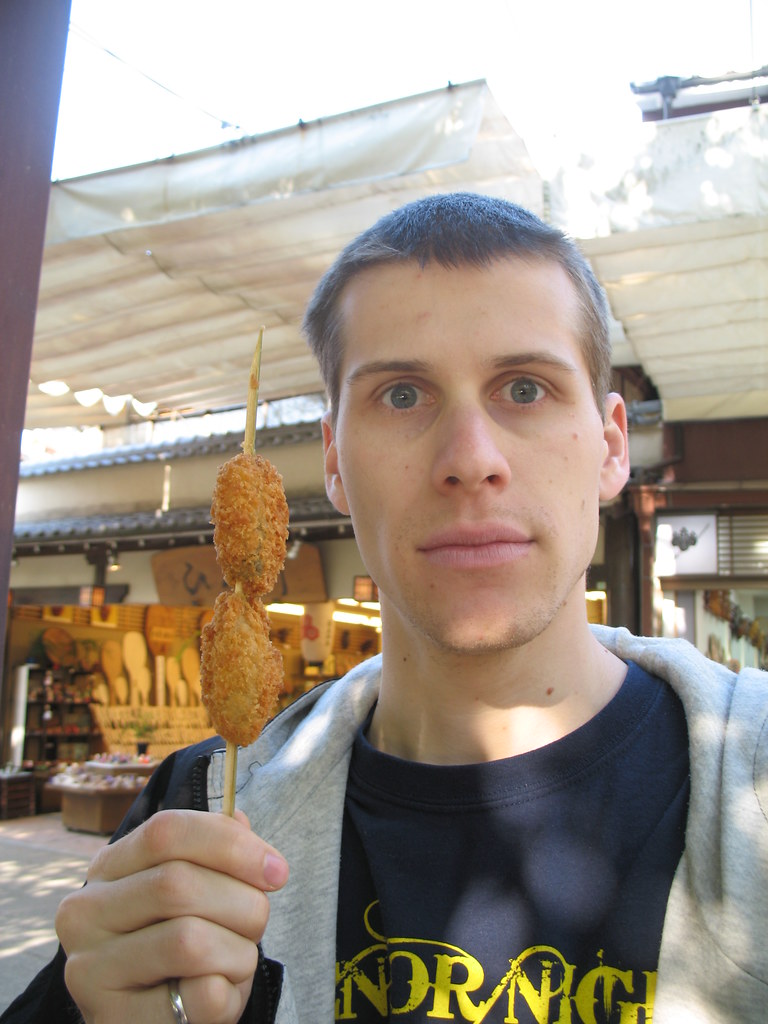
The Ropeway ends in a park area with more shrines and some gardens, which was nice, but we were starting to get hungry and moved into the tourist districts looking for things to eat with some urgency. I snagged a stick of deep-fried oysters (Ana took one) to eat while perusing restaurants.

From the park

I like this one better than the one where I'm smiling, couldn't say why

We also saw the world's largest rice paddle, according to the signs.

Because of this, all the shops sell oversized rice paddles as souvenirs

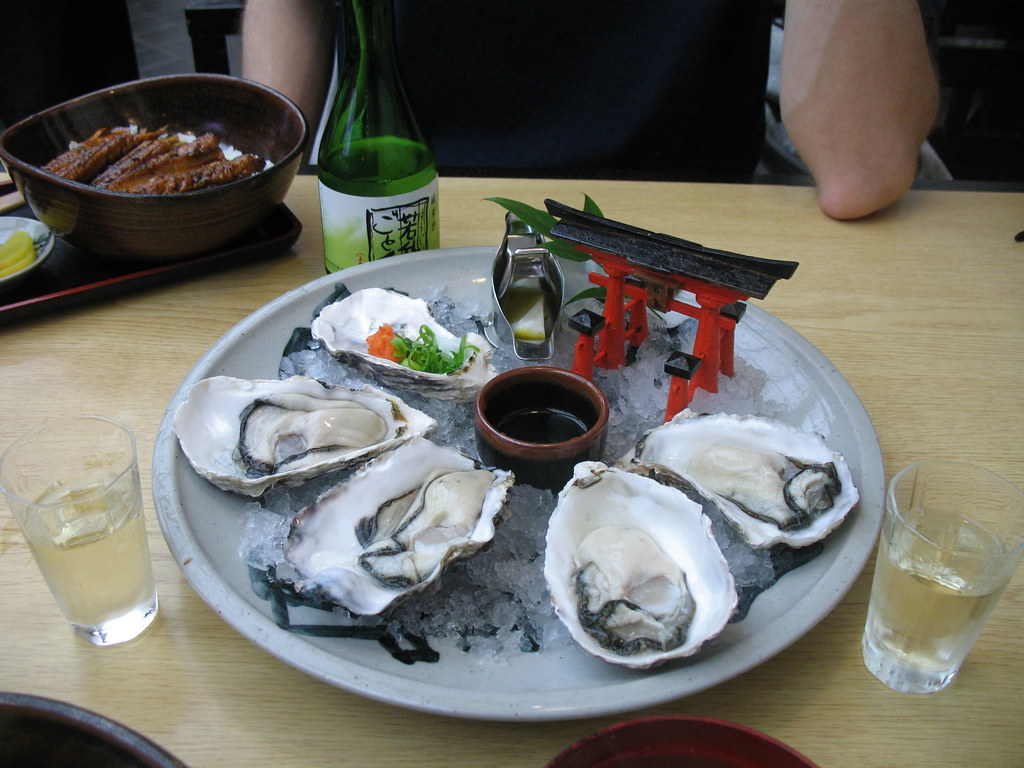
In Miyajima, your restaurant options are Japanese, Japanese, and more Japanese. In the tradition of all of Japan, the restaurants on the whole strive to be as identical as possible. I was out for raw oysters (they cultivate them in bays all around the island, so we were at the source) and one of the local signature dishes, which is grilled conger eel over rice (cleverly named anagomeshi, which means something along the lines of "eel-meal" except that they're using the form of meal that is usually used for rice so I think "eel-rice" is more accurate). Seeking these dishes didn't really narrow down the options much, so we picked a restaurant based on large size, cleanliness, and offering things that Ana wouldn't mind eating.

Oysters in the center, and eel-rice top left

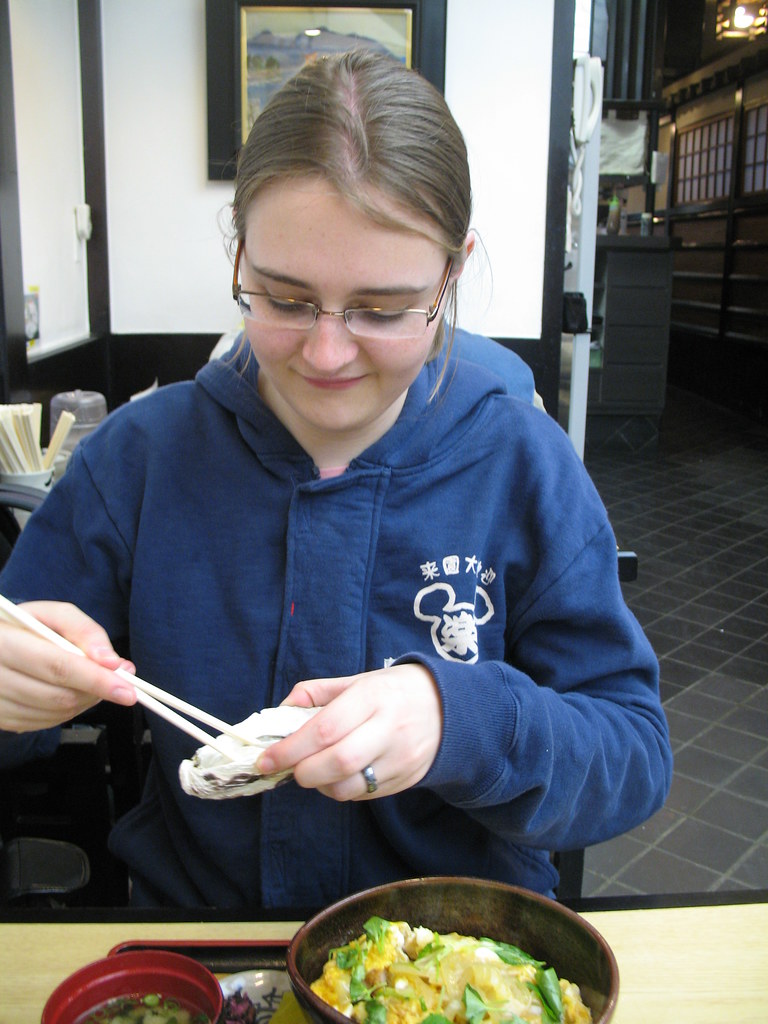
We determined that the oysters of Hiroshima bay are well-regarded with good reason. They're extremely large, with moderately firm flesh that was neither slimy nor chewy, without any grit whatsoever in the ~10-12 we had from several different restaurants, and with a mild sweet seafood flavor that is neither too much estuary, like the Chesapeake, nor reminiscent of the pure ocean flavor (minimal seafood taste) of the Northeast. Definitely one of the better sets of oysters I've had, and the value was quite good too when the size of the oyster is accounted for. Ana ate one with an expression suggesting she thought it was going to be horrible (Ana's note: I was actually wondering how the heck I was going to get the oyster out of the shell with the chopsticks and concentrating very hard on that), then switched to "not bad at all" once she actually tasted it. I enjoyed it considerably more than "not bad at all".

You be the judge

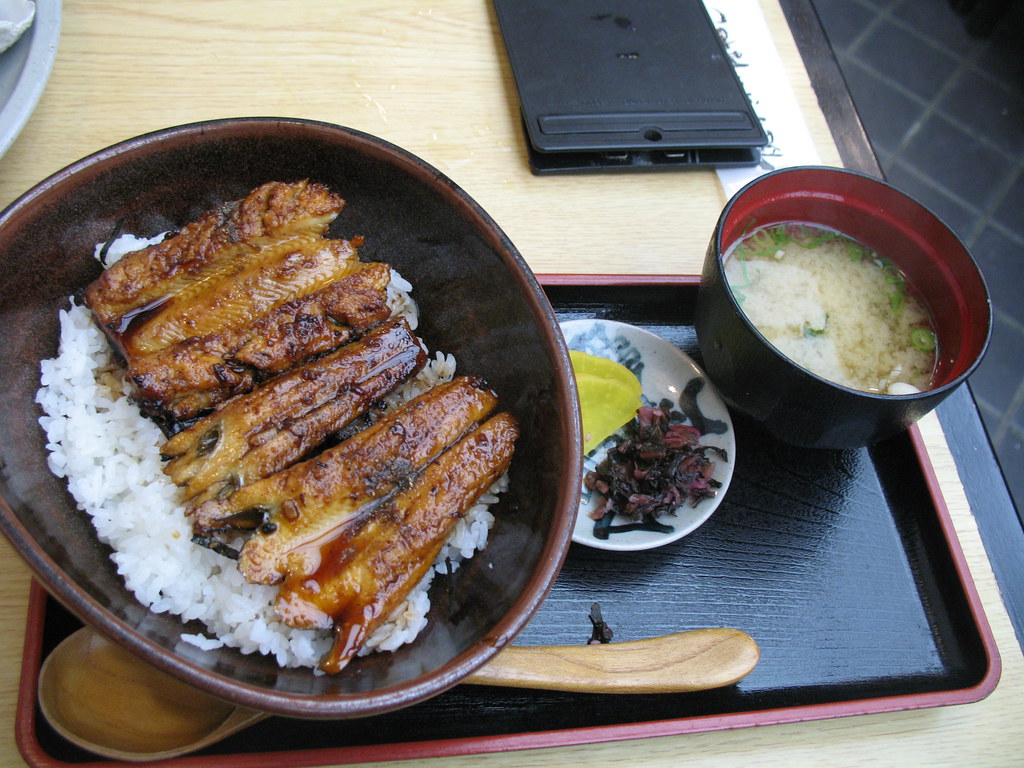
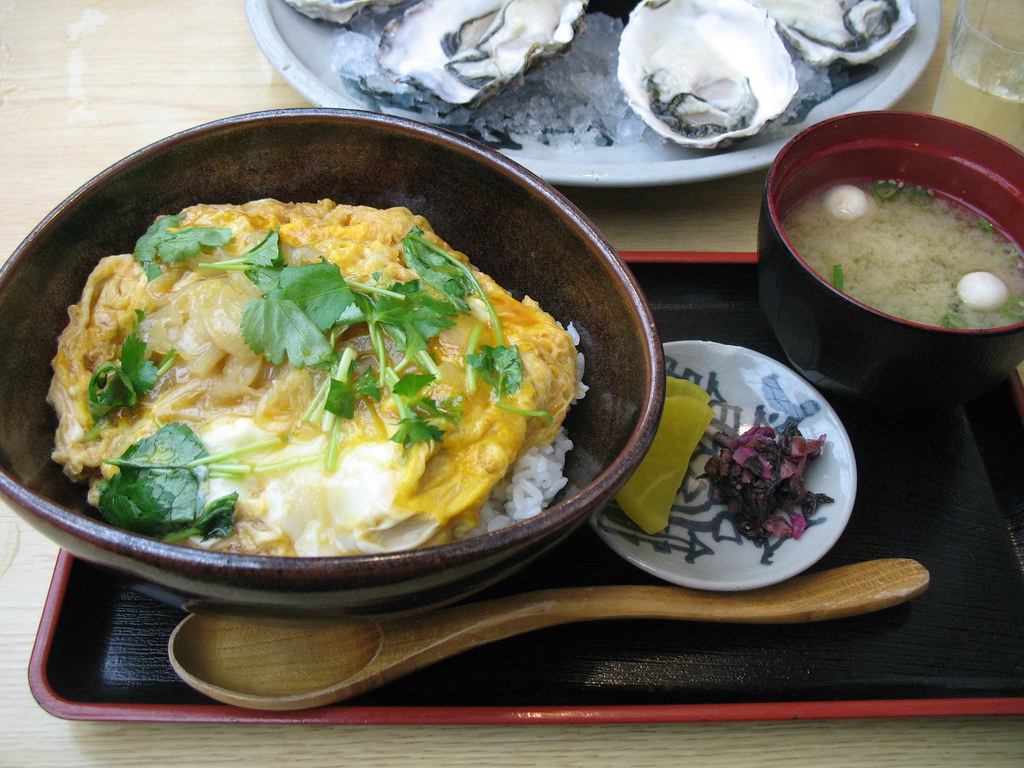
The eel rice was tasty, but not terribly special. Since I normally find roast eel on sushi with sauce, and they used a similar sauce on this one, it was a lot like a giant bowl of one of my favorite sushi. Ana had fried pork cutlet with egg over rice, which I've only had from the school cafeteria before. The restaurant's rendering of the dish was much better than the cafeteria's, since it didn't have the strange metallic flavor of all the pork the school serves (which I try to avoid for that reason). We also ordered sake since ordering wine in a Japanese-style restaurant is a bad idea (the wine is 99% of the time terrible) - not sure they were even offering it. We've definitely gotten a lot more used to sake owing to the office parties.

穴子飯 (eel-rice)

egg cutlet pork...-ness

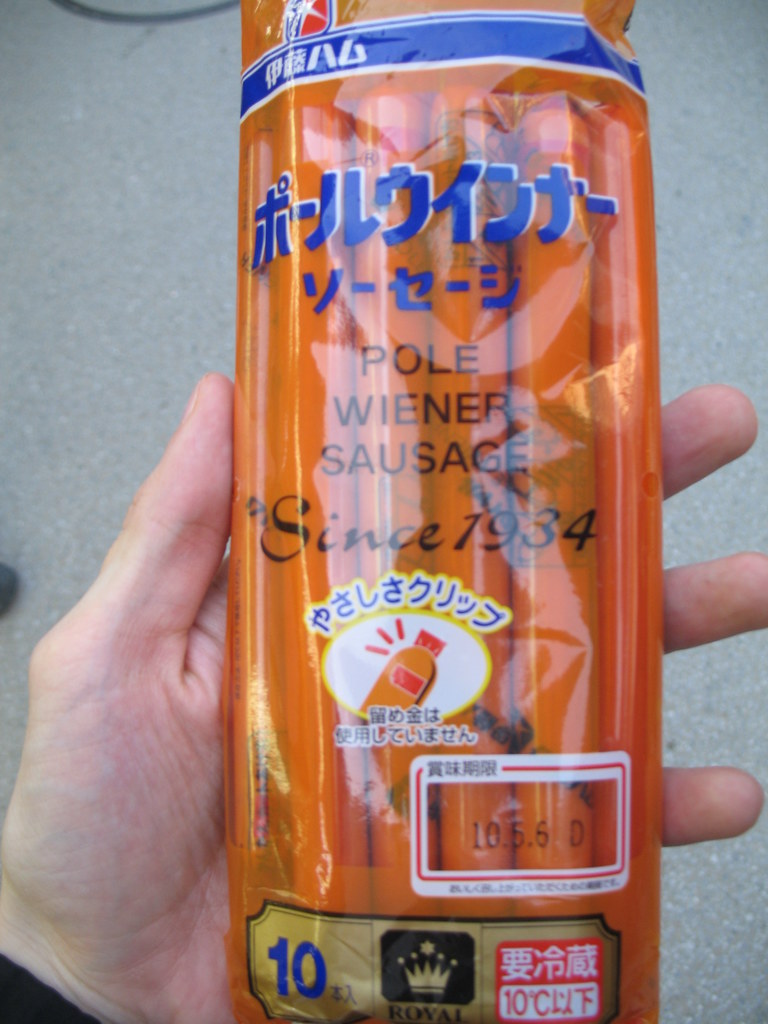
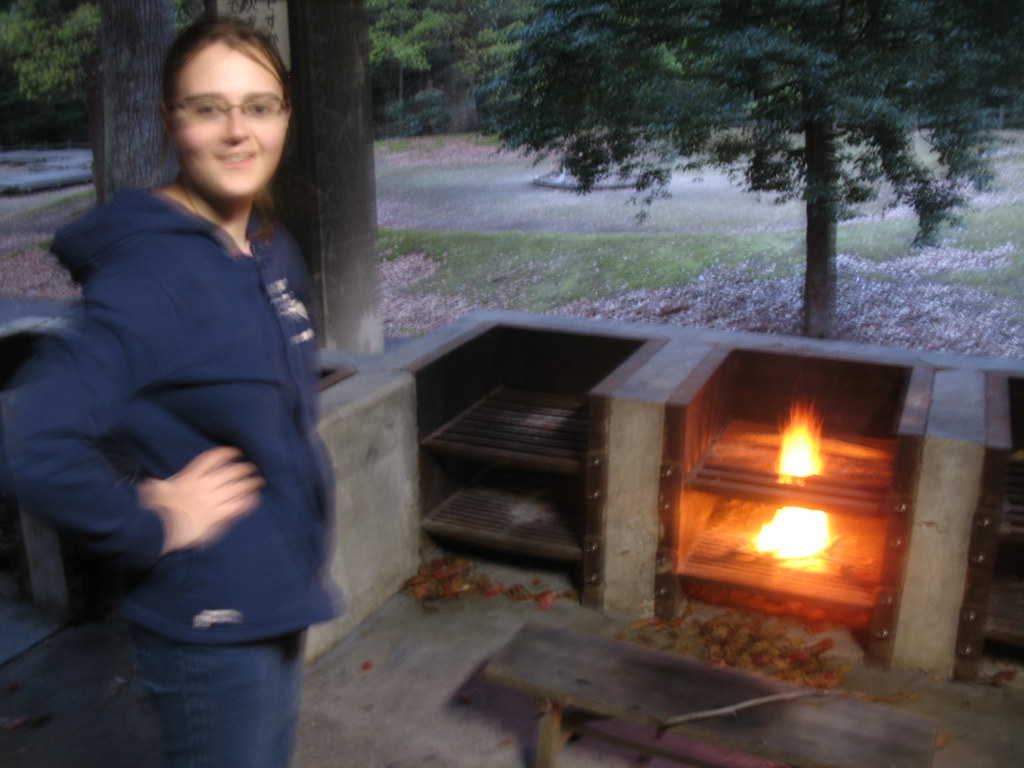
After wrapping up dinner, Ana wanted to go in search of marshmallows and other things to cook over a campfire. The camping area didn't have private fire pits but did have large buildings with concrete grills / fireplaces and her inner Girl Scout demanded that there be fire. We didn't find any marshmallows on the island, and when we went looking for hot dogs the closest thing we found were some questionably titled "Pole Sausage Wieners" which were individually wrapped inside their package. Since we weren't counting on these items to suffice for dinner as we'd just been fed, we took a chance on them. Ana bought a lighter and foraging for deadwood near the camping areas was permitted, so we shortly had fire. The sausage wieners were strange and not very good but I think the cooking part was more important to Ana than the eating part so that was OK, and finished up Day 1. Day 2 we explore the lower part of the island and several famous shrines while eating street food the whole way.

Probably actually intended as dog treats, or something

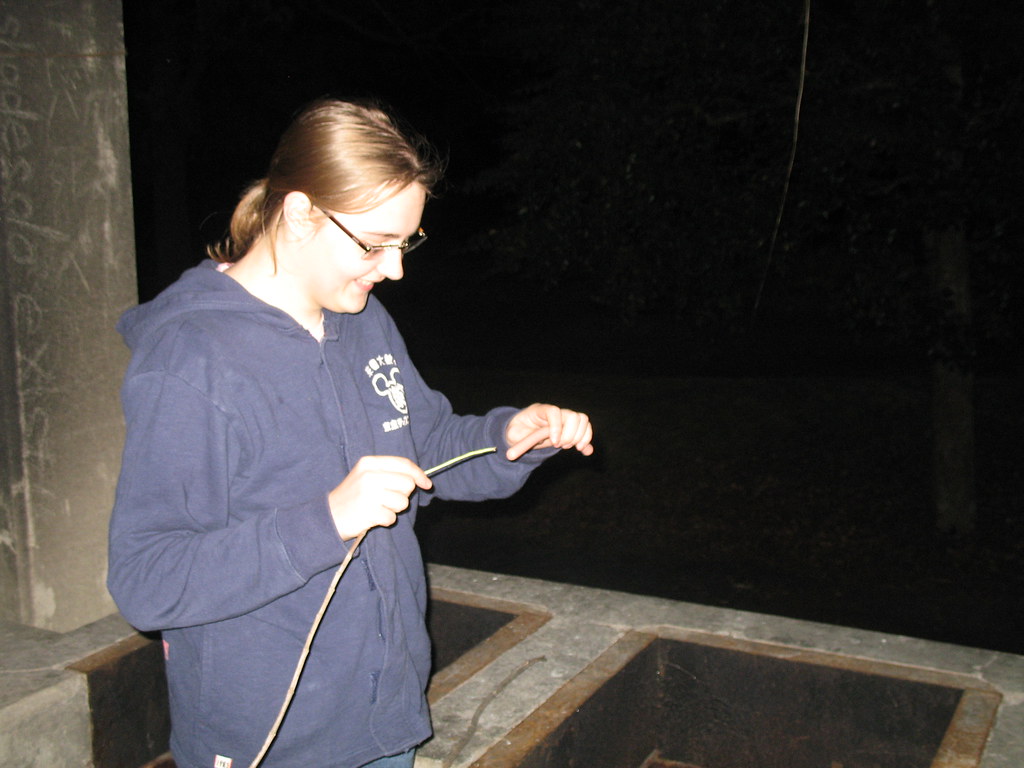
Luckily we had a Gold Awarded Girl Scout to make fire using only a lighter, a premade firepit, and perfectly dry deadwood.

Ana enjoying our sorry excuse for a cookout

Sunday, May 16, 2010

Golden Week Trip (Day 1)

Japan has a confluence of national holidays in the first week of May that combine to form "Golden Week" when most people have at least a five day weekend. Last year we used this time to go to Tokyo Disney, and this year we visited Miyajima, Hiroshima, and Okayama.

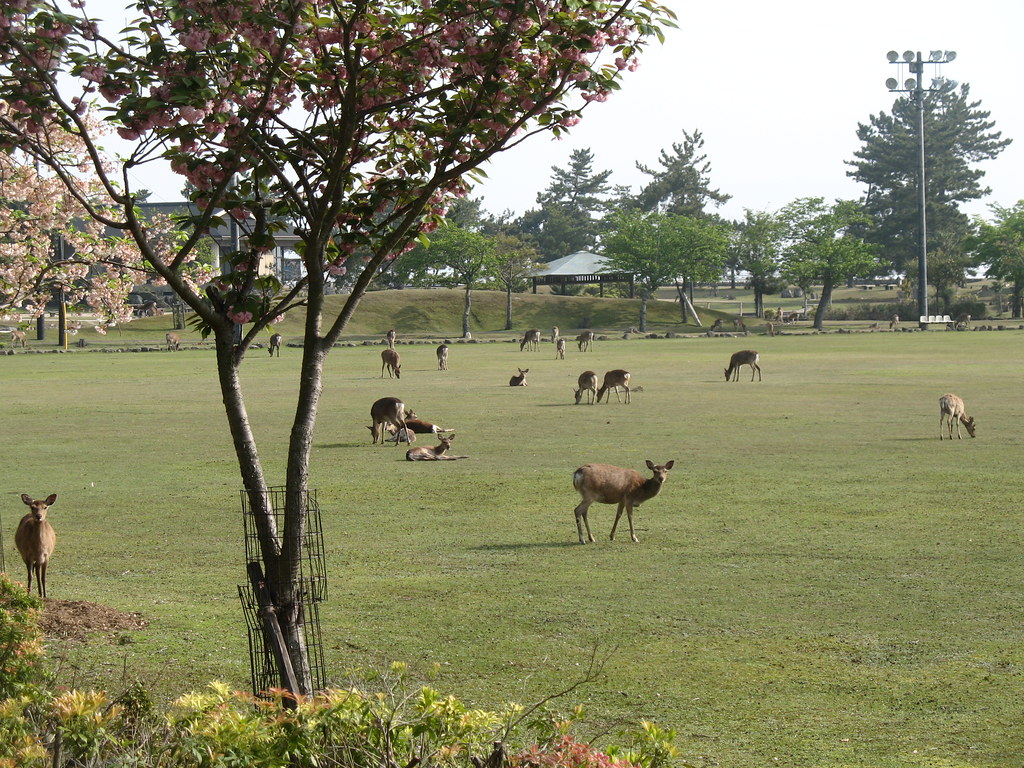
Hiroshima I suspect most readers have heard of, but the other two are likely more obscure. Miyajima is a sacred island in the Seto Inland Sea off the shore of Hiroshima. On it you are not allowed to give birth or die (or else!) and wild deer walk unimpeded everywhere as the messengers of the gods. Several of the most famous shrines and temples in Japan are on this island, and it is home to one of the Three Views. The Three Views are supposed to be the three most spectacular vistas in Japan, codified centuries ago by some monk who thought about such things. Some friends of ours recommended this area as a must-see place, and this vacation was just the right size for heading down there.

Not kidding about the deer

We took the train down to Osaka, then, being out of the sticks, were able to switch to Shinkansen (bullet train) and sped up the rest of the trip to Hiroshima considerably. We think this particular Shinkansen was faster than the one we usually take part of the way to and from Tokyo - things were definitely moving fast outside of the window.

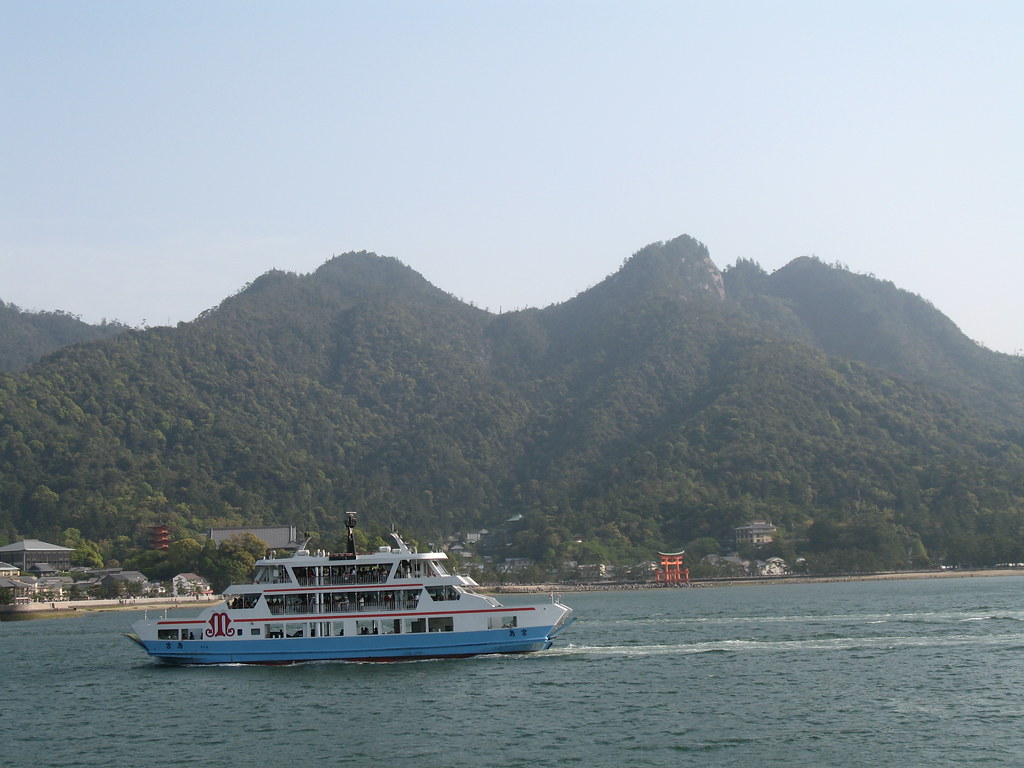
Once we arrived at Hiroshima Station, we took a local train to the closest stop to the island and took the ferry (maybe 10 minutes) across to Miyajima. We figured out pretty quickly that the whole island shuts down between 5 and 6PM, when most of the tourists clear out, and being past that time we walked the 3km to where were staying.

Technically not our ferry, but close

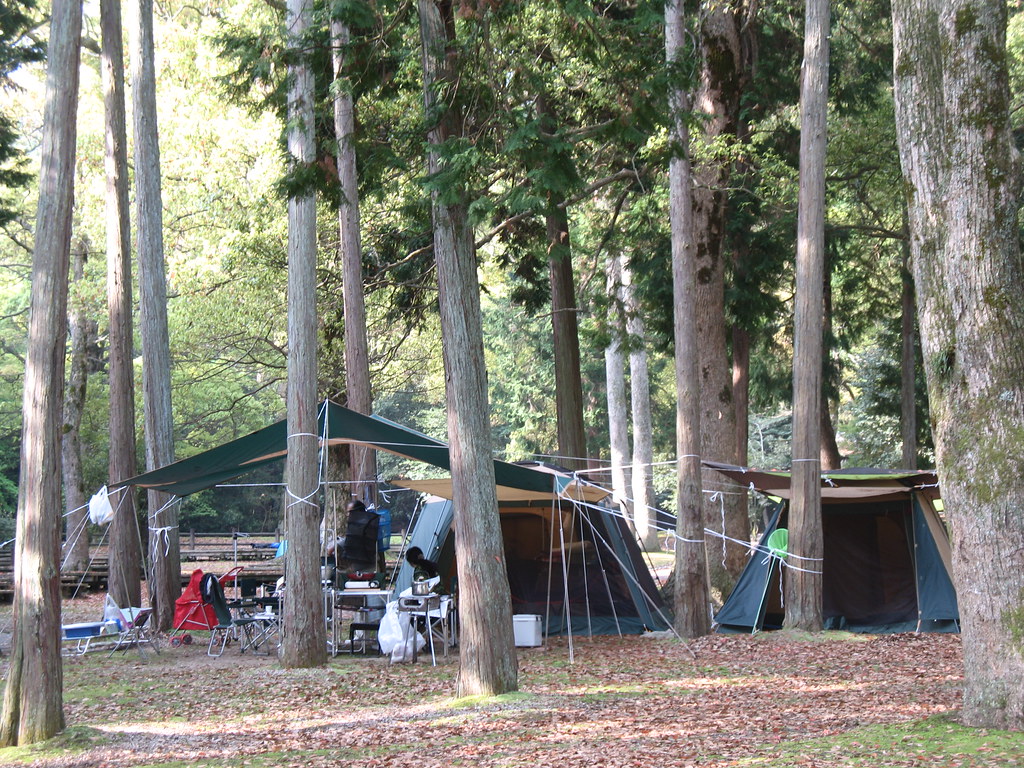
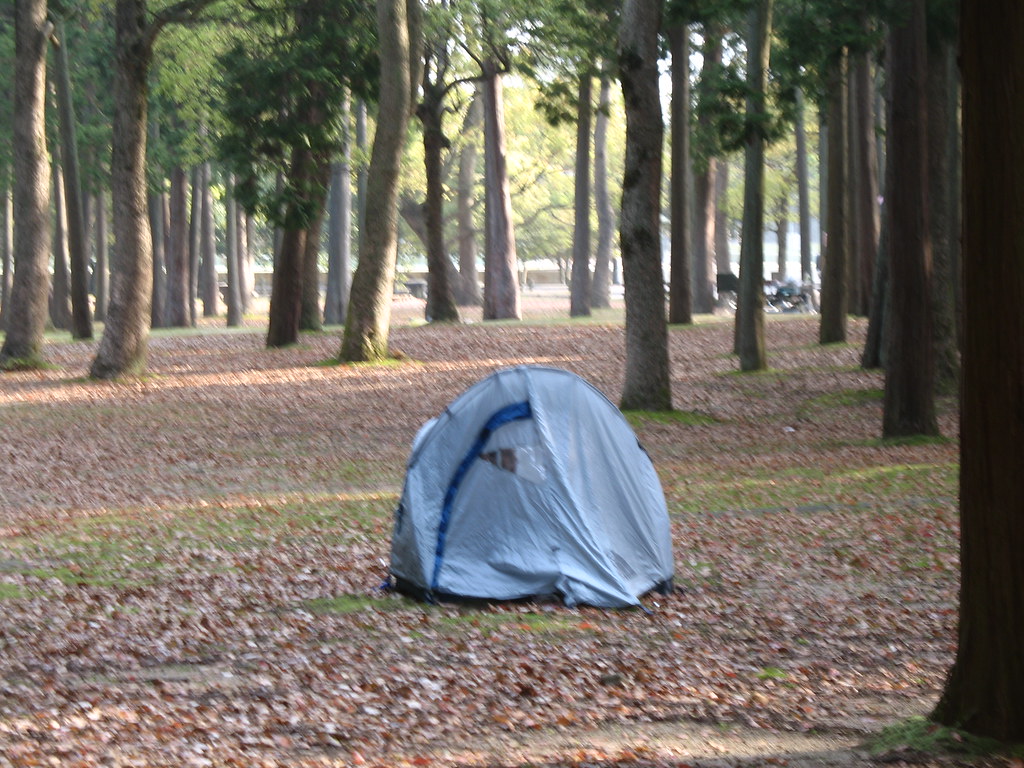
The hotels on Miyajima all have shuttle buses, but we weren't staying in a hotel. Ana had discovered that there exists a campground on Miyajima, and for $6 a night the price couldn't be beat since anything else on the island costs at least $200 a night. Thus, we camped and saved the $800+ dollars for the four-night duration of our stay. Most of the Japanese were car camping, and in style, but we carried everything with us and only envied their portable enclaves a little bit.

Probably bigger than their house

Definitely smaller than our actual futon, let alone the apartment

They had about six enormous bathroom buildings, each group there could have had their own

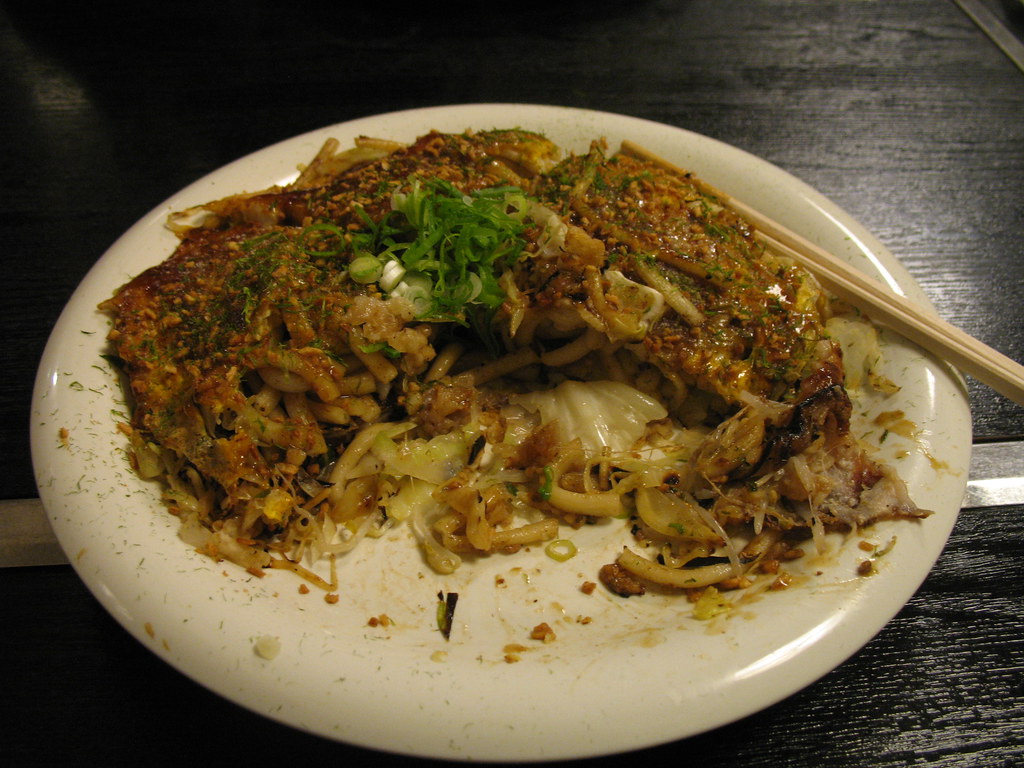
After getting the tent set up, we walked the mile and a half back into town for dinner. Most places were closed but an okonomiyaki place was open and filled with people that looked more like locals than tourists and the price was right so we went in. Miyajima being a major tourist destination, English menus were available which we found to be standard on the island and very helpful. The Hiroshima area is famous for their unique style of okonomiyaki, made with layers of egg and noodles in addition to the typical cabbage based fritter. Ana got a garlic and udon noodle okonomiyaki and I got a soba noodle and seafood one. We traded a slice of each and both preferred the one we initially ordered, so I guess we chose wisely. It was hot and filling and cheap and that was about what we were looking for before walking the mile and a half in the dark back to the tent and hitting the sleeping bags prior to starting our first full day on the island bright and early the next morning. If you want to skip ahead all of the trip pictures are on Flikr, under Miyajima, Hiroshima, and Okayama.

Ana's okonomiyaki